

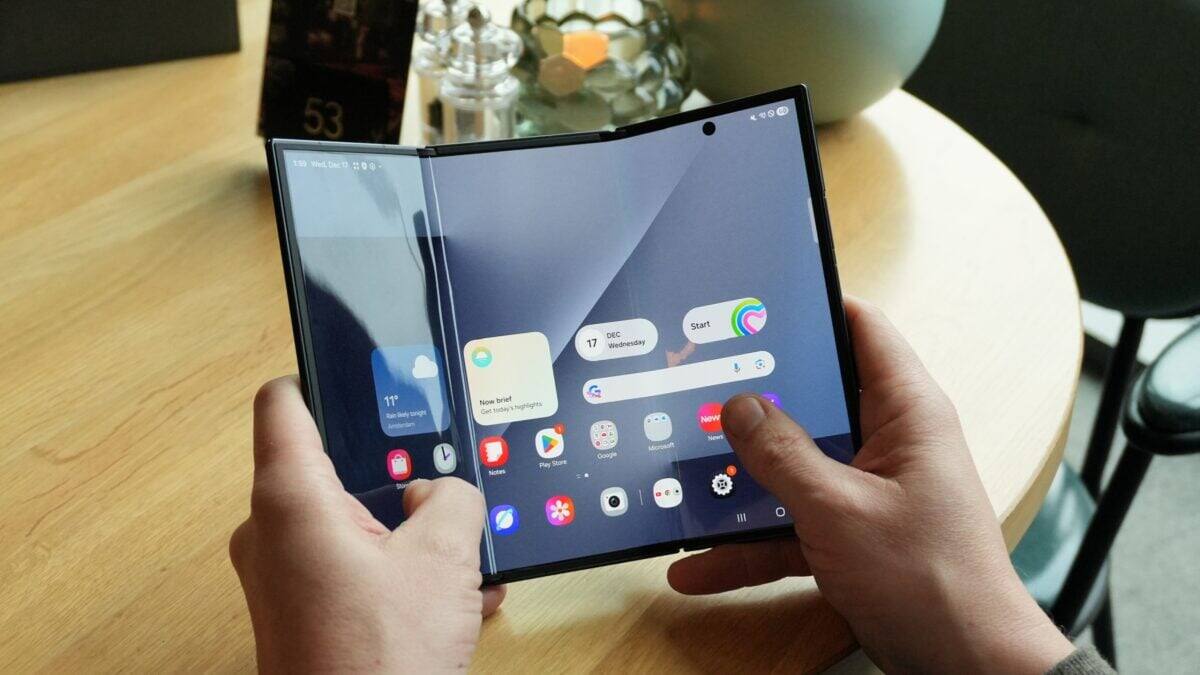
Samsung asked customers to pay up to $2,899 for a bold new form factor. A few weeks into general sales, some early buyers are reporting inner screens that go dark, flash colors, register phantom touches or make popping noises when folded. Those failures aren’t just embarrassing – they expose a fragile trade-off at the heart of tri-fold engineering.
The problem has surfaced in public user reports: one owner said their Galaxy Z TriFold’s inner display went unresponsive and started registering ghost touches just five days after first use; another, with a month-old device bought in China, described a green flash followed by repeated failures that a reboot eventually stopped fixing. In both cases users reported no drops or visible external damage. Early signals point to a failure in the display flex cable rather than the OLED panel itself, though Samsung is the only party that can confirm the root cause and authorize repairs.
Why this matters: tri-fold designs add at least one extra hinge and one extra span of moving display compared with traditional foldables. That multiplies the number of components that must bend reliably for thousands of cycles – flex cables, hinge linkages, adhesives and routing channels – and it increases the odds that a single weak link will take the whole screen offline.
A familiar pattern, with higher stakes
This isn’t the first time new folding mechanics have bitten early adopters. When the first-generation Galaxy Fold arrived, multiple reviewers reported screen damage that forced Samsung to delay the launch and rework vulnerable areas. Manufacturers learned from that episode by stiffening layers, changing protective films and improving hinge tolerances. But adding a third panel and another hinge reintroduces complexity – and with a premium price tag, buyers have less patience for teething problems.
What companies typically do in these situations is a mix of engineering, customer care and optics: identify the failure mode, issue a software or hardware fix if possible, and replace or repair affected units under warranty. How quickly and transparently Samsung handles claims will determine whether the TriFold becomes a quirky, high-end cult device or a costly cautionary tale for the wider foldable market.
What we don’t know – and what to watch for
Current reports point toward a flex-cable or connector fault rather than panel-level damage, but those diagnoses come from users and third-party observers; Samsung’s service technicians must confirm them. Important datapoints that will matter going forward:
– The failure rate: are these isolated early defects or a pattern that scales with units sold?
– Failure conditions: do problems appear only after specific actions (frequent folding, small debris ingress, humidity exposure) or seemingly at random?
– Repair policy: will Samsung replace affected units under standard warranty or require paid repairs? Will it expand service options or issue a service advisory?
Who wins and who loses
Winners: rival manufacturers and cautious consumers. Competitors that delay tri-fold attempts can now point to a higher bar for reliability. For users who refused to be first adopters, the drama validates patience.
Losers: buyers who paid top dollar for a novel experience and expect first-rate durability, plus Samsung’s marketing team if service costs and replacement units mount. The aftermarket and resale market for early TriFolds could also take a hit if reports proliferate.
Practical advice for owners and prospective buyers
If you already own a TriFold: back up your data frequently and document any display issues immediately with photos or video. Contact Samsung support and insist on a diagnostic record for your case. If the device shows no external damage and the fault appears to be manufacturing-related, be persistent about warranty coverage.
If you’re thinking about buying one: consider waiting for a hardware revision or more independent repair data to emerge. The tri-fold is an exciting leap, but early units often carry teething risks you’re effectively underwriting with your purchase price.
Outlook
Engineering multi-hinge, multi-panel phones is hard; that’s the whole point of the innovation. What will determine whether the TriFold succeeds is not just the cleverness of the hinge, but Samsung’s ability to find and fix systemic faults quickly and to treat affected customers fairly. If the company learns and adapts as it did after earlier foldable setbacks, the form factor can still mature. If it buries issues behind slow service or restrictive warranties, buyers will be reluctant to take the same leap next time.