


Most phone reviewers focus on cameras and screens. The real competition that decides how fast and reliably those phones work often happens in committee rooms – and companies that dominate standards writing can turn technical decisions into years of commercial advantage.
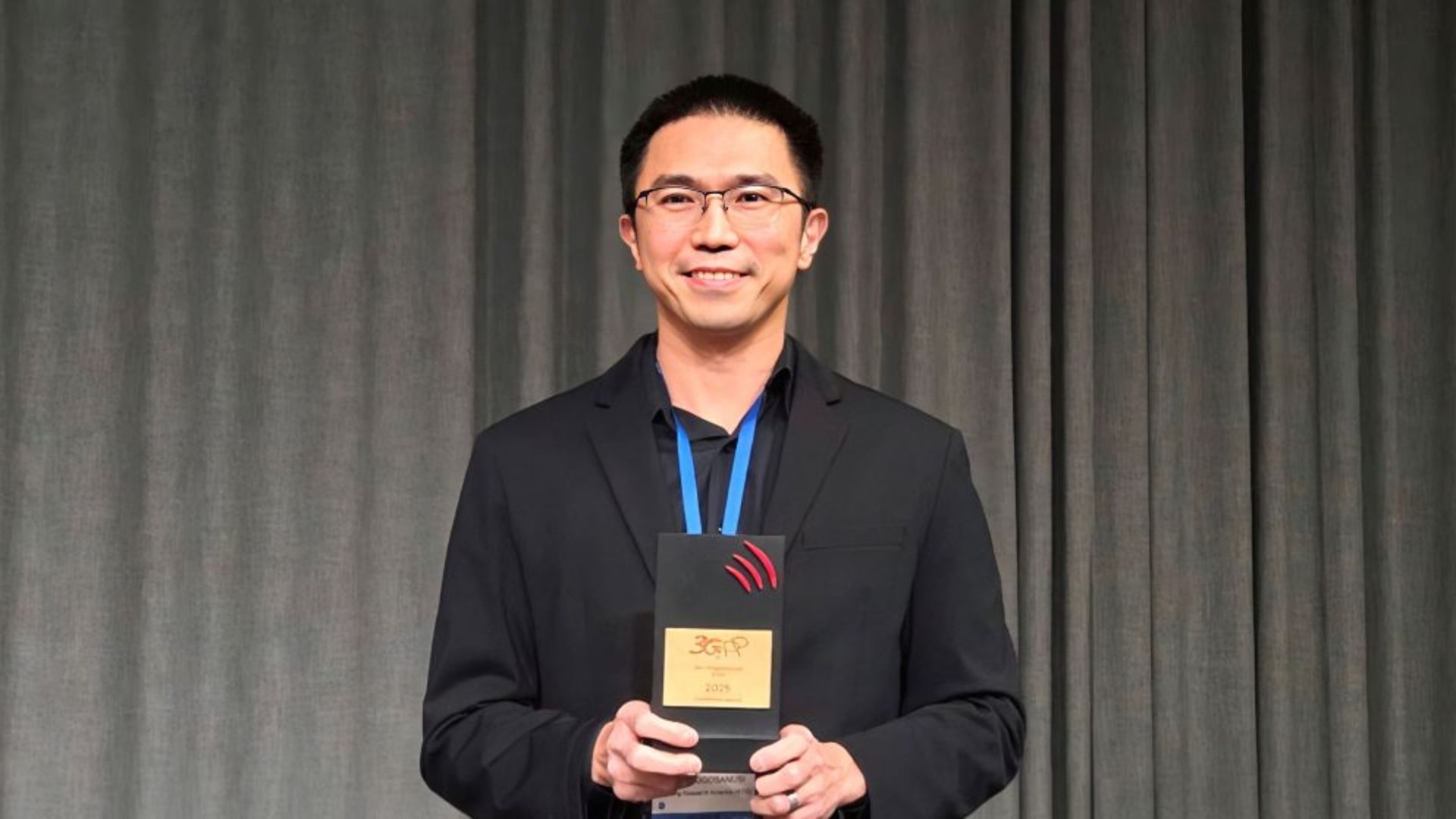
That invisible contest is why Dr. Eko Onggosanusi’s 2025 3rd Generation Partnership Project (3GPP) Excellence Award matters beyond a trophy case. Dr. Onggosanusi, an engineer in Samsung Research America’s Standards and Mobility Innovation Lab, was recognized for work in 3GPP RAN Working Group 1 (RAN1) and for leadership advancing MIMO systems – the multi‑antenna technology at the heart of 4G LTE and 5G New Radio.
Samsung says Onggosanusi was appointed by 3GPP to lead the development of FD‑MIMO technology after he joined the company in 2014, and that he held that role across six consecutive MIMO work items spanning multiple releases from 2014 to 2025. Samsung Research, part of Samsung Electronics’ Device Experience (DX) division, has long claimed a leading role in MIMO development and is expected to play a part in future 6G work.
What FD‑MIMO actually does
Full‑dimension MIMO expands classic multiple‑antenna techniques into two dimensions, allowing base stations to steer radio energy both horizontally and vertically. In practical terms that means more focused beams, better coverage in dense urban canyons and stadiums, and higher spectral efficiency – the core metrics carriers pay for when they upgrade networks.
Massive MIMO and FD‑MIMO were folded into successive 3GPP releases as carriers moved from capacity upgrades in LTE to the multi‑antenna focus required by 5G. The result: networks that can handle many more simultaneous users at higher speeds without wasting spectrum.
Why a standards award matters commercially
Standards work isn’t academic. Technical choices – antenna array formats, reference signals, beam management procedures – become normative requirements that equipment makers must implement. That creates intellectual property, informs product roadmaps, and can translate into licensing revenue or a head start selling compliant hardware.
For Samsung, having someone lead RAN1 MIMO items for more than a decade is not just prestige. It helps the company shape specifications that fit its engineering strengths and product plans, from radio heads for operators to chip‑to‑antenna integration in devices. Telecom vendors and operators also benefit: clearer specs reduce interoperability headaches and speed deployments.
Who gains, who cedes ground
Big infrastructure vendors, chipset designers and major carriers gain from concentrated standards influence. Smaller vendors, regional suppliers and newcomers struggle to match the staffing and multi‑year commitment large firms put into 3GPP working groups. That’s how standards can reinforce market leadership rather than simply level a playing field.
At the same time, standards are consensus bodies; leadership matters, but outcomes still require buy‑in from competing companies. Engineers who shepherd complex technical items – modulation, reference signals, beam control – play a balancing act: they build technical bridges while defusing commercial disputes.
What this means for 6G and beyond
Samsung Research’s public positioning that it will contribute to future 6G work is predictable. Whoever helped write the rules for MIMO in 4G and 5G is already in a favorable spot to shape next‑generation physical‑layer work: terahertz experiments, integrated sensing and communications, and AI‑assisted radio management are all on the 6G agenda.
But the next battleground won’t be technical merit alone. Policy pressure over national security, export controls and patent licensing will influence who sits at the table. Expect companies to combine deep standards staffing with lobbying, patents, and commercial trials to protect future revenue streams.
Verdict
A 3GPP Excellence Award is a reminder that wireless performance is as much governance as it is physics. Samsung’s long commitment to FD‑MIMO standardization – embodied by Onggosanusi’s decade‑plus service in RAN1 – is smart commercial strategy: influence today buys product advantage tomorrow. For customers, that usually means faster, more reliable connections. For competitors and smaller players, it raises the bar for participation.
Standards committees are a slow, opaque engine of tech power. This award is one of the more visible sparks – and it shows why the next big jumps in mobile networking will be fought in working groups as much as on factory floors.