

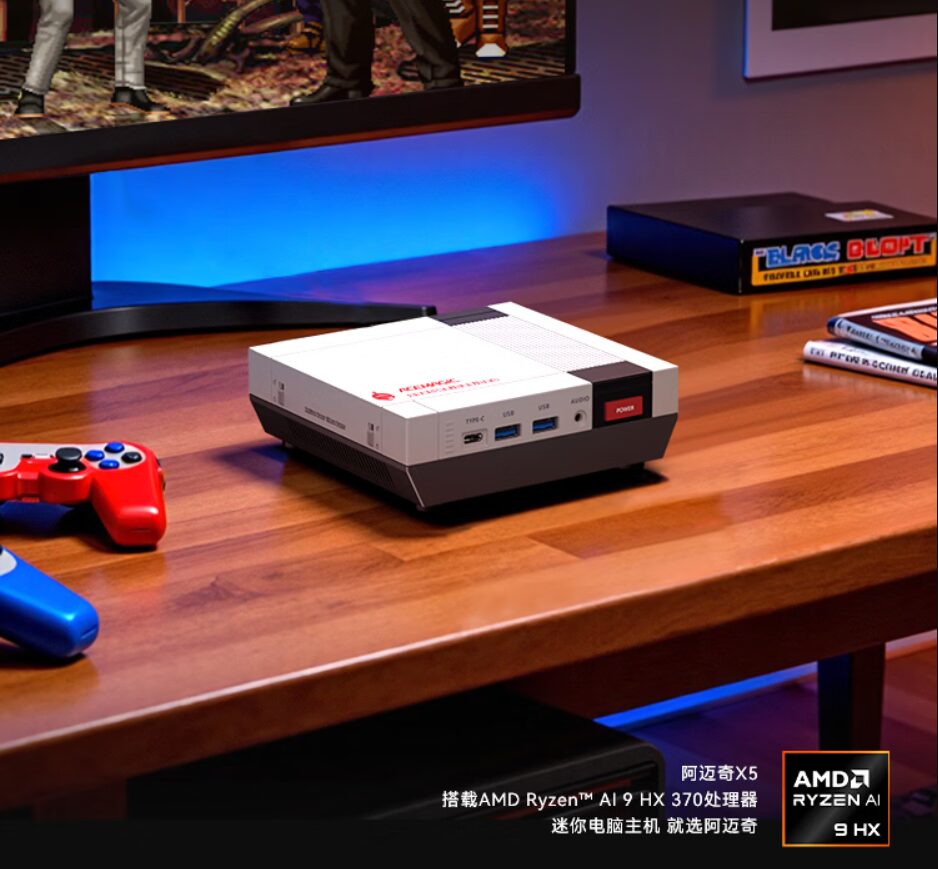
Put it on your shelf and it reads like a piece of nostalgia. Plug it in and it wants to run modern games and AI workloads. Acemagic’s Retro X5 is a reminder that retro styling and high-performance silicon are now marketing bedfellows – and that powerful mobile AI chips are leaking into ever-smaller PCs.
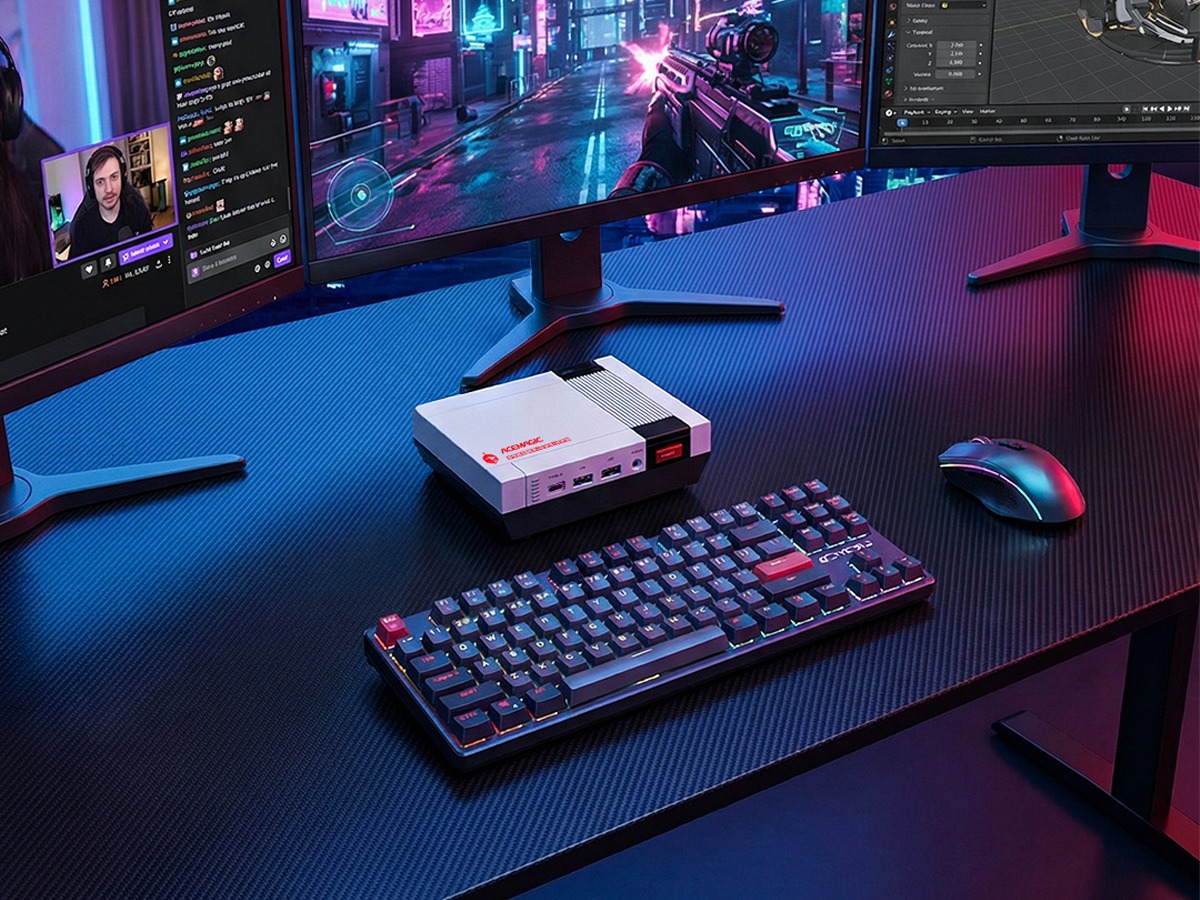
Why this matters
Mini PCs have long been a compromise: compact bodies, modest cooling, and laptop-level silicon. The Retro X5 flips that script by packing AMD’s Ryzen AI 9 HX 370 – a 12-core, 24-thread Strix Point chip that can boost to 5.1GHz – along with integrated Radeon 890M graphics and an NPU to deliver up to 80 TOPS of combined AI performance. That makes it less of a ”thin client” and more of a tiny desktop that claims gaming and local AI chops.
What Acemagic ships, exactly
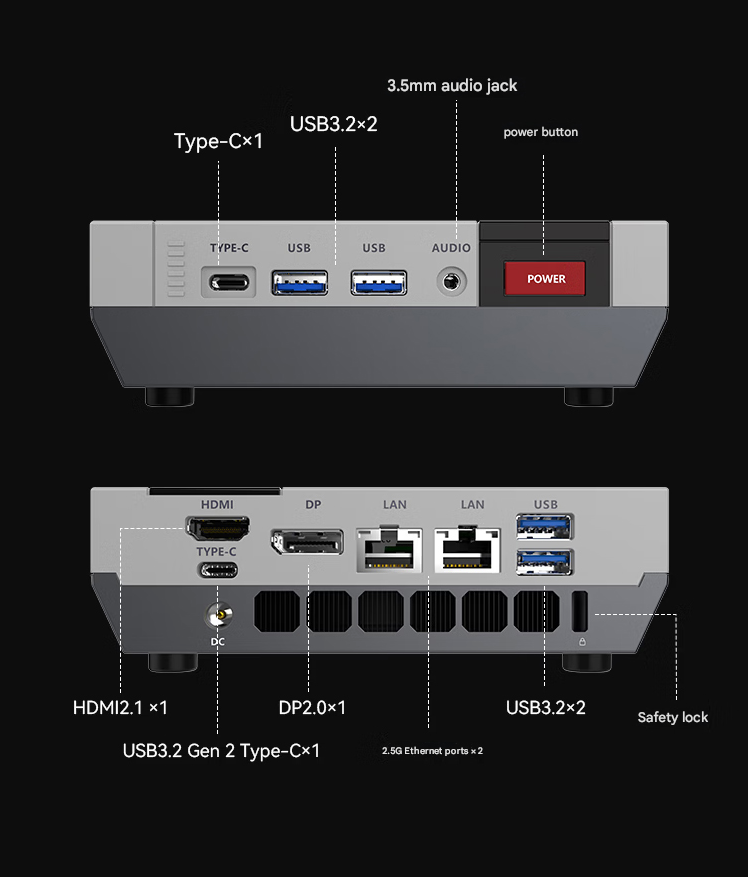
The Retro X5’s publicly listed specs read like a wishlist for power users in small footprints: the Ryzen AI 9 HX 370 with Radeon 890M (RDNA 3.5, 2,900MHz), up to 128GB of dual-channel DDR5-5600, two PCIe 4.0 x4 M.2 slots for up to 4TB of storage, and a cooling system Acemagic calls Fresh Air Cooling System 3.0 (dual copper heat pipes, copper fins, centrifugal fan). For connectivity you get USB4 with 100W PD, USB-C and multiple USB-A ports, HDMI 2.1, DisplayPort 2.0 (supporting up to four 8K displays), dual 2.5Gb Ethernet, Wi‑Fi 7 and Bluetooth 5.4. It ships with Windows 11 Pro and supports external GPUs via the USB4 port.
Price, availability and the obvious caveat
Acemagic has started selling the Retro X5 in China with a base price of CNY 6,499 (about $941). The company lists international pages but has not confirmed global launch timing or localized pricing.
Context: mini PCs, integrated AI, and nostalgia as packaging
Putting HX-series silicon – chips normally destined for gaming laptops and compact desktops that expect robust cooling – into a retro-styled box is a sign of two broader moves. First, AI accelerators and beefy iGPUs are becoming standard features across consumer PC SKUs, not just premium workstations. Second, smaller PC makers are using eye-catching designs to differentiate in a crowded market where specs alone no longer sell.
Other boutique mini-PC makers have previously squeezed desktop-class chips into tight cases, but those builds often required aggressive cooling, loud fans, or higher price tags. The Retro X5 appears to try the same trick while leaning hard on nostalgia to make it a living-room conversation piece.
Where this could stumble
There are trade-offs. HX chips are powerful but thirsty; without a roomy chassis and generous thermal headroom they can thermal-throttle under sustained loads. Acemagic’s Fresh Air Cooling System 3.0 sounds engineered for the job, but real-world thermal curves and noise levels will be the deciding factors – especially if you expect desktop-like frame rates for long gaming sessions.
Another practical limit: external GPU support over USB4 is convenient on paper, but bandwidth and driver maturity still leave eGPU setups behind native PCIe x16 cards for raw performance. So while the Retro X5 can be expanded, don’t count on turning it into a full-blown desktop replacement without compromises.
Who wins, who loses
Small hardware brands and enthusiasts win: they get a novel product that mixes style and serious silicon. AMD benefits from broader use of its mobile Strix Point platform outside laptops. Buyers who prize compactness plus capable integrated graphics and on-device AI will find the proposition attractive.
Losses are subtler. Low-end discrete GPUs face pressure if integrated RDNA 3.5 is truly competitive with entry-level cards. And mainstream PC makers that compete on conventional, sober designs may see niche buyers siphoned off by the novelty factor.
What to watch next
Demand real-world reviews focused on thermals, fan noise, sustained CPU/GPU clocks, and the practical limits of the advertised 80 TOPS AI figure. Also watch pricing and configurations as the Retro X5 moves outside China – regional variants could add warranty and service questions that matter for buyers worldwide. Finally, keep an eye on whether this trend – retro or otherwise – becomes a recurring tactic for mini-PC makers trying to stand out when specs are otherwise similar.
For now, the Retro X5 is a neat proof that the mini-PC field keeps getting more ambitious: it’s less about shrinking components and more about repackaging desktop-level capability into something small enough to tuck under a TV – with a big dose of nostalgia tacked on.