

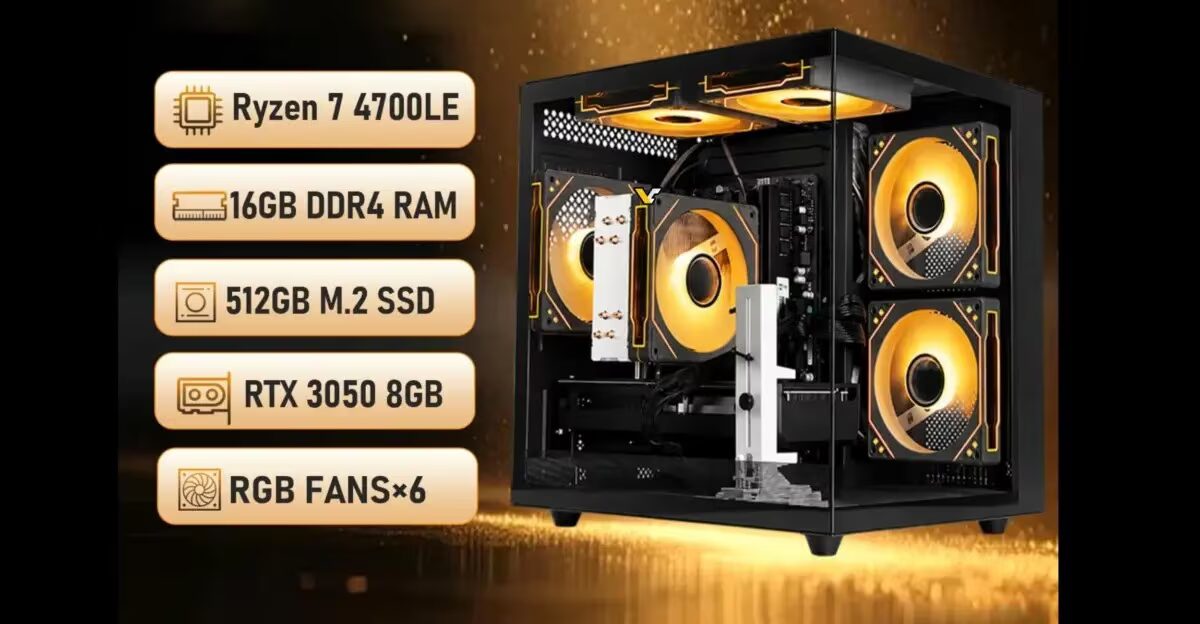
Amazon has listed a ready-to-run desktop PC powered by the Ryzen 7 4700LE, an OEM-only processor that isn’t sold separately. The catch? This chip is based on AMD’s 2019 Zen 2 architecture-making it a ”new” CPU built on a four-year-old design.
The desktop, sold by Qehi, combines the Ryzen 7 4700LE with an Nvidia GeForce RTX 3050 featuring 8GB VRAM, 16GB of RAM, and a 512GB SSD. This all comes in a compact case with a transparent side panel, RGB lighting, and multiple cooling fans, priced at $800. This positions it within the entry-level gaming PC segment, where aesthetics are emphasized alongside specifications.
The Ryzen 7 4700LE offers eight cores and 16 threads, boosting up to 4.2 GHz, with an 8MB L3 cache and a 65W TDP. It is closely related to the 2020 Ryzen 7 4700G but lacks integrated graphics and operates at slightly lower clock speeds. In comparison to the older Ryzen 7 3700X, the 4700LE trails mainly due to its smaller L3 cache-8MB versus 32MB on the 3700X-while sharing the same Zen 2 core count.
This release exemplifies how OEMs extract value from older processors. AMD often recycles chips from previous architectures for budget-friendly builds, a practical approach given retail pricing demands. For instance, the Ryzen 5 5500, based on the newer Zen 3 architecture, remains prevalent in affordable PCs because of its cost effectiveness rather than cutting-edge performance. Similarly, Nvidia’s RTX 3050 continues to be popular in budget systems despite newer GPU options existing.
From a purchasing standpoint, the key consideration is whether the $800 price delivers sufficient value. In the U.S., alternatives with newer Intel Core i5 12th or 13th generation processors paired with the RTX 3050 are available at similar prices, and deals on systems with RTX 4060 GPUs occasionally appear. Qehi’s challenge is not the Ryzen 7 4700LE’s eight cores but competing against these newer CPU options, aggressive discounts, and consumer preference for more recognized platforms.
AMD’s approach of reintroducing older Ryzen models in OEM desktops is common in certain markets but lags behind the mainstream gaming PCs led by Intel’s latest generations and Nvidia’s newest graphics cards. For gamers and PC enthusiasts seeking the latest hardware, this $800 Qehi desktop may feel dated. However, for buyers prioritizing affordability and design over cutting-edge specs, it offers a compelling entry point with a retro appeal.