

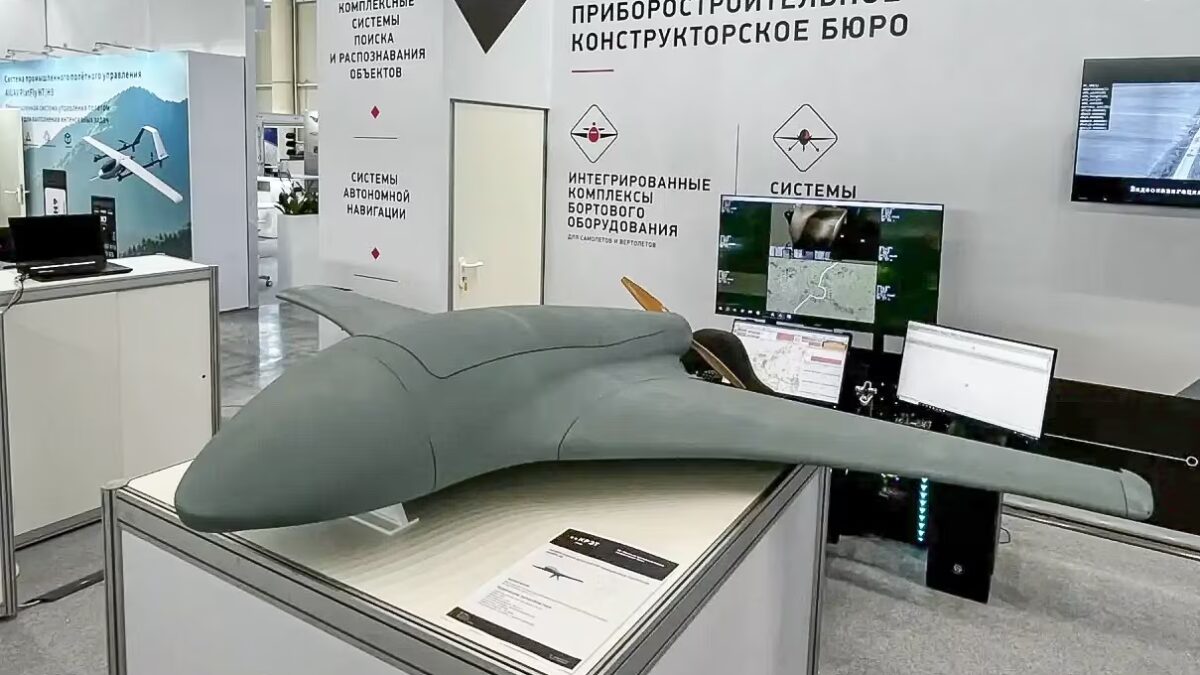
Rostec’s Radioelectronic Technologies division has introduced its first civil drone series, called Saturn, debuting at Drone Expo 2026 in Kazan. The lineup includes two electric models: the heavier Saturn-30 designed for delivery and monitoring tasks, and the lighter Saturn-10 focused on surveillance and search missions. Both drones run on domestically sourced components and feature autonomous navigation powered by computer vision and AI.
The project went from concept to flight testing in just six months, according to Rostec-a rapid pace for Russia’s drone industry, where manufacturers now need scalable, adaptable UAVs rather than one-off prototypes. These drones are pitched for a range of civil applications, from infrastructure inspection and forest monitoring to last-mile logistics and search-and-rescue operations.
Russia’s drone industry has seen growing activity from companies like Geoscan and ZALA, known chiefly for mapping and industrial inspection. Rostec’s Saturn line targets similar demand but adds delivery capabilities and focuses on state-backed applications aligned with Russia’s broader push to develop domestically controlled unmanned aerial systems.
Saturn drone specifications and features
- Saturn-30 weight: 30 kg
- Top speed: 180 km/h (Saturn-30)
- Operational ceiling: 3,000 meters
- Flight time: up to 1 hour (Saturn-30)
- Payload capacity: up to 7 kg (Saturn-30)
- Saturn-10 weight: 10 kg
- Flight time: around 30 minutes (Saturn-10)
- Designed for monitoring and search tasks (Saturn-10)
In practical terms, the Saturn-30 bridges the gap between lightweight observation drones and heavier cargo UAVs. With a 7 kg payload capacity, it can carry more than cameras or sensors-it is suited for small deliveries like medical supplies or tools. Its 180 km/h speed also supports longer-range missions. Meanwhile, the Saturn-10 is built for rapid deployment: lightweight, easy to launch, and ideal for urgent aerial reconnaissance and search operations.
Rostec has not disclosed pricing, delivery timelines, or manufacturing plans. The program appears to be focused on validating flight capabilities and onboard electronics stability before moving into certification, software refinement, and securing customers. That phase typically takes the most time for Russian drone developers before beginning production.
Russia’s government is heavily investing in unmanned aviation, establishing dedicated centers and support programs to boost producers of drone systems. For Rostec’s Saturn series, the key challenge will be moving beyond trade shows to mass production and operational deployment, likely targeting 2026-2027 for serial releases.