

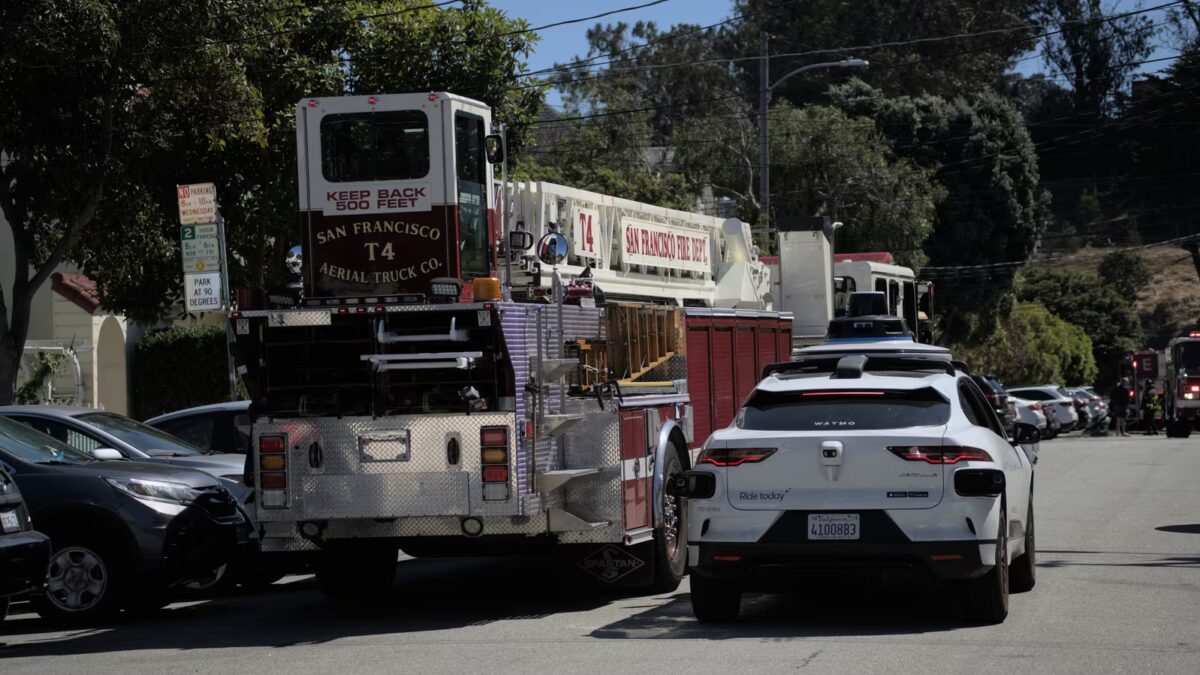
The US National Highway Traffic Safety Administration (NHTSA) has issued a stern warning to autonomous vehicle developers: stop putting emergency responders at risk. Recently, self-driving cars have increasingly interfered with police, fire trucks, and ambulances, delaying critical response times. The agency is demanding concrete fixes, not promises, from companies by the end of July.
NHTSA’s administrator Jonathan Morrison sent a pointed letter to AV operators outlining that the problem isn’t just about rare glitches. When autonomous cars freeze in front of fire stations, fail to respond to traffic cops’ hand signals, or block ambulance access, it creates serious safety hazards-not minor technical faults. Such behavior jeopardizes lives during emergencies.
Though NHTSA’s letter doesn’t list specific incidents, several high-profile cases have highlighted these issues. In March, a Waymo vehicle in Austin, Texas, blocked an ambulance rushing to a fatal shooting near a bar. Police had to physically move the robotaxi, causing dangerous delays. While a stuck car in traffic can be inconvenient, the stakes are vastly different when emergency responders are involved.
According to Wired, emergency service leaders from various cities expressed growing frustrations in a March meeting with regulators. In San Francisco and Austin-both early testbeds for Waymo’s autonomous taxis-officials reported more frequent stalls and uncooperative behavior from AVs during active emergency calls. San Francisco Fire Chief Patrick Rabbit specifically called out Waymo vehicles for blocking fire station exits, impeding fire crews. In Austin, AVs also ignore first responders’ manual signals.
NHTSA challenges with autonomous vehicles and emergency responders
For US regulators, this is no longer a futuristic debate about driverless cars but a pressing public safety issue on real streets. In 2023, California suspended Cruise’s autonomous taxi permit after incidents including one where an AV dragged a pedestrian after a collision. Cruise responded by pulling back nationwide and limiting testing. This set a precedent: regulators are prepared not only to issue warnings but also to halt operations if needed.
Waymo remains the only major company running large-scale commercial robotaxi services in multiple cities-Phoenix, San Francisco, Los Angeles, and Austin. The broader their footprint, the harder it is to attribute these troubles to pilot program hiccups. If self-driving cars can’t reliably navigate chaotic emergency scenes-full of flashing lights, temporary traffic changes, and urgent human commands-scaling the technology will face serious regulatory roadblocks.
The issue goes beyond simple technical hurdles. Autonomous systems must detect not only sirens and flashing lights, but also temporary detours, makeshift barricades, hand gestures from officials, and unpredictable behavior of other vehicles on the scene. While human drivers can get overwhelmed too, AVs hesitating silently and freezing mid-lane creates dangerous situations.
NHTSA plans to convene meetings with developers by late July to hear their solutions. The key question is whether companies will propose universal protocols for interacting with emergency services or just patchwork fixes for individual cities. A weak response could trigger stricter restrictions or operational bans-actions already seen before in the robotaxi industry.
As autonomous vehicles aim to expand, their ability to cooperate with first responders will be a critical test. Regulators and the public won’t tolerate driverless cars that hinder those trying to save lives. This challenge is likely to define AV development over the next year.