

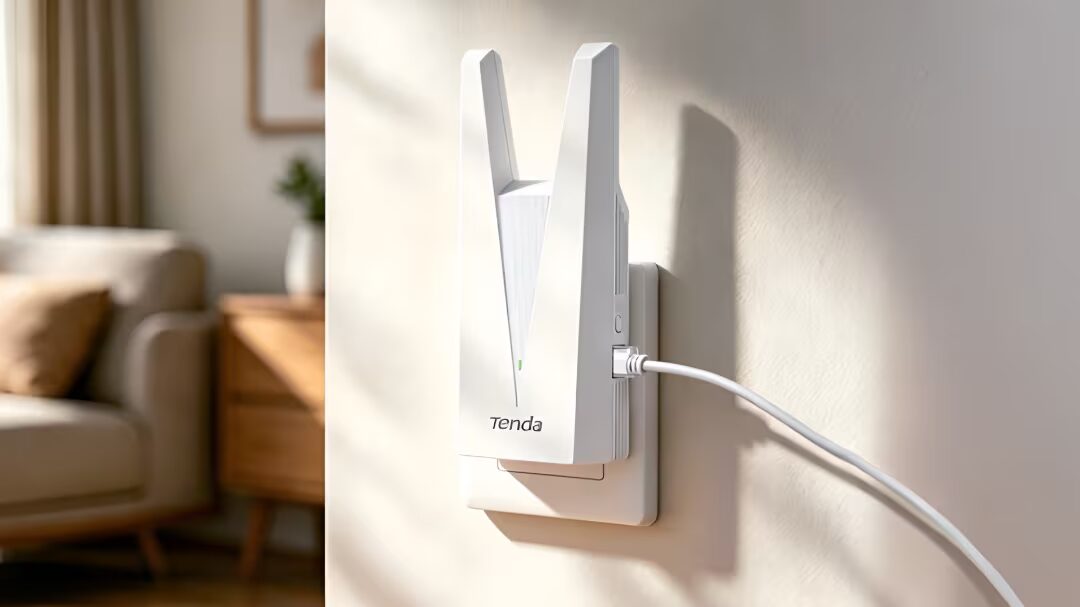
Tenda just launched the A33 V2.0 in China-a budget Wi-Fi 6 signal booster priced at an aggressive 169 yuan (about $24) during its introductory offer. Designed to solve the all-too-common home Wi-Fi dead zone, this device can act as both a repeater and a wall-mounted router, promising solid coverage up to 100 square meters. After the launch period, expect the price to increase to 209 yuan.
Classified as an AX3000 device, the Tenda A33 V2.0 boasts a combined speed of up to 2976 Mbps: 2402 Mbps on the 5 GHz band and 574 Mbps on the 2.4 GHz band. This is standard for budget Wi-Fi 6 equipment, but the inclusion of 160 MHz channel width support at this price point is relatively rare-especially since the unit is primarily a range extender, not a full-fledged router.
Under the hood, it runs a dual-core 1.2 GHz processor that handles routing, signal amplification, and mesh networking simultaneously. This processing power is crucial in typical home setups where multiple devices-TVs, smartphones, laptops, security cameras-are connected at once. Cheaper repeaters often struggle not in benchmarks but under real-world network load.
Tenda A33 V2.0 specifications and features
- Dual-band Wi-Fi 6 (AX3000 class)
- Up to 2402 Mbps on 5 GHz, 574 Mbps on 2.4 GHz
- Support for 160 MHz channel width
- Two external omnidirectional antennas
- Four operating modes including mesh support
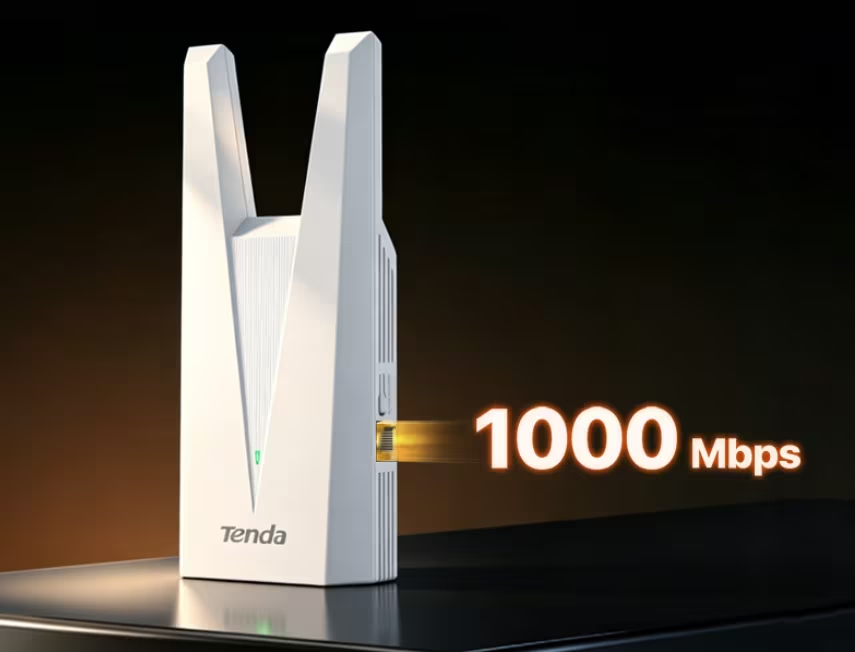
- One gigabit Ethernet port (WAN/LAN switchable)
- Coverage up to 90-100 m²
- Dual-core 1.2 GHz processor
- Wall-plug form factor measuring 86 × 37.5 × 196 mm
The A33 V2.0 sports a wall-plug form factor, measuring 86 × 37.5 × 196 mm with a built-in power supply. This design eliminates bulky adapters and extra cables that can clutter a living room or office space-simply plug it directly into an outlet.
The device’s radio setup includes two external dual-band antennas and two external FEM modules, which Tenda claims deliver a 38% signal strength boost over their older Wi-Fi 5 AX1200 repeaters. Particularly notable is the improved 5 GHz penetration through walls, addressing a common household issue where routers placed near entryways struggle to reach far corners.
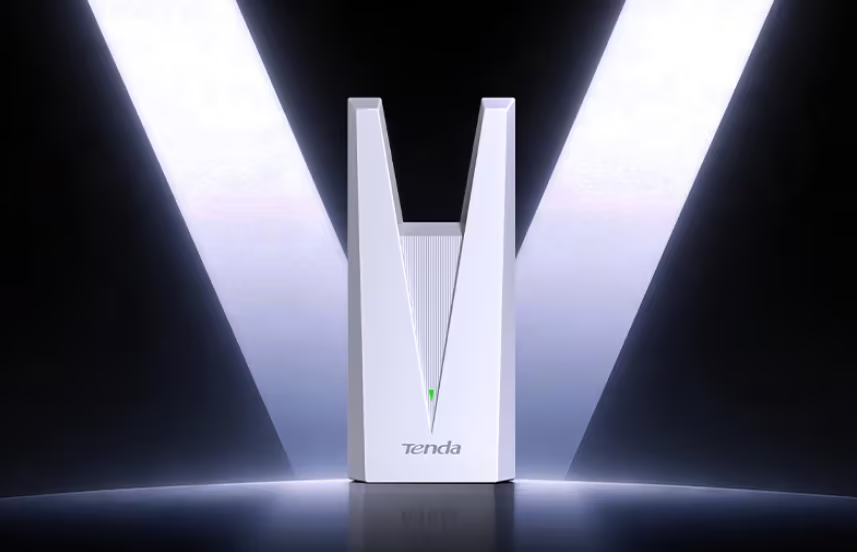
Operating in four modes-signal booster, router, wired AP repeater, and mesh-the A33 V2.0 can integrate seamlessly with existing Tenda devices to create a unified Wi-Fi network. This setup competes with offerings from Xiaomi, whose mesh kits and budget extenders are well-established, and TP-Link’s RE and Deco product lines. Standalone repeaters like the A33 tend to be more affordable than full mesh systems, though they usually offer less management convenience.
Wired connectivity is limited to a single gigabit Ethernet port that toggles between WAN input and LAN output depending on the mode. This is sufficient for connecting a desktop PC, smart TV, or game console in Wi-Fi weak spots without running long cables.
Tenda’s main selling point is value: for just $24, you get Wi-Fi 6 speeds, a gigabit Ethernet port, mesh capabilities, and decent coverage for small to medium homes. This makes the A33 V2.0 a noteworthy option for those looking to fix Wi-Fi dead zones without spending on more expensive mesh systems. If this price point holds globally, TP-Link and Xiaomi will face fresh competition in the budget extender segment worldwide.
As more devices demand reliable high-speed wireless connections, affordable and effective Wi-Fi 6 extenders like the Tenda A33 V2.0 could influence home networking decisions. The next question is whether Tenda will bring this product internationally and if it can maintain its competitive pricing to challenge established players in the crowded extender market.