

Microsoft is swapping out some of the AI models powering Excel and Outlook with its own to save on token expenses-the computational credits needed for AI responses. According to Bloomberg, tens of thousands of weekly queries in these apps now run on Microsoft’s proprietary MAI models instead of OpenAI or Anthropic solutions. For a company this size, it’s not a matter of preference anymore-it’s about controlling costs.
This shift doesn’t mean Microsoft is fully breaking off from its AI partners yet. Bloomberg reports that MAI’s share of Microsoft’s AI workload remains relatively small, particularly compared with Copilot, whose corporate usage consumes massive token volumes. Still, the change is notable: even after investing billions in OpenAI, Microsoft is hunting for ways to lower the price per AI-generated response.
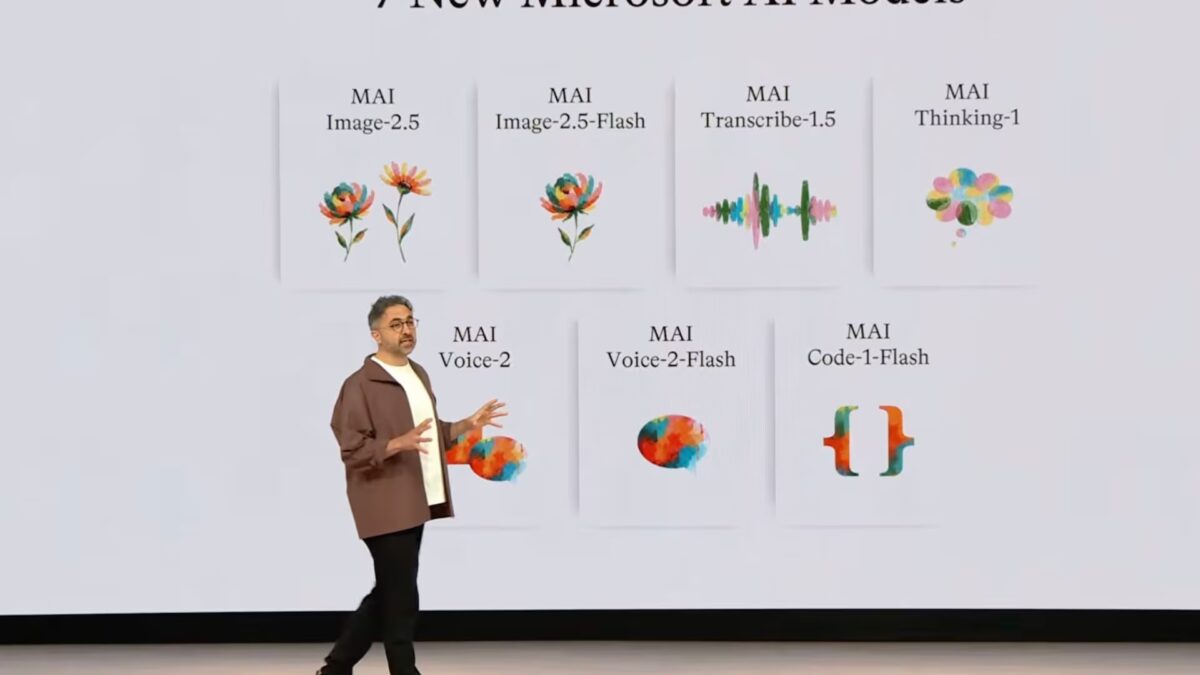
Though Microsoft hasn’t publicly commented on the move, it’s hardly a surprise. Just last month, the company unveiled seven internal AI models, including MAI-Thinking-1-its first reasoning-focused release. Microsoft emphasized these models were designed for efficient operation with low token costs.
MAI-Thinking-1 is described as a mid-sized model boasting 35 billion active parameters and an extended 256k token context window. In internal blind tests, it matched the programming capabilities of Anthropic’s Claude Opus 4.6. Alongside it, Microsoft launched in-house AI for image generation, speech recognition, voice, and coding-signaling a broad strategy to reduce reliance on external APIs.
Why Microsoft is cutting AI token costs
The core issue is clear: top-tier AI models are simply too expensive for widespread enterprise use, especially in scenarios involving long query chains-like smart replies in Outlook or summaries in Excel. Companies pay per input and output token, so when millions of requests roll through, token pricing quickly adds up to substantial bills.
Pricing illustrates this sharply. Bloomberg notes DeepSeek charges roughly $0.44 per million input tokens and $0.87 for output tokens on its V4-Pro model. Anthropic’s Fable 5 rates spike to $10 per million input and $50 per million output tokens. OpenAI’s GPT-5.5 API runs somewhat cheaper at $5 and $30 respectively. Microsoft’s AI lead Mustafa Suleyman told Bloomberg that ”many, many people” at Microsoft burn through millions of dollars in tokens every month.
Microsoft’s relationship with Anthropic appears increasingly strained. Suleyman openly acknowledged to Bloomberg the company is paying Anthropic a lot and is actively aiming to cut those costs-or eliminate them entirely. This candid talk about the price of a partner’s AI model is rare; it frames expensive external AI as a pain point rather than a necessary tradeoff for quality. Meanwhile, Microsoft’s OpenAI pact, which runs through 2032, may no longer offer the safety net it once did as the firm braces for a future where every token counts.
This move fits into a wider industry recalibration. After the initial race for the smartest AI, companies are returning to the perennial question: what does it cost per employee, per use case? Microsoft already charges $30 per user per month for Microsoft 365 Copilot, and at that price point, margins depend heavily on how cheaply routine tasks-email summaries, text edits, spreadsheet prompts-can be handled. Assigning these frequent queries to in-house models could dramatically improve service economics.
Microsoft’s massive infrastructure investments add pressure too. The company announced plans to spend around $80 billion on AI and cloud data centers this fiscal year. With such soaring capital expenditures, it makes business sense to push workloads onto its own AI models running on its own hardware instead of paying premium rates for external compute.
The real test won’t be in laboratory benchmarks but in everyday office tools. If Microsoft can maintain quality in Excel, Outlook, and Copilot while expanding MAI’s use, it could significantly strengthen its position by 2026 and squeeze external AI vendors in future contract talks. For OpenAI and Anthropic, this signals that even their biggest corporate partner is scrutinizing not just performance but the cost of every AI-generated word.