

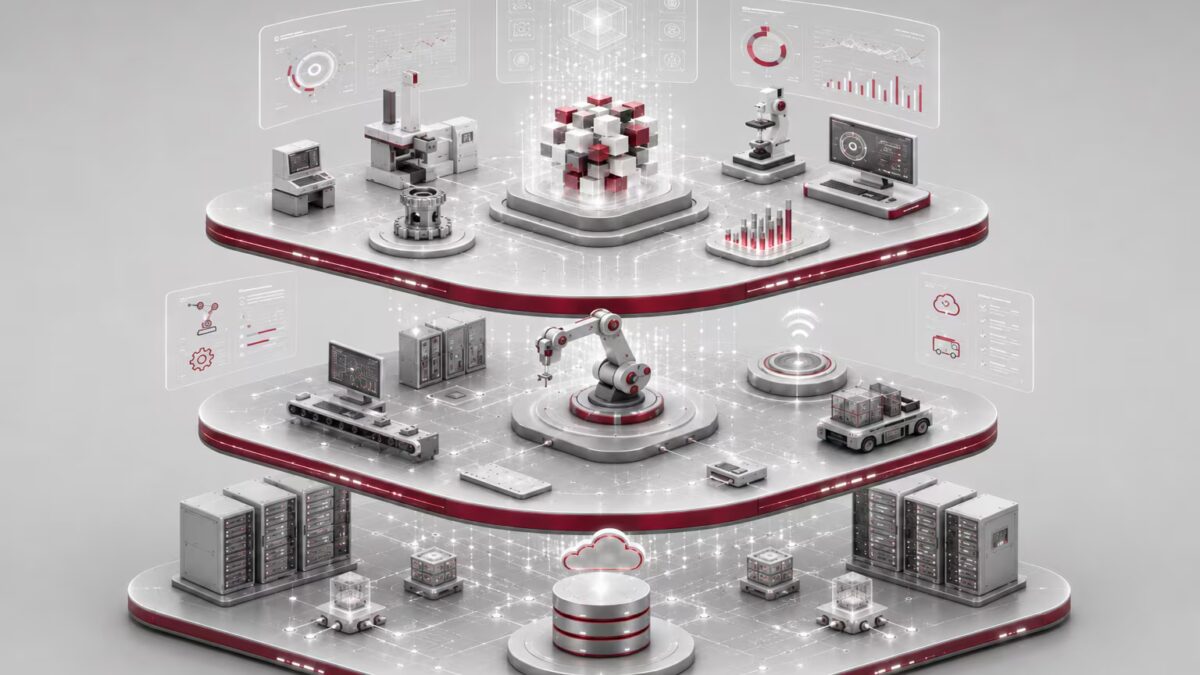
Softline has taken a pragmatic approach to import substitution in Russian manufacturing by integrating three domestic CAD systems instead of pursuing a single all-in-one replacement for foreign software. This multi-vendor setup was implemented at a major Russian industrial plant to handle diverse engineering tasks – reflecting the complexity of working not just with office files, but with design, repairs, and upgrades of production lines.
Information security requirements also played a key role. The previous foreign CAD solution no longer met the plant’s security standards, but no single Russian alternative could cover every function alone. After a thorough IT audit, Softline proposed a composite solution centered around ASCON’s KOMPAS-3D, responsible for 3D modeling of production tooling and equipment.
The setup also includes CADLib Model & Archive from JSC CSoft Development, serving as a shared data environment where engineers store drawings and technical documentation for both construction and mechanical engineering. To cover foundational engineering workflows, another local CAD product was added. Softline handled supply, implementation, and staff training through their proprietary ”Quick Start” program.
Softline integrates multiple Russian CAD tools for industrial engineering
Softline emphasizes that this approach is not about stacking more software but about consolidating competencies across three vendors in one integrated project. For industrial firms, this is typical: office software swaps happen quickly, but engineering tools are deeply tied to on-site manufacturing processes, archival formats, and equipment maintenance logic.
Impact of Western software exit on Russian engineering CAD adoption
The Russian engineering software sector didn’t pivot overnight. After 2022, many Western providers like Autodesk and Siemens Digital Industries Software curtailed or halted their operations in Russia, forcing urgent migration groundwork. Today, the conversation focuses on how to connect multiple Russian systems without disrupting production. System integrators who can assemble effective combinations from ASCON, CSoft, Nanosoft, and other local developers gain the edge.
Future of import substitution in Russian industrial software
This case signals how transitions to new engineering stacks will unfold in Russia’s industrial sector. Large factories rarely overhaul their entire software ecosystem at once. Migrations proceed in modules and segments, constrained by archive compatibility, user training, and cross-disciplinary support. Projects like this one – not simple license purchases – will drive the next phase of import substitution in industrial software through 2026.