

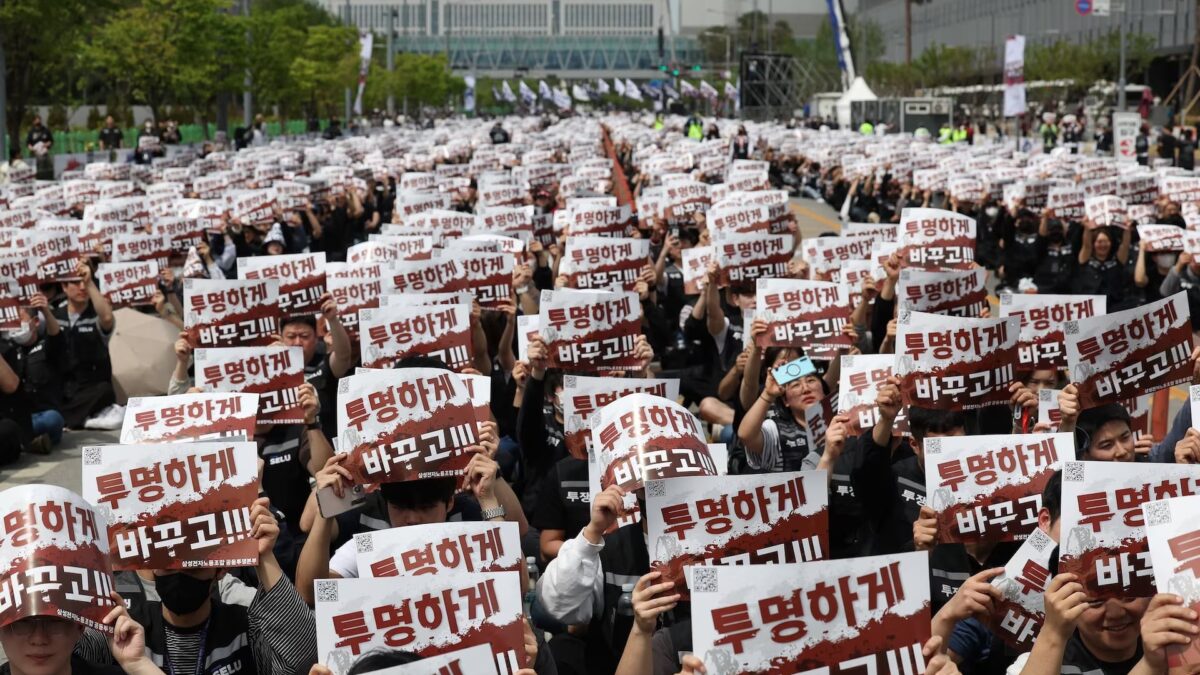
Samsung’s semiconductor division is set to receive bonuses nearly 100 times larger than those awarded to employees in its Device eXperience unit – the team behind its smartphones, TVs, and home appliances. This staggering pay gap, fueled by the surge in AI chip demand, has ignited widespread frustration among non-chip workers. In response, the DX union is planning a protest outside Samsung’s headquarters on July 16, expecting 2,000 to 3,000 participants.
At the heart of the dispute is a new agreement Samsung inked with its chip business union just over a month ago. The deal guarantees that 10.5% of the semiconductor division’s operating profit will go toward employee bonuses. If revenue targets hold, this bonus framework could last up to a decade. For workers, the difference has turned from abstract math to a glaring disparity-bonuses inside Samsung now hover around a 100-to-1 ratio between divisions.
Financial results explain some of the gap. In Q1 2026, Samsung’s chip division generated 81.7 trillion won ($62 billion) in revenue compared to 52.7 trillion won ($40 billion) from the DX segment. The profit disparity is even sharper: 5.37 trillion won ($4 billion) from semiconductors versus 3 trillion won ($2.3 billion) for consumer electronics. But while one unit basks in AI-driven windfalls, the other’s modest rewards have sparked morale issues and raised questions about corporate unity.
Tensions are already spilling into the open. Bloomberg reports that some non-chip employees have worn black clothing and masks at work as a silent protest against the deal. Prior to this, they attempted to block the company-wide vote on the bonus plan through legal means. Samsung has yet to comment on these developments.
Background of Samsung bonus conflict
The bonus controversy is just the latest chapter in a long-running clash within South Korea’s tech giant. The chip division’s union forced the deal following tough negotiations and the threat of an 18-day strike. This represents a shift for Samsung, which was once known for tightly centralized management and had only recently faced significant union protests.
To grasp the stakes, it helps to look at the chip market context. Samsung’s memory chip unit is capitalizing on the AI boom and racing to catch SK Hynix in the high-bandwidth memory (HBM) segment-an essential component for AI accelerators like Nvidia’s GPUs. Industry analyst TrendForce estimates that the global HBM market more than doubled in 2025 and expects double-digit growth in 2026. These dynamics explain why semiconductor bonuses have swelled so dramatically-they reflect genuine excess profits in the sector.
Meanwhile, Samsung’s consumer electronics business faces a tougher environment. According to IDC data, the global smartphone market grows only by low single digits annually, while TVs and home appliances have long ceased to be major profit drivers. Within one company, two very different speeds have collided: explosive semiconductor gains versus mature, slower-growing device segments. For management, this split might be logical, but for employees sharing the same corporate brand and workspaces, the bonus disparity feels deeply unfair.
The union itself is feeling the strain. Last week, 88% of semiconductor union members voted confidence in leader Choi Seung Ho, who negotiated the bonus deal. Yet membership has dropped by thousands to below 55,000-less than half of Samsung’s Korean workforce-hinting at fracturing representation and the likelihood of multiple unions vying for influence.
Choi acknowledged some employees’ dissatisfaction and pledged to narrow the bonus gap. But broad relief seems unlikely. If semiconductor profits continue to soar on AI demand while the DX segment remains in a modest growth phase, internal pressure will only mount. The July protest will reveal whether grievances settle with a rally or escalate into deeper negotiations over Samsung’s internal reward structures.