

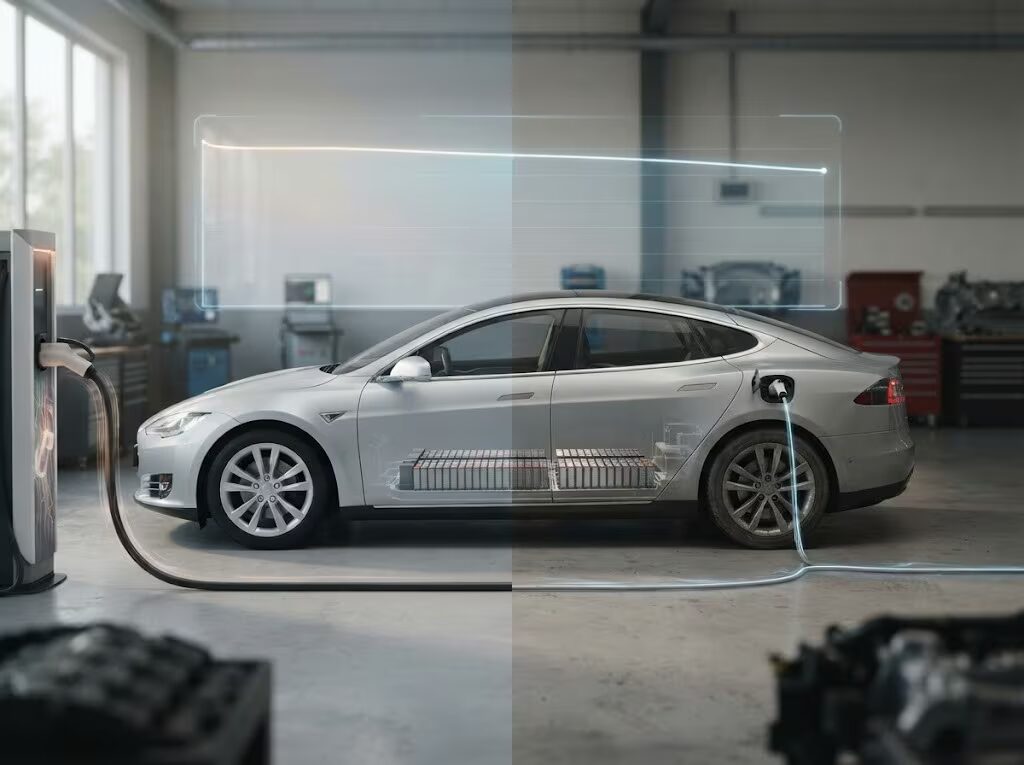
Concerns that electric car batteries fail after just a few years are losing ground. According to The Wall Street Journal’s analysis of usage data and service records, modern electric vehicle (EV) battery packs degrade much slower than early predictions suggested-often holding onto as much as 95% of their original driving range even after five years.
Take this real-world example: UK used EV dealer Richard Simons reports his five-year-old Tesla Model 3 has logged nearly 397,000 kilometers (around 246,000 miles) and remains far from being a ”grocery-getter”-still fully functional for daily driving. While one case isn’t definitive, it aligns with broader trends seen by Recurrent, a battery analytics firm, which finds that typical electric vehicles maintain roughly 95% of their initial range after half a decade on the road.
The service data supports this trend clearly. For EVs made between 2011 and 2016, battery replacements due to wear occurred in about one out of every 12 vehicles. For 2022 models and newer, that figure drops sharply to just 0.3%. Several factors contribute to this improvement: enhanced battery chemistry stability, advanced thermal management systems maintaining optimal operating temperatures, and smarter software fine-tuning charge and discharge cycles.
Certain charging habits, however, still accelerate battery wear. Telematics firm Geotab reports that frequent DC fast charging reduces battery capacity to around 89.7%, compared to 94.9% for cars that mostly use slower charging methods. Other typical battery-busters include repeated top-offs to 100%, long storage in fully depleted states, or exposure to extreme heat or cold-all scenarios familiar to anyone who uses rechargeable gadgets, but here the stakes involve thousands of dollars in potential repair costs.
Replacing an EV battery remains costly. Out of warranty, costs generally range from $5,000 to $16,000 depending on brand and battery design. However, the industry is evolving: more manufacturers are adopting modular battery architectures that allow swapping out individual cells or modules rather than the entire pack. This shift is significant because most battery warranties now cover eight years or 160,000 kilometers (about 100,000 miles).
This data sends a positive signal as US electric vehicle sales cool off following government subsidy revisions. Globally, the trend continues upward: the International Energy Agency estimates over 17 million EVs will be sold in 2024, and consultancy AlixPartners projects that by 2030, EVs will account for about 11% of new car sales in the US and up to 25% worldwide. The fading anxiety over costly battery replacements makes the used EV market easier to grow-no longer haunted by the persistent question, ”How much longer will the battery last?”