

Suno remains one of the most popular AI music generators worldwide, yet Russian users in 2026 face a mixed experience. The official site is spotty for some, ruble payment isn’t supported, and the free plan doesn’t let you download tracks. This means the real question isn’t whether Suno works in Russia anymore – it’s how to access it and what features you can realistically use.
Over two years, Suno has evolved from a flashy demo into a full-fledged music platform. Created by ex-Meta*, TikTok, and Kensho engineers, it’s even integrated into Microsoft’s Copilot. Suno claims around 2 million paying subscribers globally, almost $300 million in annual revenue, and up to 7 million tracks generated daily. Given this, it’s no surprise Russian demand remains high, even if users must navigate some workarounds.
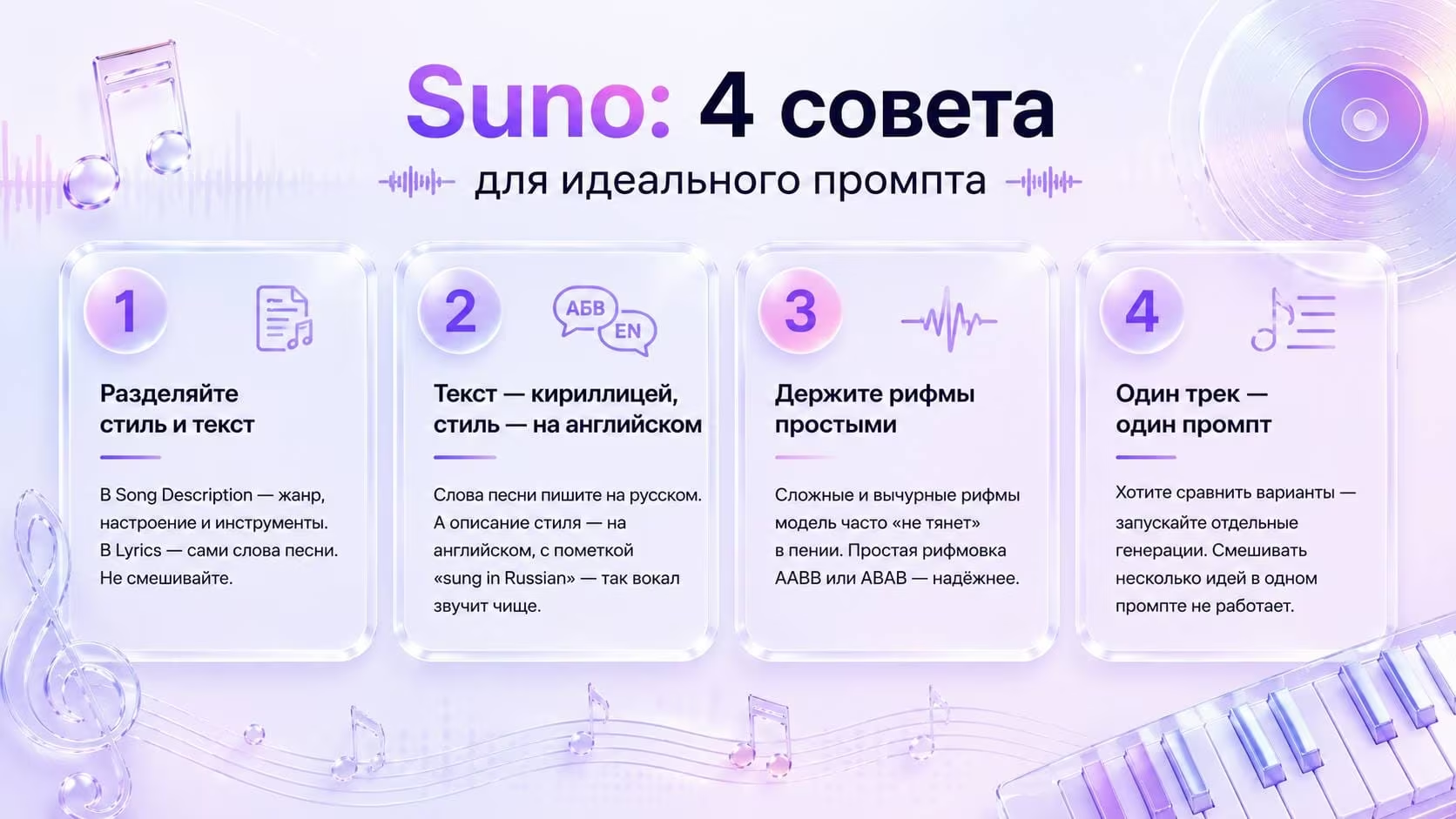
What sets Suno apart from competitors is its ability to generate complete songs-including vocals, verses, and choruses-within 20 to 30 seconds. You can opt for a simple mode requiring just one text prompt or a Custom Mode that allows separate inputs for lyrics and style. For Russian-language songs, the best results usually come from using Cyrillic lyrics combined with an English genre description plus ”sung in Russian.”
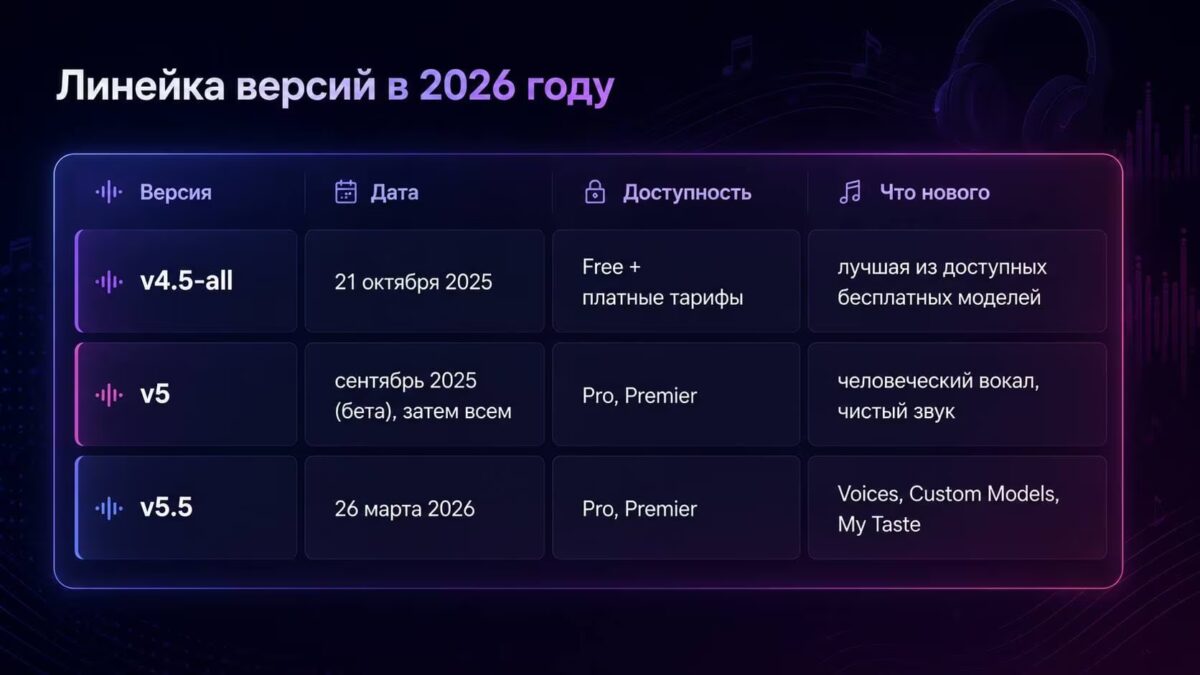
The platform now offers distinct model versions: the free tier uses v4.5-all, while paid plans default to v5.5, which adds key features like Voices for recording your own voice, Custom Models to train personalized styles, and My Taste, which tailors songs to your preferences. Voices and Custom Models require Pro or Premier subscriptions, and Suno Studio-with multi-track editing and MIDI export-is exclusive to Premier.
Accessing Suno AI music service from Russia
The most direct connection is through the official website Suno.com, but not everyone can reach it reliably. Some users access it without issue; others need a VPN with servers in the US, Germany, or the Netherlands. Subscribing often requires a foreign payment method or a middleman. Registration goes through Google or Discord, no Russian phone number needed.
- Official site: full features but often requires VPN
- Telegram bots and local platforms: no VPN needed, pay in rubles
- Neural network aggregators: unified accounts, ruble balance, sometimes documents for businesses
- Payment intermediaries: subscribe on your behalf for a fee
- App stores: need non-Russian store accounts
For Russians, the smoothest experience today comes via Telegram bots or local platforms that integrate Suno. These don’t require a VPN, allow instant track downloads, and accept payment through Russia’s Mir card, the Faster Payments System (SBP), or e-wallets. Tracks cost roughly 12 rubles each. The downside: you deal with a middleman, which can limit advanced settings like Custom Mode.
Neural network aggregators hold a middle ground for users handling music, text, and images. They offer a single dashboard, ruble payment support, and sometimes business invoicing. The tradeoff: commissions reduce savings, and their interfaces lack the depth of Suno’s native app.
If you want full access to v5.5 features like Voices and Custom Models, going through a payment intermediary to buy a Pro or Premier subscription is usually necessary. This isn’t about saving money but securing full functionality and commercial rights. It’s a go-to for professionals making music regularly.
As a contrast, while Suno excels at quick vocal tracks designed for social media, gifts, short clips, and memes, it’s less precise with instrumental complexity. That’s where competitors like Udio shine, especially in genres like jazz, classical, and ambient, offering higher-quality 48 kHz stereo output. Still, Suno leads on speed and ease of end-to-end song creation.
Suno AI music service licensing, pricing, and limitations
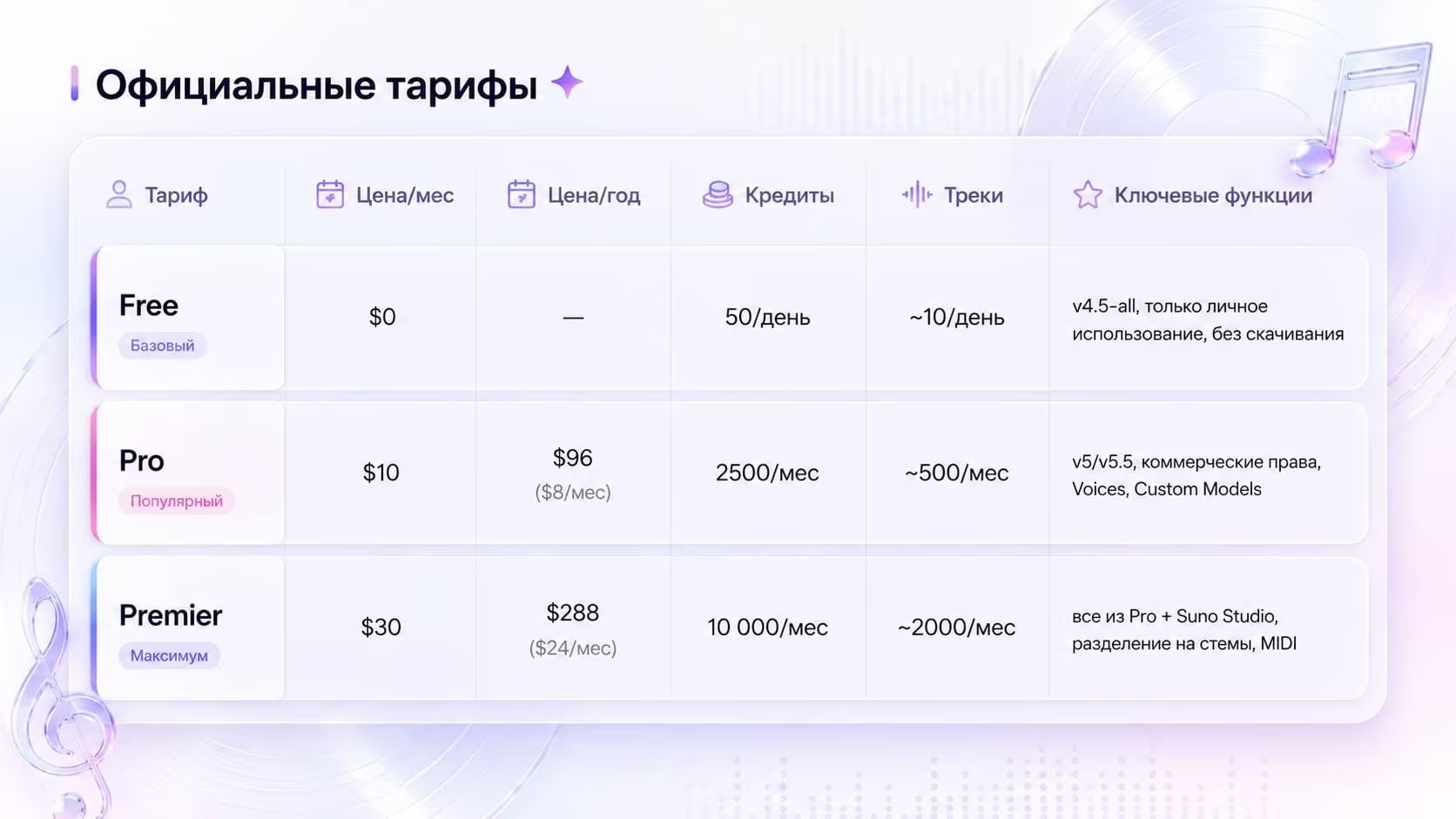
Suno’s pricing is straightforward. Each track costs about 5 credits. Unused credits don’t roll over month to month, and purchased extras only remain valid while your subscription is active. The free tier is mostly for trial; it restricts downloads and lacks commercial licensing.
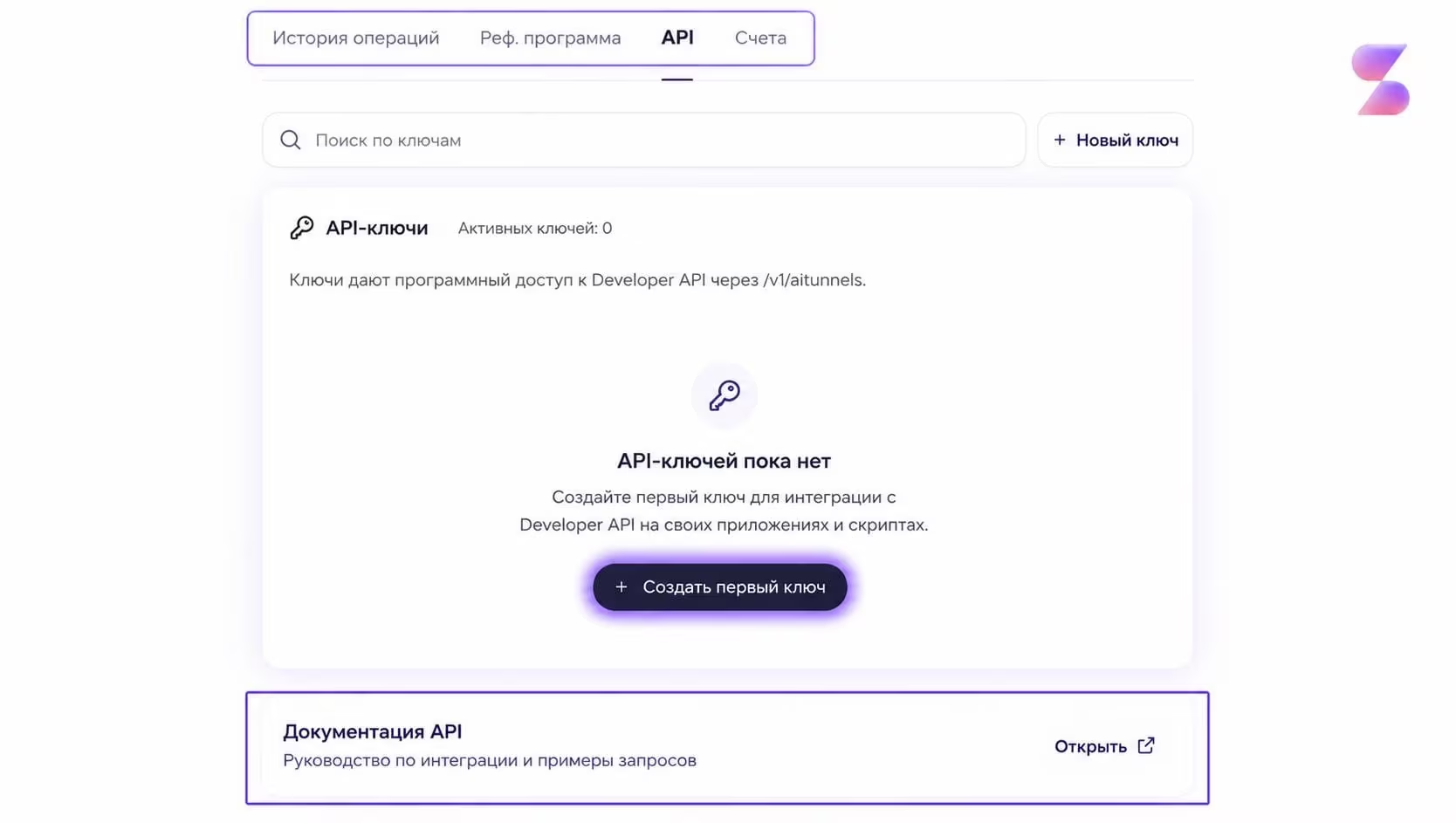
For business use-monetized YouTube videos, ads, games, or branded content-you’ll need at least Pro. Premier adds Suno Studio and more advanced editing tools. Suno has no public API in 2026; beta access is limited to partners, so embedding Suno into other apps isn’t trivial.
The legal side of AI music remains murky. Until late 2025, Suno trained on datasets including copyrighted works, creating a gray area around some tracks. The company struck a deal with Warner Music Group and started shifting to licensed catalogs in 2026. However, ongoing litigation with Sony Music leaves the legal grounds unsettled.
Russia adds a unique twist: its law states only humans can be authors. If a track is entirely AI-generated without clear human creative input, the legal authorship is questionable. Suno’s paid plans grant users rights to their tracks, but this doesn’t override Russian specifics. Using AI music commercially there requires understanding how the track was made and proving human involvement.
Suno also has practical weaknesses. Users get a finished stereo mixed track with minimal control over the process. There’s no way to upload reference audio, weight parts of a prompt, or easily compare multiple generations other than generating each anew. Professionals often treat Suno as a quick sketch or idea generator, finishing arrangements later in a traditional DAW.
If you want to create a one-off track with minimal fuss in Russia, local bots or aggregators with ruble payment and no VPN are your best options. For regular, licensed commercial use, subscribing to Pro or Premier-often via a middleman-is worth the extra hassle and cost. Those craving precise sound engineering should weigh Suno against alternatives like Udio, MiniMax Music, or new Google DeepMind music models. Suno’s growth in Russia depends heavily on stable direct access and a legal, local payment system.
*Meta is officially banned in Russia as an extremist organization.