

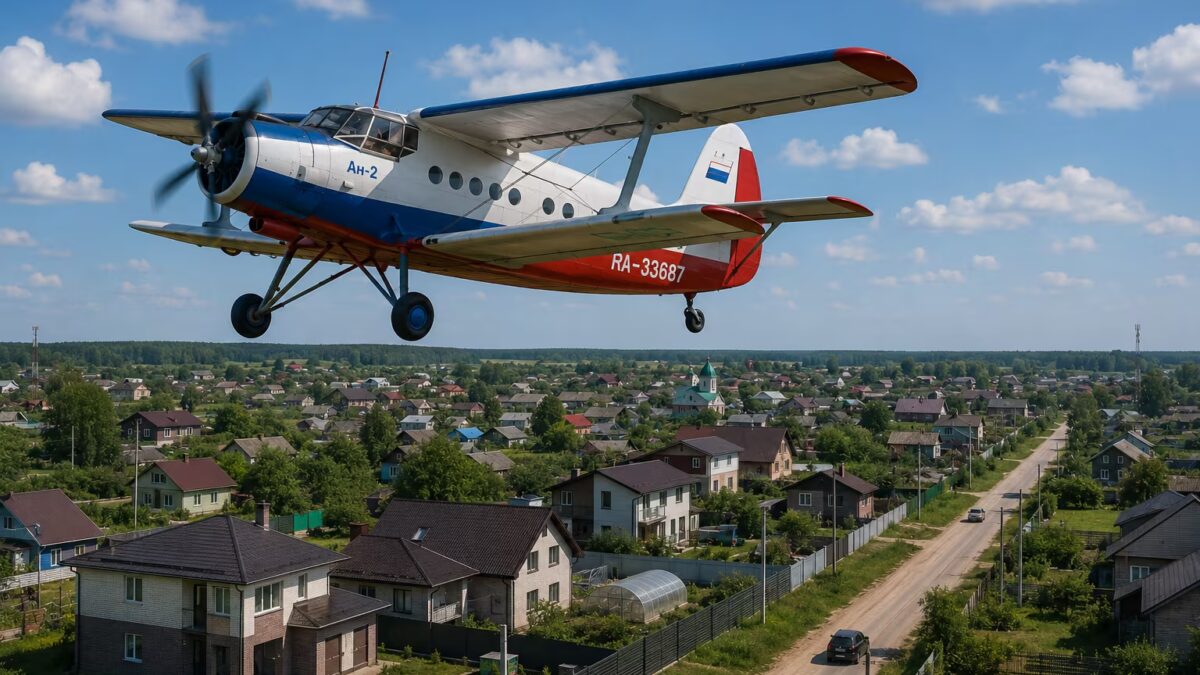
Russia has officially issued a type certificate for the legendary An-2 biplane, a workhorse of light aviation for decades. This certification isn’t just bureaucratic-it paves the way for extensive modernizations, including installing a new VK-1200 turboprop engine and upgrading onboard systems. The Siberian Scientific Research Institute of Aviation named after S. A. Chaplygin has been officially appointed as the domestic developer for the aircraft’s modernization.
Gennady Abramenkov, Deputy Head of Russia’s Ministry of Industry and Trade, emphasized that the new certificate defines permissible design changes and operation rules for the An-2. For commercial operators, this legal clarity is a major boost. Modernizing the plane no longer means navigating vague regulations based on decades-old documentation. Beyond engine replacement, plans also include specialized variants tailored for passenger transport, cargo shipments, agricultural work, and patrol duties.
The An-2 is a rare example of an aircraft introduced in 1947 that remains vital for everyday tasks in Russia. Over 18,000 units have been built worldwide, valued for their ability to take off and land on short, unprepared airstrips with minimal fuss. The idea to swap its aging piston engine for a more efficient turboprop has circulated for years, aiming to boost reliability and performance.
This move also comes amid broader challenges. Russia has long intended to replace the An-2 with the new LMS-901 ”Baikal” light transport plane, but development delays have pushed timelines back repeatedly. Meanwhile, operators seek interim upgrades to keep the existing fleet viable. Certifying the An-2’s modernization is a practical solution: airlines don’t have to wait for a new model when the classic can be updated to current standards. The Ministry reports growing commercial interest in such upgrades.
The future depends on the VK-1200 turboprop’s development pace and the cost of retrofitting. If the engine enters production, the refreshed An-2 could carve out a niche in regional transport and utility aviation, where there are few alternatives. This certification-and the potential engine upgrade-could extend the An-2’s frontline service by another decade, bringing a vintage workhorse into the 21st century on its own terms.