

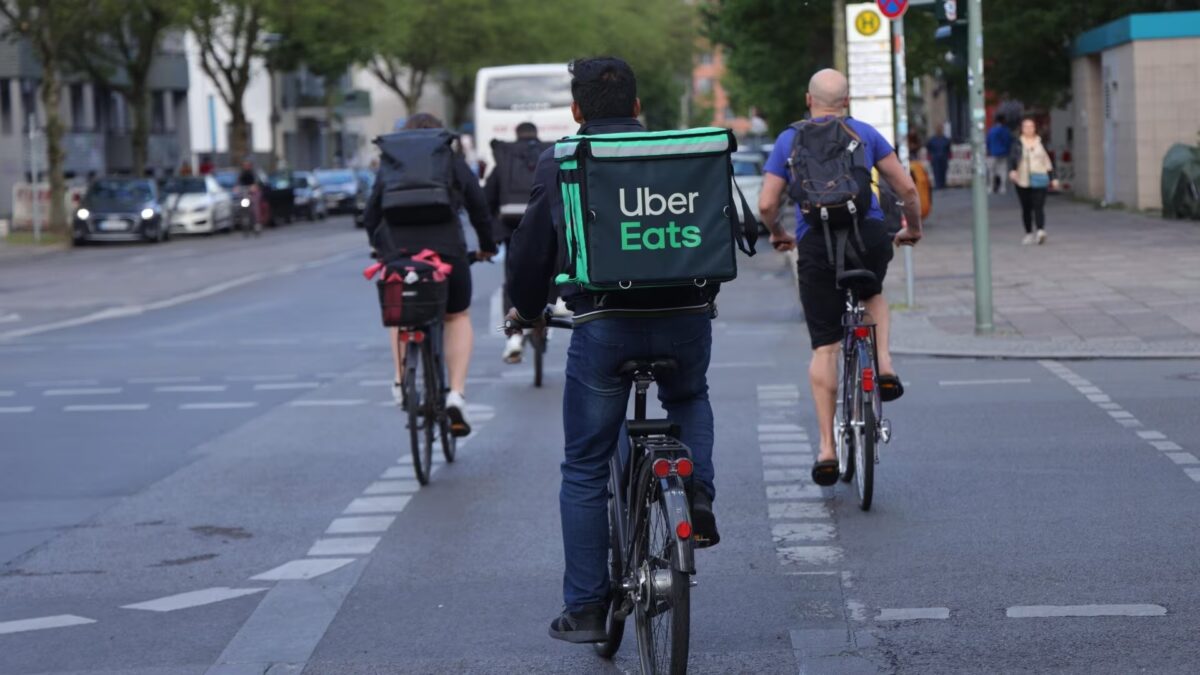
Uber has hit the brakes on launching its food delivery service in five European countries: Austria, Norway, the Czech Republic, Romania, and Greece. Just five months ago, these nations were slated as Uber’s next growth spots, but now the ride-hailing giant seems to be reconsidering its approach-potentially leaning on Delivery Hero, where it already holds a significant stake, instead of going solo.
According to the Financial Times, this pause only affects these five planned launches. Two other European markets from the same expansion round remain on track. So Uber isn’t retreating from Europe entirely; it’s reassessing whether to build from scratch or enter through existing, well-established local networks.
That existing network could be Delivery Hero. In May, the German delivery giant revealed that Uber was exploring a potential acquisition valued at around €10 billion. Prior to that, Uber already owned 19.5% of Delivery Hero shares. Delivery Hero framed this investment as a strong endorsement of its platform strategy, dubbed the Everyday App.
The overlap feels anything but accidental. Delivery Hero already operates local brands in those five countries where Uber planned to launch independently. Foodora runs in Austria, Norway, and the Czech Republic; efood covers Greece; and in Romania, Delivery Hero leans heavily on Glovo. For Uber, this means ready-made infrastructure, local teams, and apps that customers know-all without the long and costly ramp-up of building new services.
Uber’s European food delivery launch challenges
Europe’s food delivery scene isn’t a simple ”build an app and attract customers” game anymore. Established heavyweights compete aggressively for users, couriers, restaurants, and profits. Local brands often hold stronger footholds than international newcomers. That makes buying into an existing player far less risky-and arguably smarter-for Uber than launching standalone services in each market.
Delivery Hero has the clout for such a move: the company employs 40,000 staff and operates across 65 countries spanning the Middle East, North Africa, Latin America, and Asia. Ironically, it no longer has a presence in its native Germany, where Just Eat Takeaway effectively seized the market in 2021. This highlights how fierce competition is within the European delivery sector.
The European delivery space has seen similar consolidation before. DoorDash’s 2021 €7 billion acquisition of Finnish startup Wolt boosted its continent-wide footprint. Just Eat Takeaway has spent years snapping up assets and later pruning less profitable markets. The industry’s unspoken rule: buying a ready network is cheaper than pouring resources into slow, uncertain expansion.
From a financial viewpoint, food delivery remains less profitable than Uber’s core ride-hailing business. In Europe, this is further complicated by ongoing legal battles over courier classification and various regulatory hurdles. The larger the market, the steeper the cost to enter. With Delivery Hero already entrenched where Uber was set to start, pausing launches makes sense as a move to avoid paying twice for the same turf.
The next steps hinge on Uber’s potential acquisition of Delivery Hero. A full buyout would instantly strengthen Uber’s position across multiple European countries and unlock access to Delivery Hero’s global network. If a deal falls through, Uber will likely return to piecemeal launches-now competing alongside DoorDash (via Wolt), Just Eat Takeaway, and established local services that already have built-in restaurant and courier networks plus loyal users.
For international observers, Uber’s strategy adjustment reflects the brutal reality of Europe’s heavily contested delivery business, where local expertise trumps global scale and strategic partnerships outpace risky startups. Watching whether Uber doubles down on Delivery Hero or resumes building alone will reveal a lot about consolidation trends and corporate strategies in a sector that continues to heat up worldwide.