

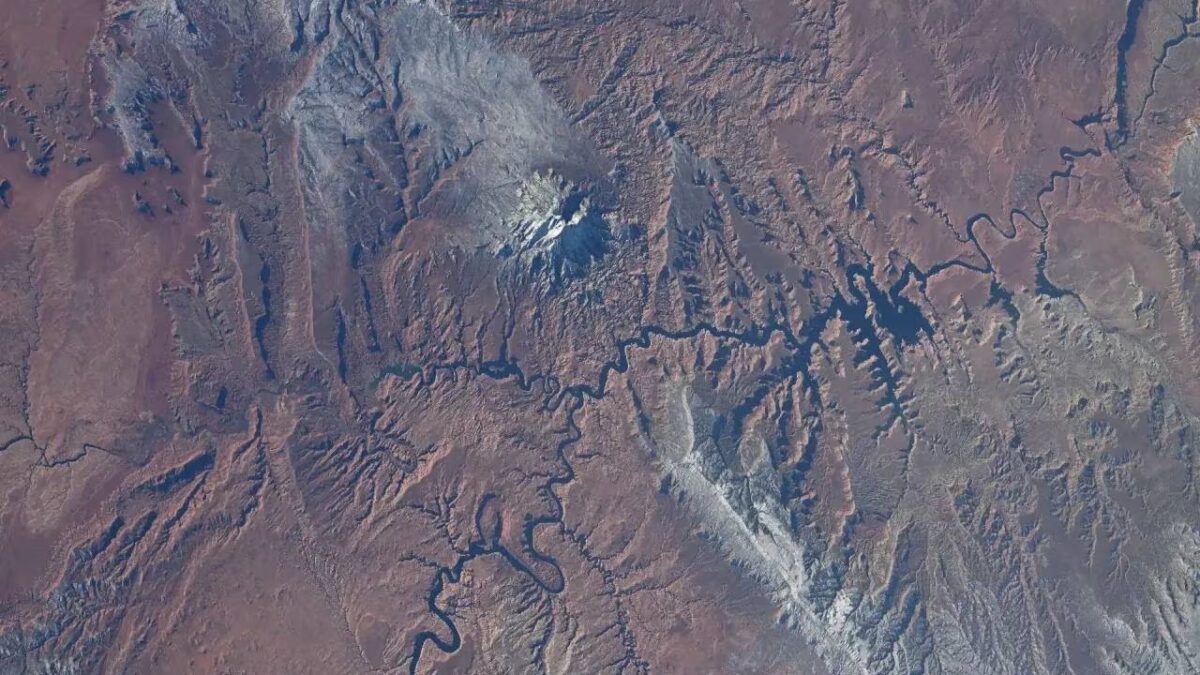
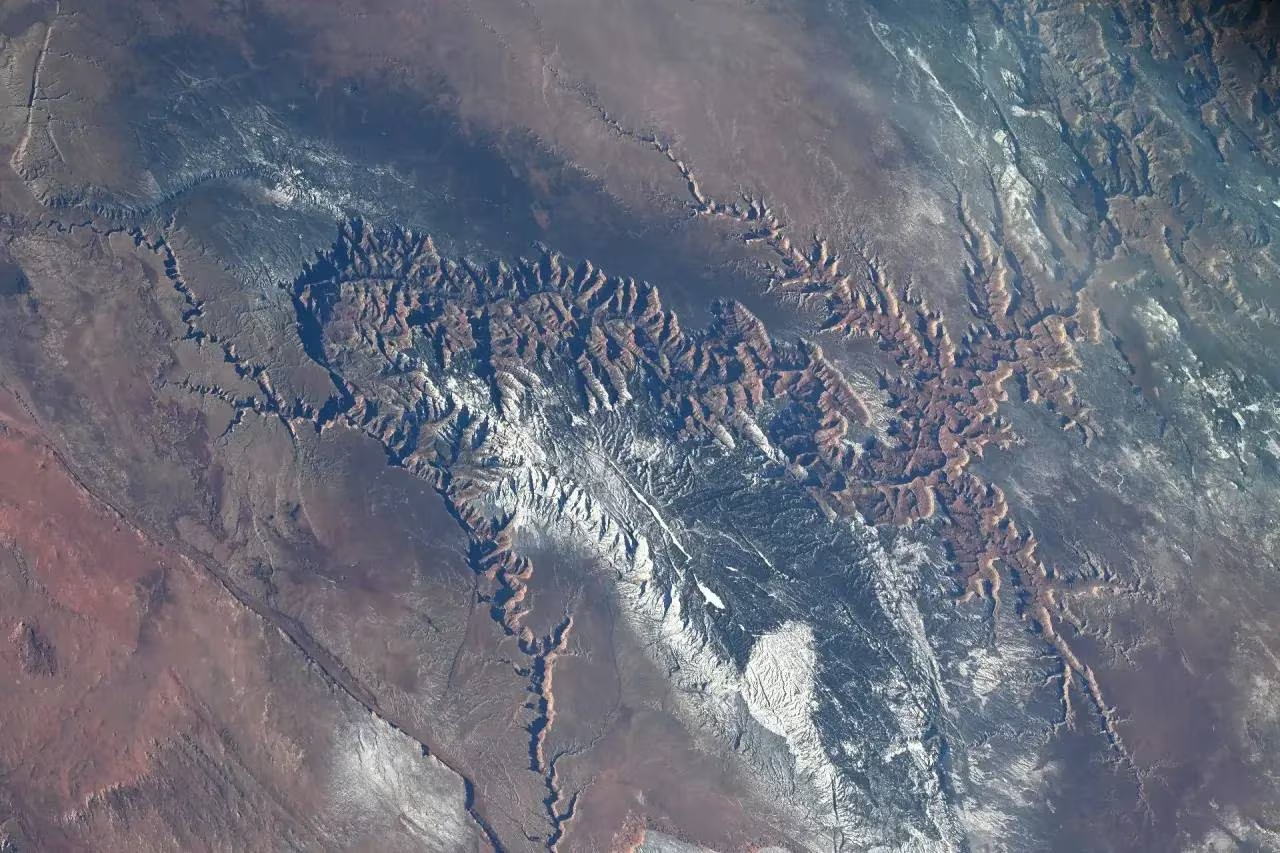
Roscosmos cosmonaut Sergey Kud-Sverchkov snapped stunning photos of the Grand Canyon and Lake Powell from the International Space Station (ISS), providing a rare orbital view of these iconic Southwest US landmarks. While the images are visually striking, they also serve a practical purpose: experts use such shots to monitor changes in water levels, erosion, and landforms in these ecologically sensitive areas listed as UNESCO World Heritage sites.
One photo showcases Navajo Mountain and Lake Powell, a massive reservoir on the Colorado River formed by the Glen Canyon Dam built in the 1960s. Lake Powell is a key water storage and flow regulation hub for the drought-prone American Southwest, supporting cities, agriculture, and power generation.
The other image highlights the Grand Canyon, one of the planet’s most studied geological formations. Carved over millions of years by the Colorado River and its tributaries, the canyon reveals strikingly layered rock strata that are easily visible from orbit thanks to their scale and vivid color contrasts. The Grand Canyon was designated a UNESCO World Heritage site in 1979 and serves as a useful reference point for calibrating satellite and orbital imaging.
Photos from the ISS like these are a regular occurrence but carry significant scientific value. NASA and other space agencies rely on the station for Earth observation, capturing floods, wildfires, dust storms, glacier conditions, and major water bodies. The ISS crew can quickly pivot their cameras between different targets and catch fleeting light conditions, an advantage over automated satellites with fixed orbits and schedules.
These images come as preparations continue for the next ISS crew rotation. The Soyuz MS-29 spacecraft has been fueled, with its launch for mission ISS-75 scheduled for July 14, 2026. The new crew includes Russian cosmonauts Pyotr Dubrov and Anna Kikina, along with NASA astronaut Anil Menon. Final checks, cargo loading, and leak tests are still underway. Assuming no delays, the new team will arrive mid-July, adding fresh eyes to the station’s ongoing Earth monitoring efforts.
The ongoing use of crewed orbital photography underscores the value of human eyes in space, complementing satellite data with real-time flexibility. As drought and climate challenges intensify, maintaining detailed observations of critical water systems like Lake Powell and geological features such as the Grand Canyon will grow more important for managing the Southwest’s fragile ecosystems and water resources.