

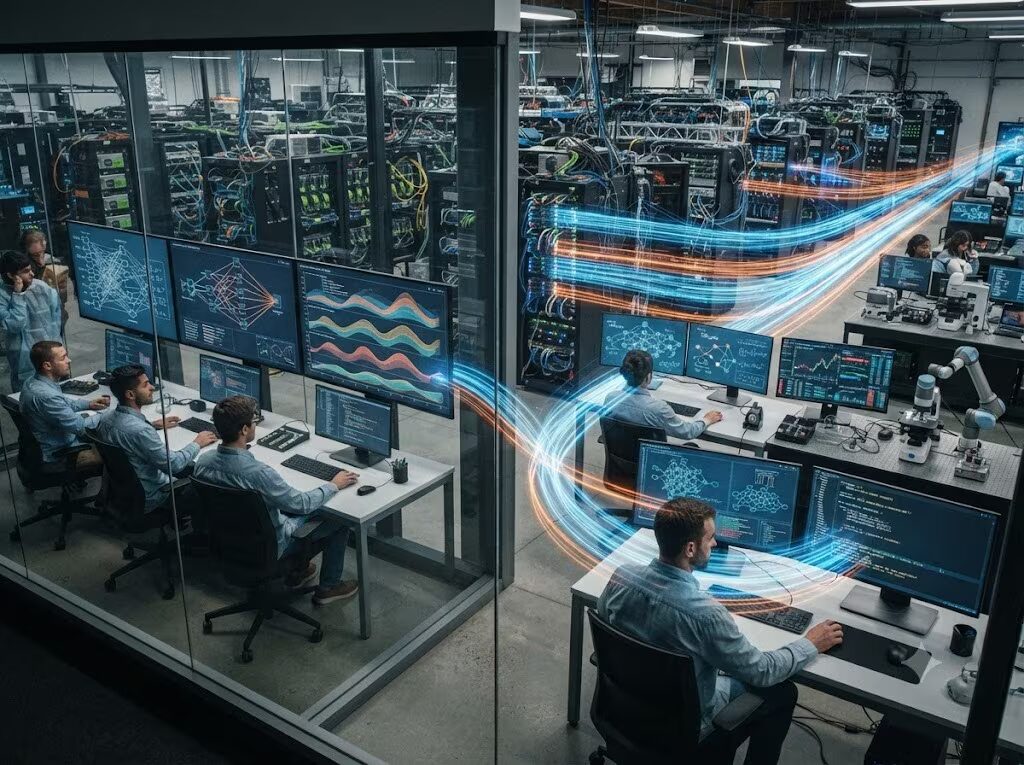
ByteDance’s research arm Seed AI reports that autonomous AI agents can significantly accelerate their learning once deployed in real-world environments. Their findings show that when agents tackle extended, practical tasks instead of just training on static datasets, their learning pace can double approximately every three months. This signals a shift for the AI industry: big players are seeking ways to improve AI without endlessly scaling up costly datasets and massive compute clusters.
Unlike traditional model retraining done in the lab, Seed AI’s approach focuses on post-deployment learning. The concept is straightforward: the AI agent evolves through experience gained from real tasks, interacting with users, and integrating with external systems. This dynamic adaptation offers an alternative to the common strategy of boosting AI quality solely by adding more GPUs and data.
To test this idea, ByteDance created EdgeBench, a benchmark consisting of 134 lengthy tasks. Each task demands at least 12 hours of uninterrupted agent work, spanning domains like software engineering, scientific research, formal mathematics, and professional analytics. The benchmark evaluates not only the accuracy of the agent’s final output but also its stamina-whether it can maintain context and avoid errors over extended periods.
This focus on endurance and continuous improvement sets ByteDance apart from most public AI agent evaluations, which usually involve brief sessions and narrow tasks. Companies like OpenAI, Google, and Anthropic have introduced AI agents as the next evolution beyond chatbots-examples include Operator, Project Mariner, and Google’s Computer Use-but these tests rarely measure performance in long, real-world workflows. ByteDance’s approach aims to quantify what truly matters for business: how many hours an agent can function autonomously and whether it improves through that experience.
The commercial stakes are high. Gartner predicts that by 2028, at least 15% of routine workplace decisions will involve agent-assisted AI systems, up from nearly zero in 2024. Meanwhile, training state-of-the-art AI models already costs tens or hundreds of millions of dollars. Interest in on-the-job learning isn’t just academic-it’s a potential cost-saving strategy for major AI platforms. If Seed AI’s results hold up across other models and independent tests, industry giants could adopt continuous learning post-launch as a cheaper way to enhance AI agents over time rather than relying solely on costly pre-release training.