

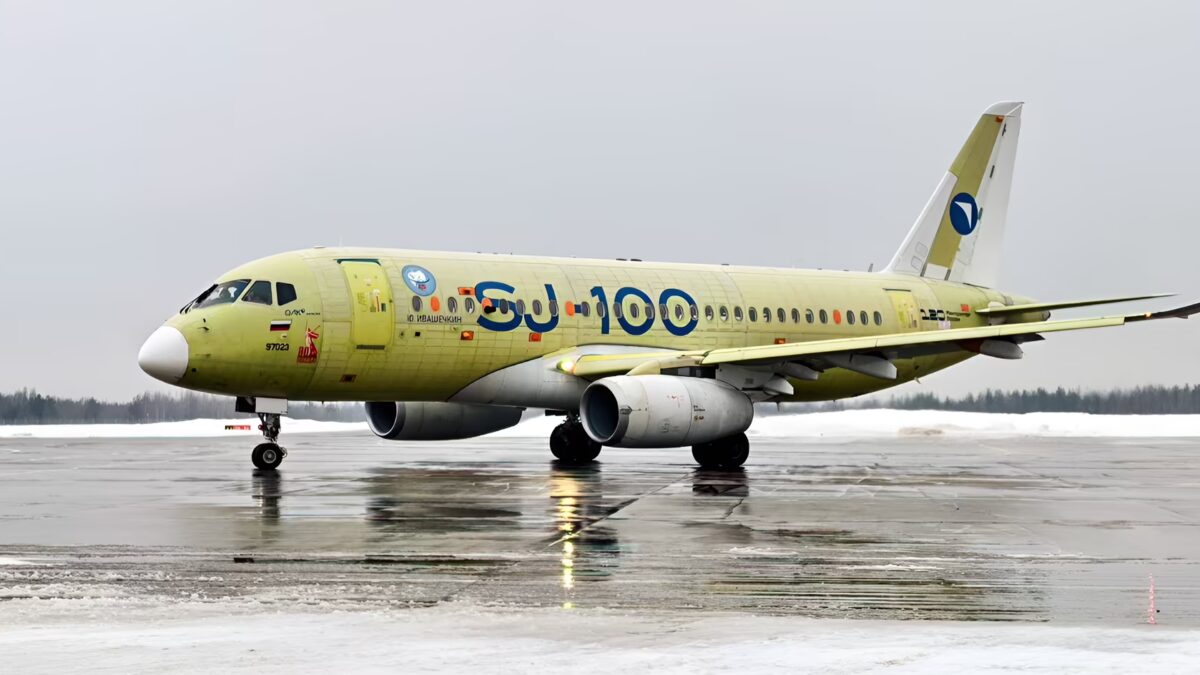
The Yakovlev production center in Komsomolsk-on-Amur has revamped its assembly line to complete the entire wing construction for the SJ-100 aircraft within a single workshop. This change eliminates the wait for preassembled components from other factories, streamlining the production process for the SJ-100, which is already manufactured with a high degree of local content. This move aims to remove a critical bottleneck in the supply chain.
Previously, the plant received partially finished wing sections assembled through internal subcontracting. Now, only the wing frame arrives, and Yakovlev carries out all subsequent steps in-house: installing systems and final assembly occur on an upgraded production floor dedicated to the task. This reduces inter-factory transport and handoffs of semi-finished parts, lowering the risk of delays caused by logistics issues, and tightening quality control.
Wings are among the most complex components in aircraft manufacturing. They integrate mechanization systems, control surfaces, and some onboard wiring-all requiring precise assembly. Consolidating these operations adjacent to the final assembly line shortens production cycles and gives engineers immediate feedback on build pace rather than relying on indirect indicators.
SJ-100 wing assembly efficiency improvements
The SJ-100 is a flagship project in Russia’s civil aviation segment for roughly 100-seat regional jets. Globally, this niche is dominated by Embraer’s E-Jets, with the Airbus A220 representing the upper end. In this competitive arena, build speed matters as much as flight performance; airlines demand not only a domestic alternative but also reliable delivery schedules.
Technical innovations of the fully import-substituted SJ-100
Aviation expert Roman Gusarov has pointed out that the fully import-substituted SJ-100 incorporates technical solutions absent from Boeing and Airbus models. However, he advises judging the plane by real operational data rather than factory milestones. For regional jets, reputation depends more on flight hours, reliability, and how swiftly the manufacturer addresses issues once the aircraft joins an airline’s fleet than on assembly line updates.
Impact of assembly consolidation on SJ-100 delivery speed
If this new assembly model truly eliminates delays in one of the program’s trickiest sections, its impact will show quietly through faster deliveries in upcoming quarters rather than splashy announcements. The SJ-100 program’s clearest barometer remains how quickly it can replace aging foreign aircraft in Russia’s regional jet market-a sector where it competes not only with fresh jets but also with extending the service lives of existing fleets.