

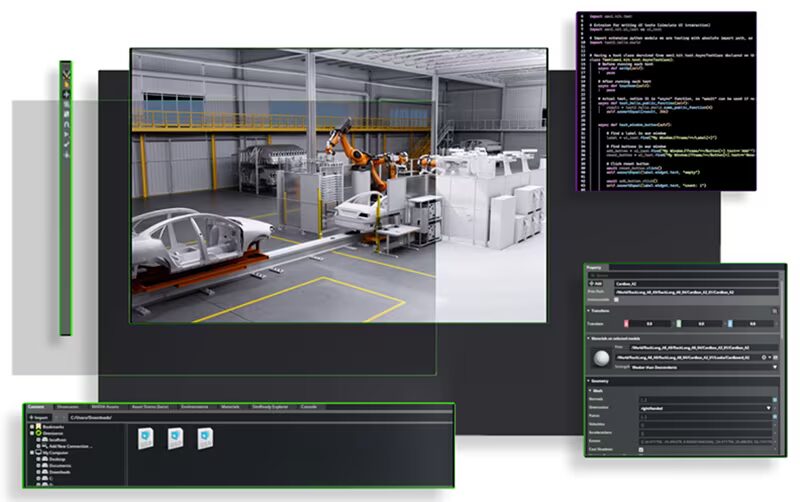
NVIDIA has quietly revamped Omniverse’s licensing, dropping the hefty $4,500-per-GPU annual fee for production deployments. Starting May 2026, companies can use the platform not only for development but also for full industrial rollout at no cost. Applications built on Omniverse can be distributed freely under the same terms. The platform itself is now free, though corporate support remains a paid service.
Previously, Omniverse was free for development only, but moving projects into production required an NVIDIA AI Enterprise subscription. Cloud providers charged $4,500 per GPU per year or offered a perpetual license at $22,500 per GPU, or $1 per GPU-hour. For studios, integrators, and enterprise teams running multiple GPUs, this became a significant expense.
Now the licensing model is straightforward: the Omniverse platform is free, community support runs via forums and Discord, and paying customers get dedicated service-level agreements (SLAs), guaranteed response times, and engineering support with NVIDIA AI Enterprise. This shift makes it easier for companies to deploy and scale Omniverse solutions without upfront license costs.
Developers integrating Omniverse components into their own products will especially benefit. The new license allows free distribution of those solutions, easing the burden on independent software vendors (ISVs) and system integrators. Commercial partners operate under a tiered support model where the first line is handled by the partner, with NVIDIA stepping in for more complex issues.
Omniverse licensing changes lower barriers to industrial adoption
This move aligns with broader industry trends focusing on lowering barriers to adoption. Autodesk, Epic Games, and Unity compete less on features than on how fast teams can start building and shipping. NVIDIA positions Omniverse as a foundation for digital twins in factories and robotics simulations. Back in 2025, NVIDIA estimated the industrial software and AI infrastructure market at tens of billions of dollars.
How NVIDIA’s open-core model drives Omniverse growth
NVIDIA’s approach mirrors successful commercial open-core models from companies like Red Hat, Confluent, and Elastic: provide a widely accessible free core product, and generate revenue through enterprise support and services. Omniverse is not becoming open source, but the elimination of production fees opens the door to broader adoption while NVIDIA maintains service revenues.
Future outlook for Omniverse adoption in industries
The real test will come in the next few quarters as partner applications and industrial pilots increase. With the cost barrier lowered, Omniverse could accelerate its push into industries where GPU license fees previously held it back.