

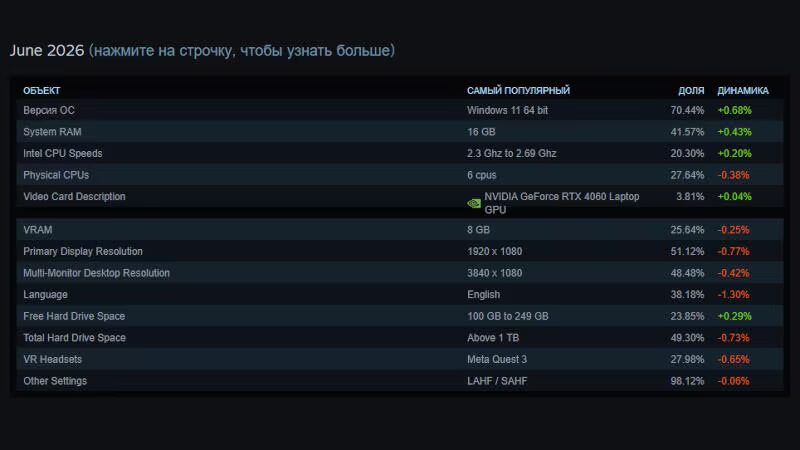
Valve’s latest Steam Hardware and Software Survey for June reveals a subtle but telling shift in PC specs among gamers. Systems running graphics cards with 16GB of VRAM are gaining ground, now accounting for nearly one in four Steam users, while SSDs larger than 1TB have slightly declined in popularity. Meanwhile, memory trends show more PCs equipped with 16GB of RAM. This reflects changing market realities amid rising memory prices, giving a raw snapshot of the PC gaming landscape today.
The real momentum lies in GPU memory sizes rather than brand wars between AMD and Nvidia. Older cards with 2GB, 3GB, and 4GB of VRAM collectively dropped about 0.5 percentage points among Steam users. Meanwhile, models equipped with 6GB, 12GB, and especially 16GB of VRAM climbed steadily. The 16GB segment grew by 0.45 points, reaching 24.5% of the total. That means nearly one in four gamers on Steam now plays with a graphics card boasting 16GB of VRAM-a spec that just a couple of years ago was reserved for high-end rigs.
On the storage front, Steam data indicates a slight drop in SSDs sized over 1TB. This dip likely reflects the impact of rising NAND flash prices, which have pushed PC builders and upgraders toward smaller, more affordable storage capacities. As a result, the share of systems with 1TB or less in SSD capacity has nudged up slightly.
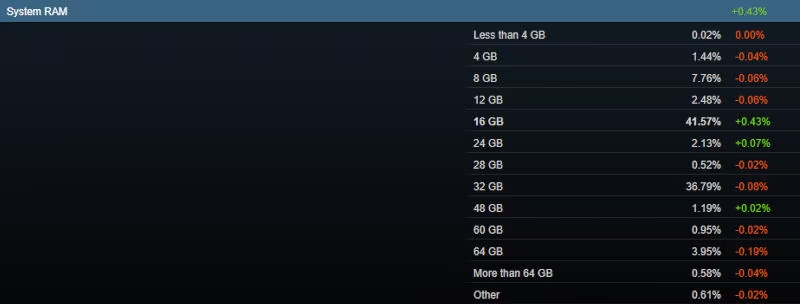
RAM capacity is also inching up, with 16GB setups gaining share. These shifts appear in line with broader market trends, where higher DRAM costs have complicated moves to even larger memory configurations like 32GB. For most gamers, 16GB remains the sweet spot for price and performance.
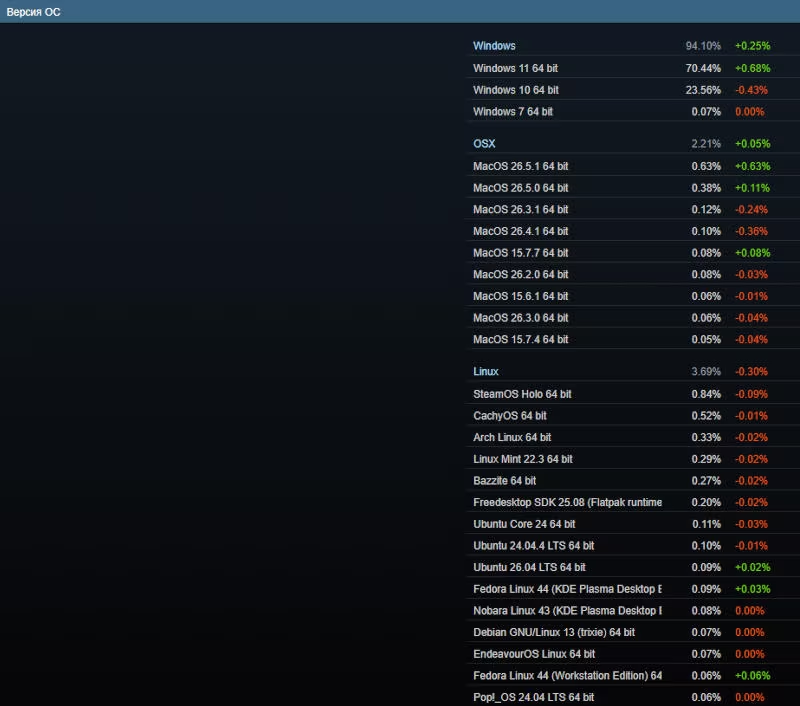
Windows remains king on Steam PCs, with overall Windows usage increasing to 70.44%, while Windows 10 usage slipped to 23.56%, signaling more users shifting to Windows 11 or other versions. The standard 1080p screen resolution still leads at 51.12%, but has given ground to higher resolutions like 1440p and 1600p. Language preferences also shift noticeably-Simplified Chinese climbed to 24.19%, strengthening its position as the second most popular interface language after English. Given China’s growing influence on PC gaming sales and online communities, such changes directly shape Steam’s user dynamics.
To put this data in perspective, Valve’s Steam Hardware and Software Survey remains one of the most comprehensive indicators of PC gaming trends worldwide, pulling from millions of active users. The rise of 16GB VRAM cards echoes the increasing demand for gaming performance as titles require higher texture qualities and ray tracing, while the retreat in large SSDs suggests price sensitivity among gamers balancing storage and budget.
Looking ahead, the next couple of months will reveal if June’s spike in 16GB VRAM GPUs and dip in large SSDs reflects a short-term adjustment to pricier components or signals a longer-term trend toward cautious upgrades and mid-range configurations. Should memory prices remain high for NAND flash and DRAM, expect continued pressure on storage capacities above 1TB and slower adoption of 32GB RAM setups, as gamers weigh cost versus performance.