

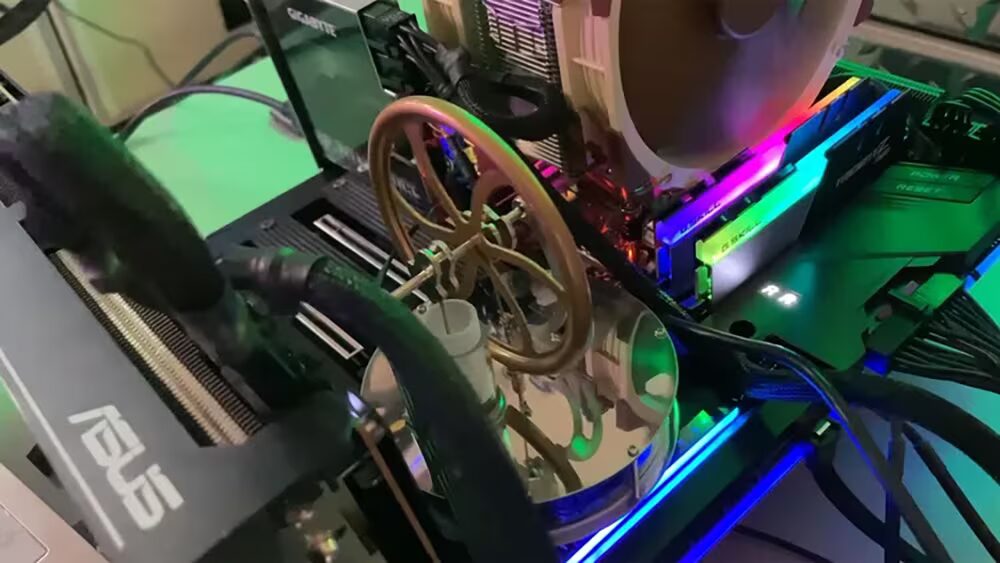
In an intriguing mix of vintage engineering and modern computing, a Stirling engine from 1816 has been powered solely by the heat generated by an AMD Threadripper 3970X CPU. While the setup is more a physics demonstration than a practical mod for PC enthusiasts, it highlights just how much thermal energy high-end processors emit.
The Stirling engine converts temperature differences into mechanical motion, a concept patented by Robert Stirling over two centuries ago. Today, these engines find niche uses in specialized power systems, cryogenics, and educational models rather than mainstream tech. This particular engine was set spinning using the thermal output of the Threadripper 3970X, a 2019 high-end desktop (HEDT) CPU known for its hefty 280-watt thermal design power (TDP)-plenty of heat to drive such an old-school heat engine.
Dave Plummer, who demonstrated this experiment, didn’t share metrics like CPU or chipset temperatures or describe any impact on system cooling. So this isn’t a new method to dissipate heat from a processor but rather an impressive and visual experiment showcasing how much energy desktop PCs shed as heat.
Small Stirling engines like this are widely available as desktop demos, typically priced between $30 and $50. They can be powered by the warmth of a cup of coffee or even a human hand. In an era where custom PCs often boast exotic cooling solutions, this simple thermal engine vividly illustrates the magnitude of heat wasted-energy that modern desktops release into the air without a second thought.
How a Stirling engine works with CPU heat
Stirling engines operate by exploiting temperature differences to create mechanical motion. Using the heat generated by the Threadripper 3970X’s 280W TDP, this vintage engine converts the processor’s waste heat into rotational energy, spinning the engine without any electrical input.
Thermal output of the AMD Threadripper 3970X
The AMD Threadripper 3970X, released in 2019, is known for its high thermal output typical of high-end desktop CPUs. Its 280-watt TDP produces a significant amount of heat under load, which is usually managed through advanced cooling solutions like liquid coolers.
Reclaiming waste heat from desktop processors
This Stirling engine experiment raises interesting questions about the potential to reuse waste heat from consumer PCs. Although using such engines for meaningful energy recovery remains impractical, they highlight the untapped thermal energy that could, in theory, be redirected for useful work or educational purposes.
As processors grow more powerful and thermally dense, creative approaches to energy reuse could find a place-if only as educational tools or niche tech novelties.