

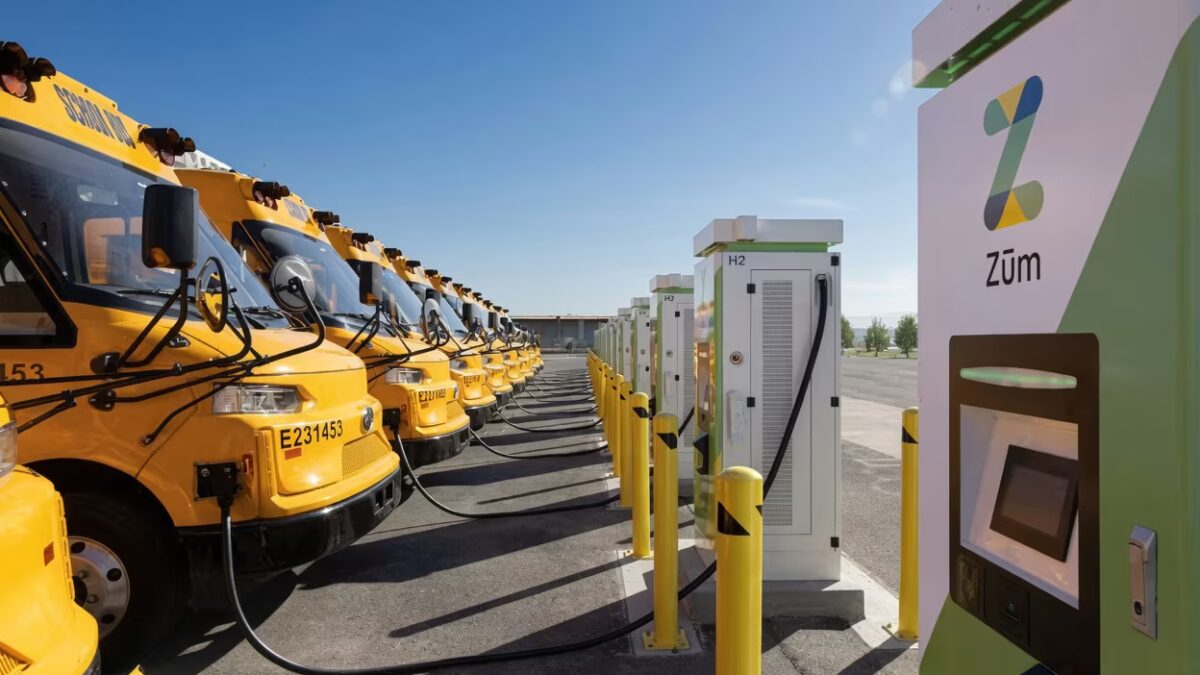
During summer breaks, 230 electric school buses across the US are doing more than just sitting idle-they’re acting as distributed energy storage units by feeding electricity back to the grid using Vehicle-to-Grid (V2G) technology. This helps smooth out peak electricity demand on scorching days, with projects running in states ranging from California to North Carolina.
According to the World Resources Institute (WRI), these buses represent a fraction of the approximately 6,700 electric school buses operating nationwide. Collectively, they can return around 8 megawatt-hours (MWh) of energy to the grid. While this volume is modest compared to the overall summer electricity demand in the US, it proves valuable on a local level-easing stress on neighborhood grids and reducing overloads that occur for a few hours each day.
Vehicle-to-Grid technology enables EVs not just to charge but also to discharge power back into the grid, essentially functioning as mobile batteries. School buses are an ideal fit for V2G because they’re mostly inactive during the summer and equipped with large traction batteries, often exceeding 200 kilowatt-hours (kWh). They can be charged during off-peak hours or at night when electricity is cheaper, then use that stored energy to support the grid during evening peaks driven by widespread air-conditioning use.
How electric school buses support the power grid with V2G technology
Currently, WRI notes that at least 31 utilities and 21 states support V2G programs involving school buses. This marks a significant leap forward for a technology that mostly lingered in pilot phases just a few years ago. The federal government’s Clean School Bus Program, launched in 2022 with a $5 billion budget, accelerated adoption by funding fleet upgrades-many of which include buses equipped for two-way charging right from the factory.
Electric school buses as flexible energy resources near local grid points
Utility interest in tapping electric school buses as grid assets is easy to understand when looking at data from PJM, the nation’s largest grid operator. PJM serves about 67 million people and sees peak loads above 160 gigawatts (GW) during extreme heatwaves. While 8 MWh from these buses is a drop in the ocean compared to that, it provides a flexible, quick-deploy resource positioned right near schools, municipal buildings, and substations-key points for managing local grid stresses.
Future growth of the US electric school bus fleet and V2G potential
WRI forecasts that the US electric school bus fleet will more than double in size within the next few years, reaching 14,625 vehicles. If a substantial portion of these buses are V2G-enabled, electric school buses could evolve from niche pilot projects into a meaningful segment of distributed energy storage-transforming the role of electric vehicles from mere passengers on the grid to active energy managers.