

Most Mac updates will center on Apple’s routine transition to the next generation of Apple Silicon chips:
- Mac Studio with M5 Max and M5 Ultra chips
- Mac mini with M5 and M5 Pro processors
- iMac with M5 chip and new color options
- Entry-level 14-inch MacBook Pro with M6 chip
- MacBook Ultra featuring a major redesign including OLED display, touchscreen, and Dynamic Island
The new baseline 14-inch MacBook Pro with the M6 chip seems designed to refresh the entry point into Apple’s pro laptop lineup without immediately overhauling higher-end models. It’s also a direct response to the growing competition from Snapdragon X-powered laptops and AI-focused Windows PCs that market local AI features as upgrade incentives.
Separately, the rumored MacBook Ultra may mark a significant redesign arriving between late 2026 and early 2027. Expected features include an OLED display, touchscreen, Dynamic Island, slimmer chassis, and M5 Pro/Max chips. This would be Apple’s first major departure toward tactile laptop screens in years, breaking its long-standing stance on keeping touchscreen capabilities strictly within the iPad line despite shifting industry trends.
Apple’s smart home product lineup is also due for a notable refresh, including:
- New Apple TV powered by the A17 Pro chip with upgraded Siri and Wi-Fi 7 support
- Refreshed HomePod mini with improved audio and a newer chip
- Full-sized HomePod featuring a redesigned Siri
- Standalone smart home hub with a 6- to 7-inch display consolidating HomeKit controls, FaceTime, and AI features
This move makes sense given competitors. Amazon’s Echo Show series has offered smart displays for years, Google aggressively develops Nest Hub, and Samsung blends SmartThings into its TVs and appliances with integrated screens. Apple’s strengths-privacy, seamless iPhone integration, and services-contrast with slower rollout and more limited product variety. The smart home hub could be the critical test to see if Apple can truly unify its home platform beyond just smart speakers.
Overall, Apple’s pipeline through 2026 may include:
- Three iPhones this fall, with two additional iPhones delayed until spring 2027
- Two Apple Watch models
- Two iPads
- Four Macs
- Up to three home devices
While routine Mac and Watch updates seem solid, more ambitious projects like the foldable iPhone and MacBook Ultra depend heavily on readiness issues such as displays, hinges, and redesigned interfaces. Expect clearer answers by fall 2026’s product launches, with a fuller picture emerging at the spring 2027 event if Apple fully embraces staggered release schedules.
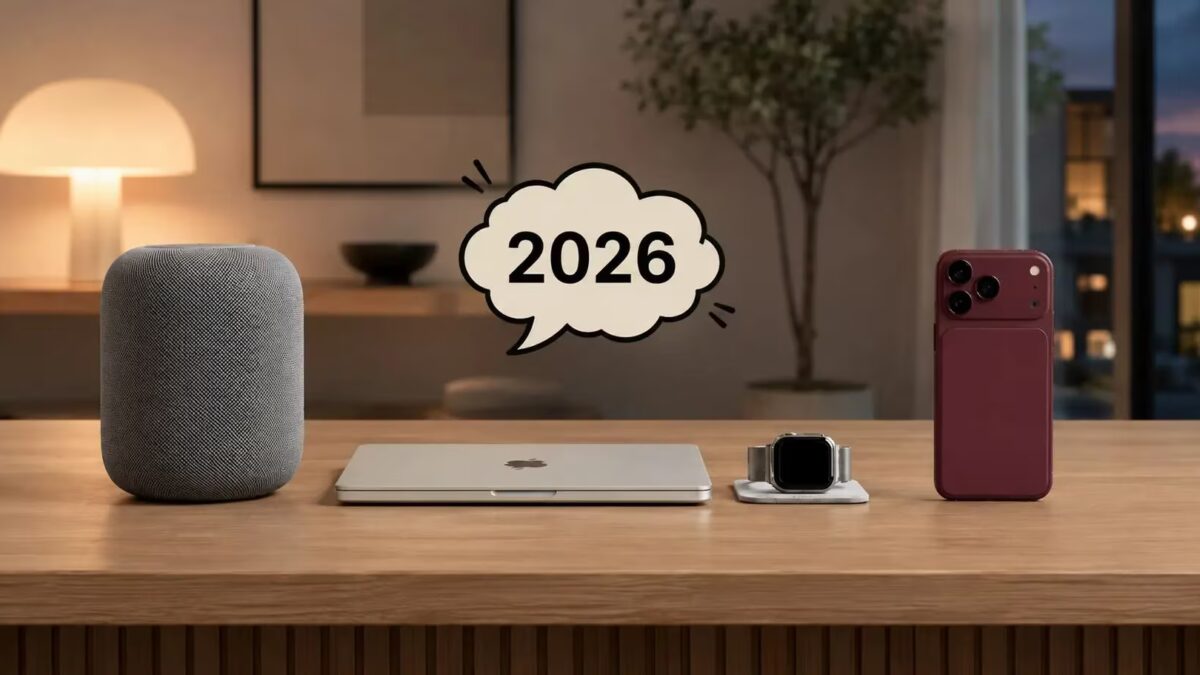
Apple is reportedly planning to release up to 16 new devices by the end of 2026. Following this year’s WWDC event, the company is shifting its focus back to hardware, with not just routine updates to iPhone, Apple Watch, and Mac models, but also new products aimed at filling long-standing gaps in its lineup: a foldable iPhone, a dedicated smart home hub, and refreshed living room devices. While some updates look like typical chip upgrades, others hint at bigger redesigns slated for 2027.
The biggest shakeup appears to be a change in Apple’s release cadence. Rumors suggest the fall iPhone lineup might narrow to only premium models, postponing more affordable base versions until the following spring. For a company that posted $391 billion in revenue in fiscal 2025, this is more than just a scheduling tweak. iPhone sales still account for over half of Apple’s revenue, and shifting model timing can ripple through the entire supply chain rapidly.
Leaks also indicate that top-tier iPhone 18 Pro models with 1TB and 2TB storage options might use slower flash memory. Though speed differences aren’t usually a dealbreaker for most buyers, Apple traditionally markets its highest-capacity iPhones as the peak technical offerings, not just larger storage variants. If true, this would be the first time in years Apple introduces an internal speed hierarchy within an iPhone generation.
Wearables are set for more modest upgrades. The Apple Watch Series 12 is expected to include a new S11 chip or equivalent, while the Apple Watch Ultra 4 could expand satellite connectivity beyond emergency SOS: enabling maps offline and photo messaging over satellite networks. This deepening of Ultra’s expedition-focused features aligns with its current positioning, despite many owners using the device mostly between gym and office.
On the tablet front, the base iPad 12 may upgrade from the A16 chip to the newer A18 or A19, boosting performance and AI capabilities. The iPad mini stands out with rumors of a switch to an OLED screen, upgraded sound via vibration actuation, and water resistance-features that could revive interest in a model that has become niche without a major display refresh.
Mac updates and smart home device refreshes
Most Mac updates will center on Apple’s routine transition to the next generation of Apple Silicon chips:
- Mac Studio with M5 Max and M5 Ultra chips
- Mac mini with M5 and M5 Pro processors
- iMac with M5 chip and new color options
- Entry-level 14-inch MacBook Pro with M6 chip
- MacBook Ultra featuring a major redesign including OLED display, touchscreen, and Dynamic Island
The new baseline 14-inch MacBook Pro with the M6 chip seems designed to refresh the entry point into Apple’s pro laptop lineup without immediately overhauling higher-end models. It’s also a direct response to the growing competition from Snapdragon X-powered laptops and AI-focused Windows PCs that market local AI features as upgrade incentives.
Separately, the rumored MacBook Ultra may mark a significant redesign arriving between late 2026 and early 2027. Expected features include an OLED display, touchscreen, Dynamic Island, slimmer chassis, and M5 Pro/Max chips. This would be Apple’s first major departure toward tactile laptop screens in years, breaking its long-standing stance on keeping touchscreen capabilities strictly within the iPad line despite shifting industry trends.
Apple’s smart home product lineup is also due for a notable refresh, including:
- New Apple TV powered by the A17 Pro chip with upgraded Siri and Wi-Fi 7 support
- Refreshed HomePod mini with improved audio and a newer chip
- Full-sized HomePod featuring a redesigned Siri
- Standalone smart home hub with a 6- to 7-inch display consolidating HomeKit controls, FaceTime, and AI features
This move makes sense given competitors. Amazon’s Echo Show series has offered smart displays for years, Google aggressively develops Nest Hub, and Samsung blends SmartThings into its TVs and appliances with integrated screens. Apple’s strengths-privacy, seamless iPhone integration, and services-contrast with slower rollout and more limited product variety. The smart home hub could be the critical test to see if Apple can truly unify its home platform beyond just smart speakers.
Overall, Apple’s pipeline through 2026 may include:
- Three iPhones this fall, with two additional iPhones delayed until spring 2027
- Two Apple Watch models
- Two iPads
- Four Macs
- Up to three home devices
While routine Mac and Watch updates seem solid, more ambitious projects like the foldable iPhone and MacBook Ultra depend heavily on readiness issues such as displays, hinges, and redesigned interfaces. Expect clearer answers by fall 2026’s product launches, with a fuller picture emerging at the spring 2027 event if Apple fully embraces staggered release schedules.