

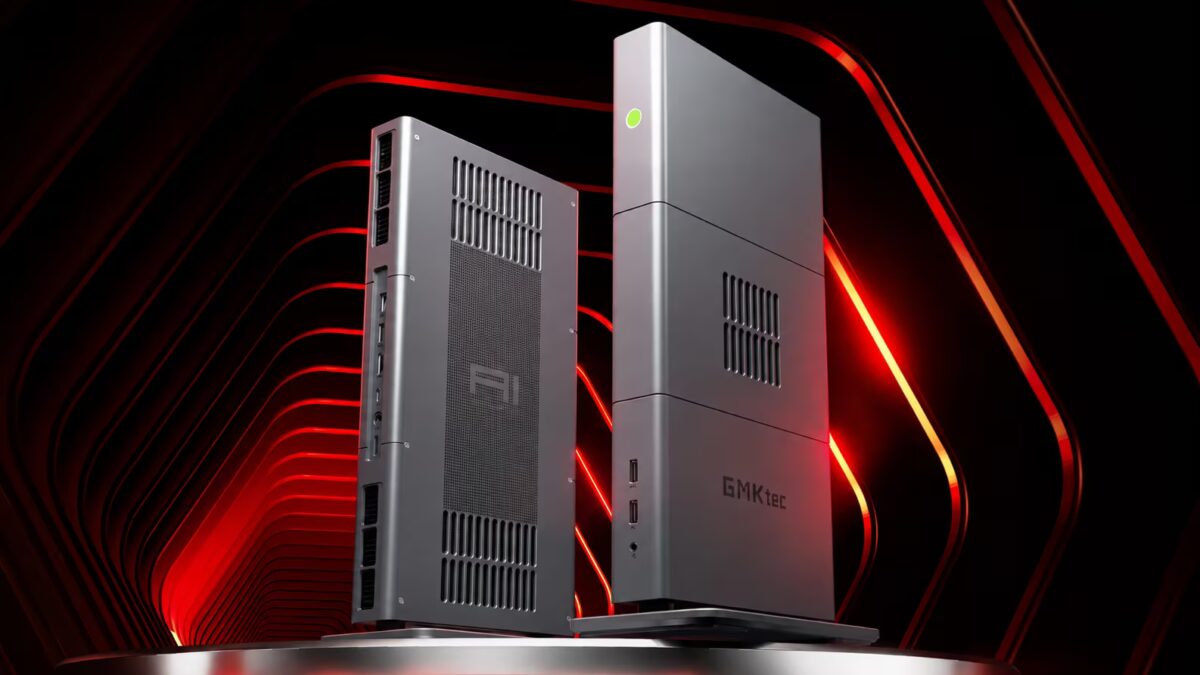
Gmktec is launching global sales for its Evo-X3 mini PC starting July 6, 2026, after an initial release in China. Aimed squarely at compact workstations for local AI model deployment, the Evo-X3’s headline feature isn’t its size but the powerful AMD Ryzen AI Max+ 395 processor paired with a whopping 128GB of unified memory. Pricing starts at $3,600.
The Evo-X3’s hardware configuration is unusual for a mini PC, especially on the AI side. Most compact systems featuring Ryzen AI 9 HX 370 or Intel Core Ultra chips max out at 32-64GB of RAM-enough for office tasks, development, and light AI workloads but insufficient for running large-scale local AI models. The Evo-X3 aims for a higher tier usually occupied by compact workstations like Apple’s Mac Studio or small desktops with discrete GPUs.
Gmktec Evo-X3 specifications
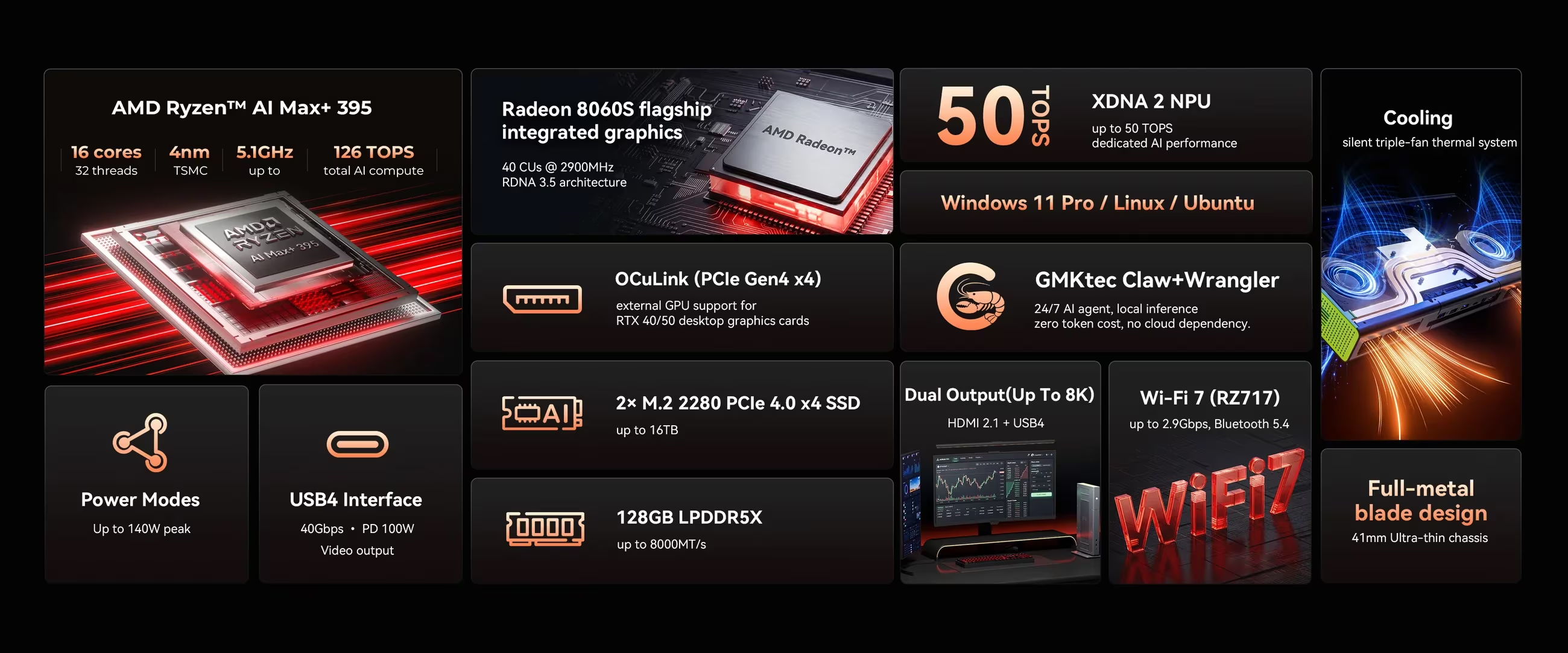
At the heart of the Evo-X3 is the AMD Ryzen AI Max+ 395 processor: a 16-core, 32-thread CPU built on a 4nm process, boasting clock speeds up to 5.1 GHz. It includes integrated Radeon 8060S graphics based on RDNA 3.5 architecture with 40 compute units. The system’s AI acceleration gets a boost from the XDNA 2 neural engine, delivering 50 TOPS (tera operations per second), with a combined AI performance rated at a substantial 126 TOPS.
The Evo-X3’s standout feature is its memory setup. Equipped with 128GB of ultra-fast LPDDR5X RAM running at 8000 MT/s, the unified memory architecture allows up to 96GB of this RAM to be allocated dynamically for graphics tasks. This is a significant advantage for running large local language models (LLMs) and complex AI frameworks, where memory capacity often becomes a bigger bottleneck than raw compute power.
- Base model: 128GB RAM, 2TB SSD – $3,600
- Expanded storage: 128GB RAM, 4TB SSD – $3,849
- Both configurations ship with Windows 11 Pro
The cooling and power delivery system is designed for performance, not media streaming. The Evo-X3 supports three power profiles: quiet mode at 54W, balanced at 85W, and performance at 120W, with peak consumption hitting 140W. Heat is managed by two fans and three heat pipes. While typical for a compact chassis, noise levels under full load remain unverified without independent reviews.
Ports reinforce the workstation vibe rather than a sleek thin client. On the back panel, you’ll find USB4 supporting up to 100W power delivery and 4K video output, HDMI 2.1, 2.5Gb Ethernet, USB-A 3.2 Gen 2, and a notable OCuLink port for external GPU expansion. While hot-swapping eGPU is not supported, including an OCuLink rather than Thunderbolt is a pragmatic move common among Chinese mini PC makers, reflecting a different ecosystem for GPU add-ons.
Price and availability of Gmktec Evo-X3 mini PC
The Evo-X3 will be available worldwide starting July 6, 2026.
At $3,600 and up, the Evo-X3 occupies a unique niche. For the same money, buyers can find full-sized PCs with more powerful discrete GPUs or Apple’s Mac Studio with more generous unified memory. Gmktec’s strategy is selling a fully packed workstation in a tiny package, targeting professionals needing 128GB of unified RAM for local AI tasks without building a bulky desktop tower. Whether this demand will scale beyond niche enthusiasts will become clearer once the first shipments arrive later this summer.
This launch reflects the growing appetite for compact but potent AI workstations, especially among developers and researchers who want offline model execution without cloud dependency. Keep an eye on how users weigh the trade-offs between integrated AI-on-CPU solutions like Ryzen AI and more traditional discrete GPU setups, particularly as mini PCs challenge the dominance of laptops and towers in AI workflows.