


Anthropic’s AI model Fable 5 is back but with reduced usage limits that have frustrated paying customers. Meanwhile, Sony will stop releasing physical PlayStation games by 2028, marking the end of discs in gaming. CERN has announced a four-year shutdown of the Large Hadron Collider to upgrade it for a tenfold increase in collision rates. Here’s the latest from AI, gaming, tech hardware, and physics.
Anthropic brings back Fable 5 with dramatically reduced usage limits
After a three-week hiatus due to U.S. regulatory restrictions, Anthropic has restored access to its flagship AI model Fable 5 within the Claude platform-but with significant limitations. Paid subscribers now face drastically reduced quotas: the previously promised two-week access window will close on July 7, effectively halving generation volumes. Tasks such as programming are being offloaded to the less capable Opus 4.8 model. This shift introduces an additional credit system priced similarly to their API fees.

The user community is vocal in its discontent, viewing these retroactive service downgrades on paid plans (Pro, Max, Team) as a breach of trust-especially since the more advanced Mythos 5 AI remains out of reach for most users. This backlash highlights tension between AI companies’ monetization strategies and customer expectations.
Apple plans a major spring 2027 launch of new iPad Pro and MacBook Pro models
Bloomberg reports Apple intends to shift its product launch cycle with four new iPad Pro configurations and an updated baseline MacBook Pro debuting in spring 2027. This change aims to balance revenue across fiscal quarters, coinciding with the expected launch of the iPhone 18 and second-generation iPhone Air devices.
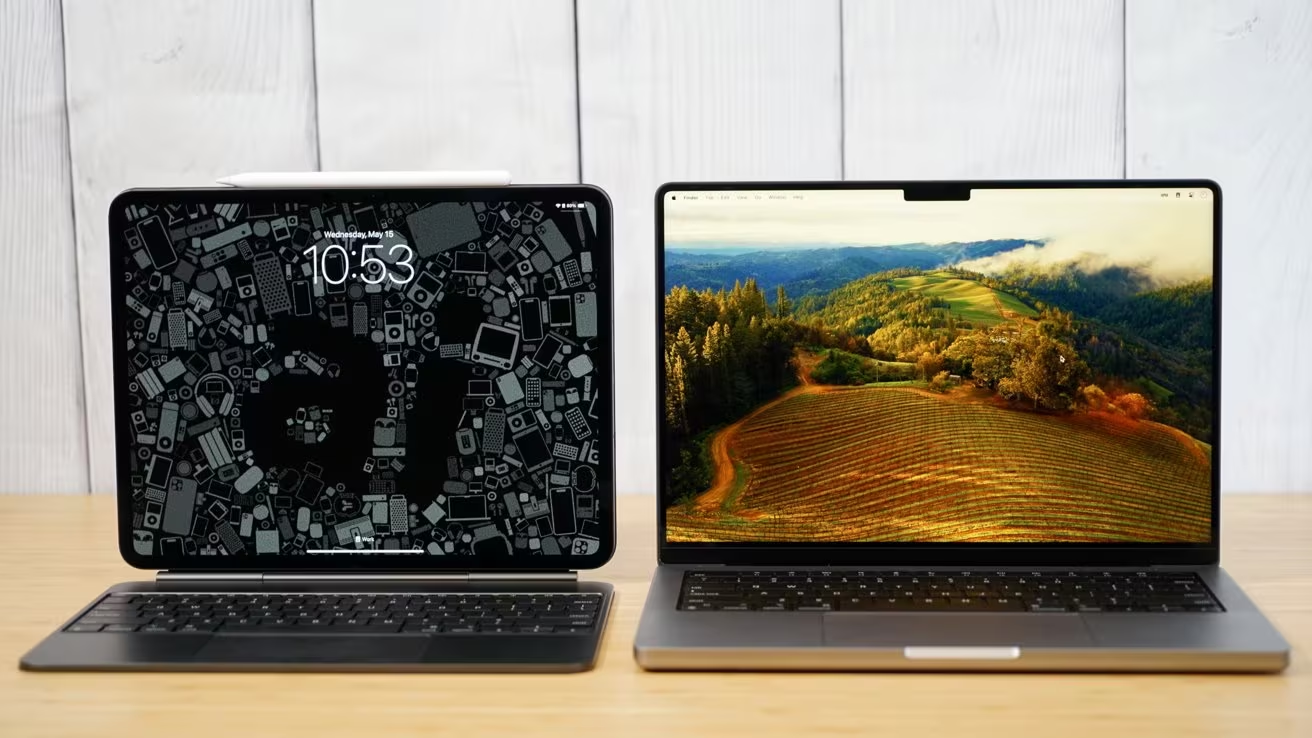
Leaked details suggest incremental upgrades for the iPad Pro’s design and performance, including a faster processor and an evaporative cooling system. The event’s headliner is expected to be the new ”K104” MacBook Pro featuring Apple’s M7 chip, a touchscreen, and a fresh chassis design echoing future OLED models. This release could come less than a year after the anticipated fall 2026 launch of a base M6-powered MacBook Pro.
Sony to fully phase out PlayStation game discs by 2028
Sony will stop releasing physical copies of new PlayStation games by 2028, offering only digital purchases via the PlayStation Store or ”empty” boxes containing download codes. This policy will not apply retroactively to existing titles or those with pre-approved physical releases.
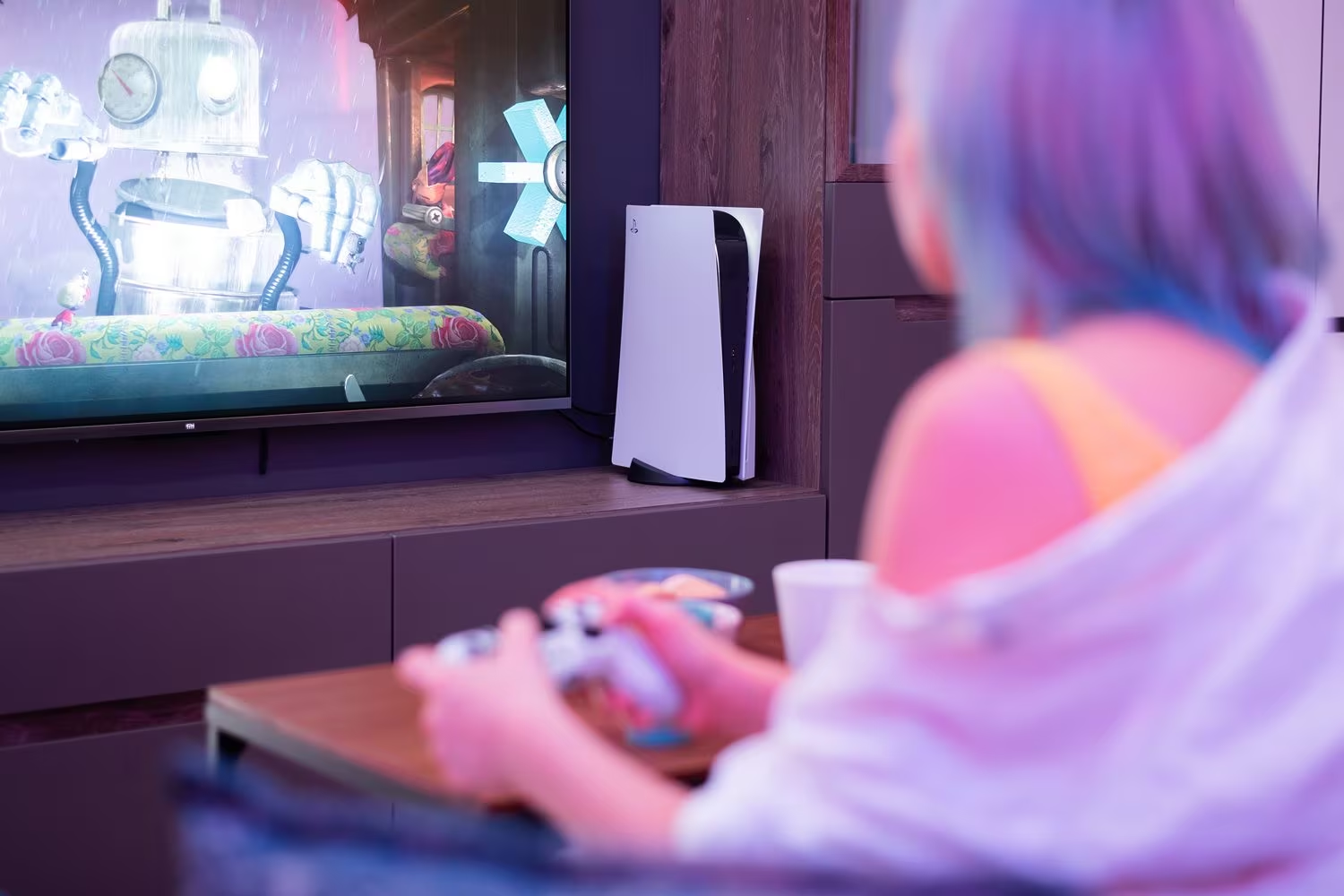
This shift reflects declining disc sales and the industry’s move toward digital-only gaming. For players, it means the end of secondary markets and a licensing model where games are tied to publisher servers rather than owned outright. Grand Theft Auto VI is expected to be among the first major releases without a disc version. The upcoming PlayStation 6 is unlikely to include a disc drive.
Microsoft tests converting Xbox discs into digital licenses with Disc2Digital
To ease the transition from physical media before the next Xbox generation, Microsoft is trialing Disc2Digital, allowing players to convert disc-based games into tied digital licenses. Internally, this prepares for Project Helix, Microsoft’s upcoming console expected to omit disc drives entirely.

This aligns with Microsoft’s disc-free focus seen in the Xbox Series S, Game Pass subscription, and cloud streaming. Unlike Sony’s transitional approach, Disc2Digital offers a long-term solution by linking physical game ownership permanently to user accounts.
Leaked design shows Samsung Galaxy Glasses shift from AR displays to smart accessories
Set to launch by the end of 2026, Samsung’s Galaxy Glasses have dropped the bulky AR headset concept for a lightweight smart accessory featuring cameras, microphones, and speakers. Positioned as a competitor to Meta’s Ray-Ban smart glasses, the design focuses on subtle smart functions instead of full augmented reality.
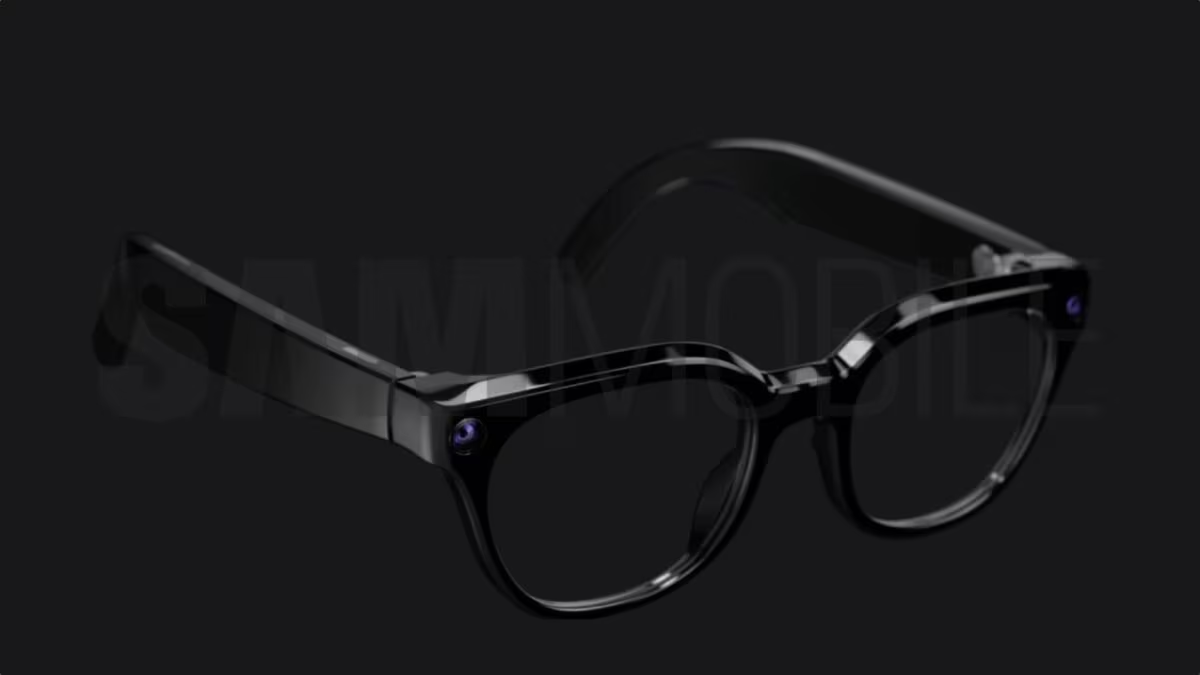
The glasses feature a classic rounded frame, an LED indicator, and a touch-sensitive area on the temple for gesture controls. They run on Samsung’s One UI XR (Android XR-based) with AI assistant Gemini, capable of object recognition and voice command responses. Additional controls may come via the Galaxy Ring smart ring and Galaxy Watch.
Elon Musk denies rumors of a SpaceX AI-powered smartphone
Elon Musk dismissed a Wall Street Journal report that SpaceX showed investors a prototype of a slim AI-powered smartphone based on Qualcomm chips. Rumors about a device combining Musk’s networks-Twitter’s successor X, xAI neural networks, and Starlink satellites-were labeled false by Musk.
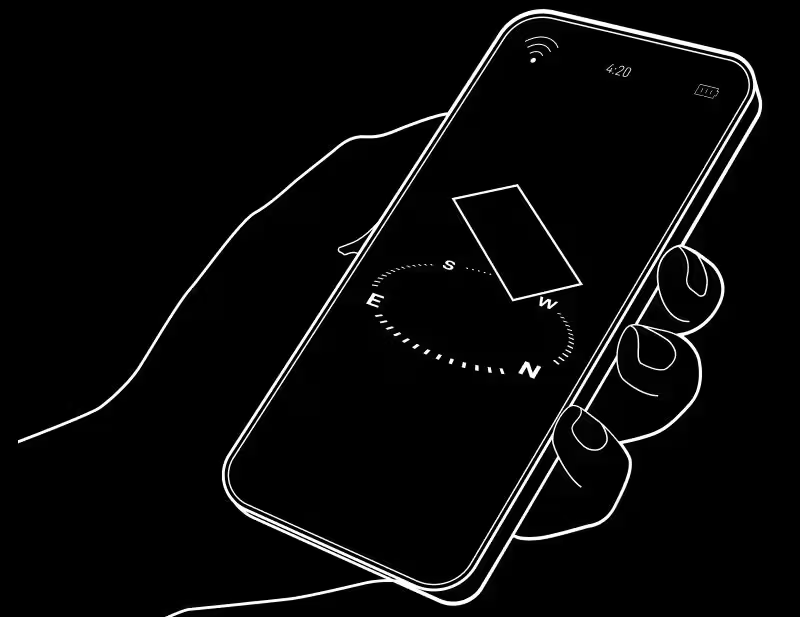
Experts note launching a proprietary smartphone brand is cost-prohibitive amid dominance by Apple and Samsung. Instead, SpaceX focuses on direct-to-cell satellite connectivity for existing LTE phones, piloted in the U.S. with T-Mobile-allowing consumers to access satellite networks without specialized hardware.
CERN shuts down Large Hadron Collider until 2030 for major upgrade
CERN’s Large Hadron Collider (LHC) will be shut down for four years through 2030 for the High-Luminosity LHC upgrade. This $1 billion project will increase proton collision rates by 10 times, enabling physicists to collect vastly more data.

During this Long Shutdown 3, approximately 1.2 kilometers of magnets and components along the 27-kilometer ring will be replaced, alongside upgrades to cryogenic systems and detectors. The improvements aim to sharpen Higgs boson measurements and explore rare particle decays. The upgrade’s success will influence plans for an even larger 91-kilometer European Future Circular Collider.
Anthropic partners with Samsung to develop custom AI chips
Facing chip shortages from Nvidia and TSMC, Anthropic is teaming with Samsung to build custom AI processors. The goal is to reduce costs, increase control over computational resources, and compete with OpenAI, which recently launched its own chip.

It remains unclear whether the partnership will prioritize powerful processors for training large AI models or energy-efficient chips for inference, which is critical for cost savings. For Samsung, the venture offers a chance to enter AI chip contracts and challenge TSMC’s dominance. Results and profitability are not expected before 2027.
Intel resumes production of 13th and 14th gen Core processors amid chip demand
Intel has restarted production of its 13th and 14th generation Raptor Lake processors to meet high demand and ease DDR5 memory shortages. These chips will be supplied to OEMs and retail markets primarily in mainland China.
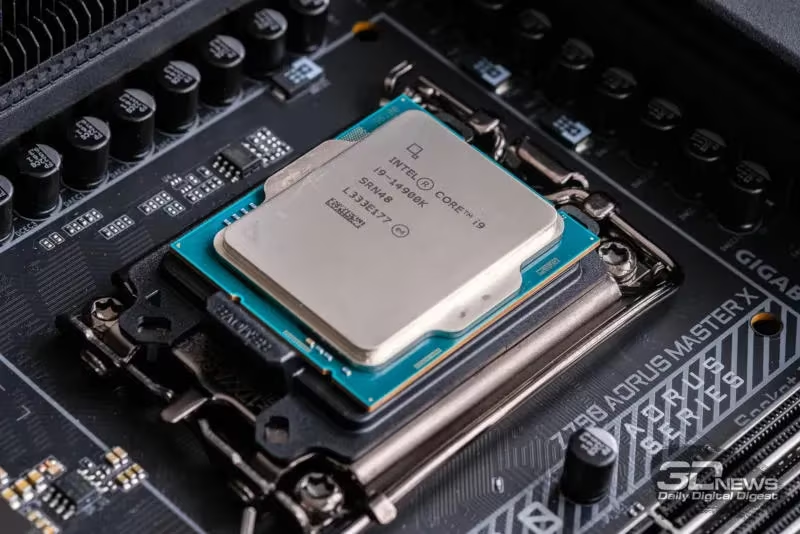
The appeal of Raptor Lake and Raptor Lake Refresh CPUs lies in their support for both DDR5 and DDR4 memory, allowing Intel to maximize manufacturing capacity and offer reliable, affordable options for gamers. Intel is also increasing shipments of 10th and 12th gen chips to fill budget segment gaps.
*Note: Meta, owner of Ray-Ban smart glasses, is designated an extremist organization and banned in Russia.
These developments highlight accelerating shifts in AI access models, gaming distribution, and hardware innovation. Watch for Anthropic’s tighter AI limits impacting adoption, the irreversible move away from game discs reshaping the industry, and CERN’s collider upgrade enabling breakthroughs in particle physics. Meanwhile, collaborations like Anthropic and Samsung’s chip project could redefine computing architectures powering the next wave of AI.