

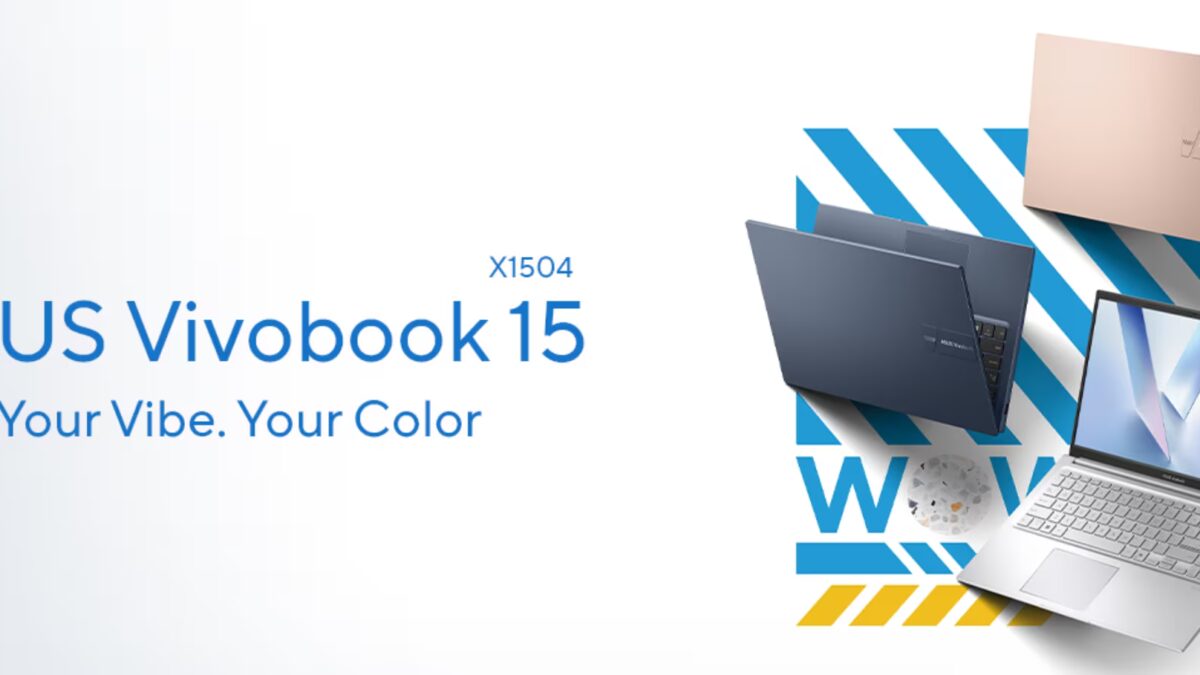
Asus has introduced the 2026 edition of its Vivobook 15 laptop in India, marking the country’s first model powered by the new Intel Core 5 Series 3 processor. Positioned as a versatile all-around laptop for study, office work, and media consumption, the Asus Vivobook 15 highlights Windows’ local AI features. At launch, it will be available with a steep discount of nearly 30% off the official retail price.
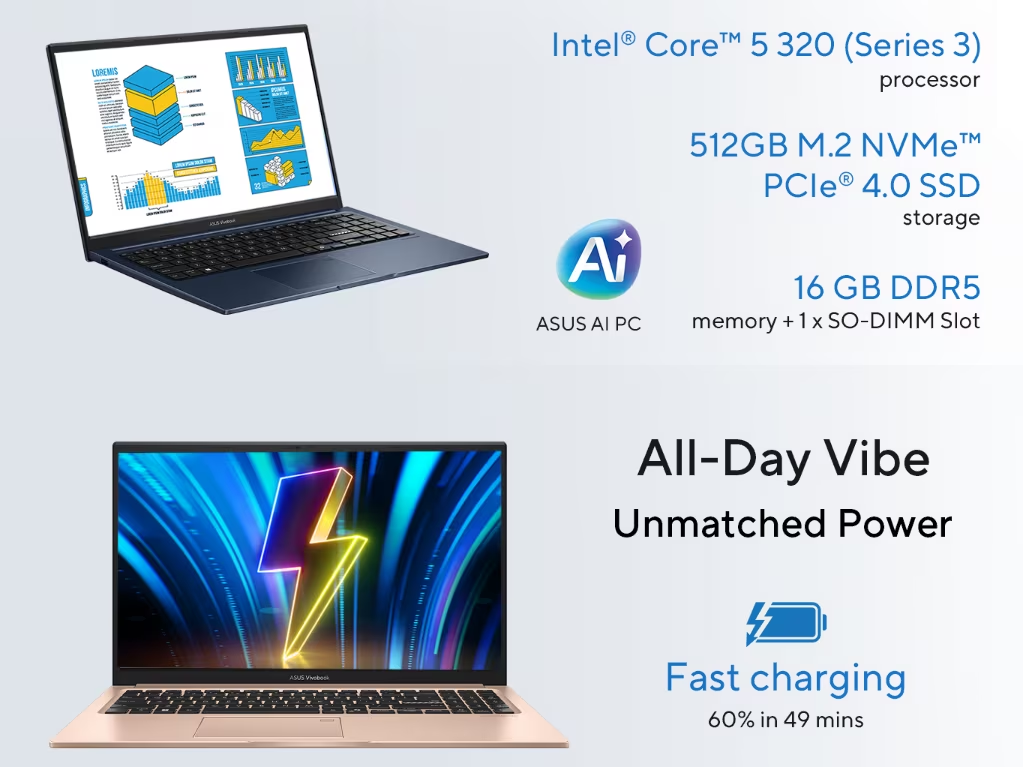
The standout feature of this new Asus Vivobook 15 is its Intel Core 5 Series 3 processor, equipped with an Intel AI Boost neural block capable of up to 16 trillion operations per second (TOPS). While this is a solid baseline for mainstream notebooks, it falls short of the 40 TOPS performance threshold Microsoft sets for Copilot+ PCs, which support more advanced AI functionalities. In practical terms, the Vivobook 15 taps into Windows’ AI scenarios but doesn’t offer the full AI feature set found on devices powered by Qualcomm Snapdragon X or AMD’s new Ryzen AI platforms.
Outside of the AI capabilities, the Asus Vivobook 15 is a typical midrange 15-inch laptop focused on balancing screen quality, memory capacity, and weight rather than chasing ultra-thin design or discrete graphics. This focus aligns with consumer preferences in India, where IDC reports steady growth in laptops suited for home use, education, and hybrid work, emphasizing affordability and familiar form factors over experimental AI integrations.
Asus Vivobook 15 specifications
- Intel Core 5 Series 3 processor
- Intel AI Boost NPU delivering up to 16 TOPS
- 15.6-inch Full HD display with anti-glare coating
- 16GB DDR5 RAM
- 512GB PCIe 4.0 SSD
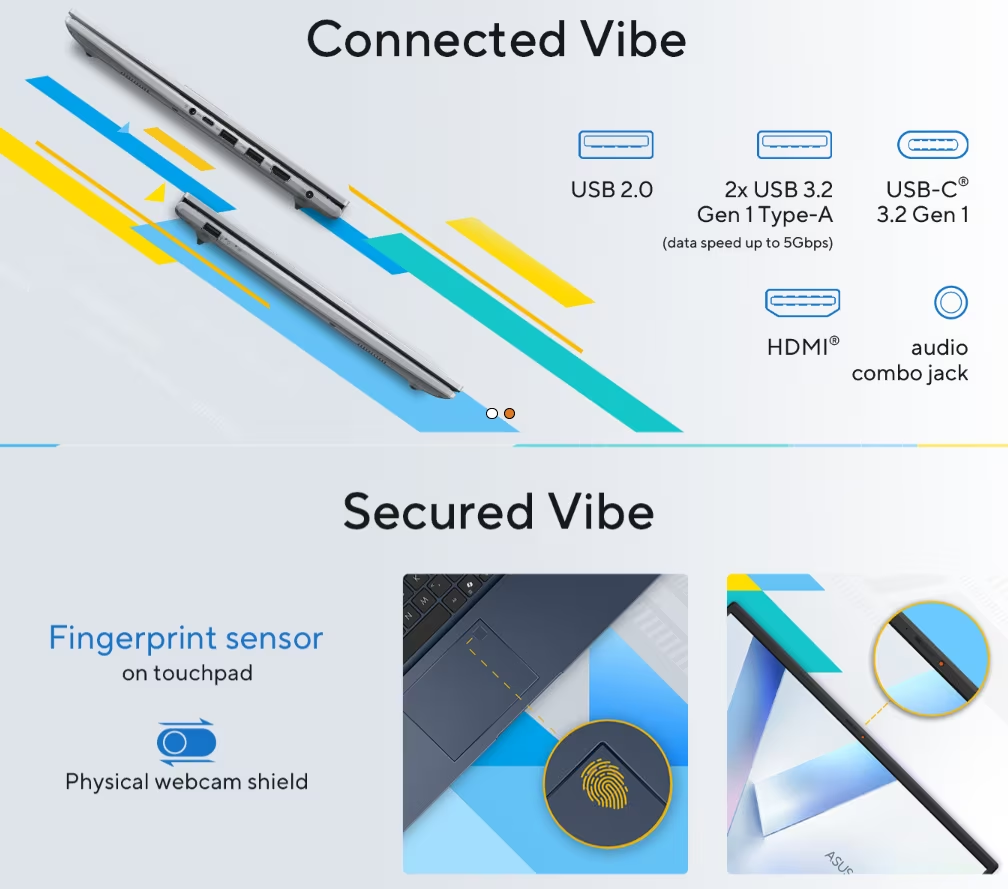
- Wi-Fi 6, fingerprint scanner, webcam privacy shutter
- Backlit keyboard with dedicated Copilot key
- Weight: 1.7 kg; MIL-STD-810H durability certification
The Vivobook 15 will be available in three color options: Cool Silver, Quiet Blue, and Terra Cotta. At 1.7 kg, its weight is competitive but not exceptional among 15.6-inch laptops – comparable models such as Lenovo’s IdeaPad Slim and Acer’s Aspire range between 1.6 and 1.8 kg, placing Asus comfortably within the standard bracket.
The MIL-STD-810H certification has become nearly standard in this segment, offering reassurance against everyday bumps and drops rather than military-grade protection. This feature appeals especially to the education market, where laptops endure frequent transport in backpacks instead of sitting constantly on a desk.
Asus Vivobook 15 pricing and availability in India
Asus sets the official retail price for the Vivobook 15 (2026) at 159,990 Indian rupees (~$1,930), with an aggressive launch price slashed to 107,990 rupees (~$1,300). Sales will be exclusive to Amazon India and Flipkart, following a common retail strategy where manufacturers list higher sticker prices to enable discount promotions during key sales periods.
Pricing details for Asus Vivobook 15 (2026):
- Official retail price: 159,990 Indian rupees (~$1,930)
- Launch discount price: 107,990 Indian rupees (~$1,300)
The launch coincides with hefty discounts across Asus consumer, gaming, and creator laptops for Amazon Prime Day and Flipkart GOAT Sale, including bank discounts up to 6,000 rupees, trade-in bonuses as high as 20,000 rupees, and interest-free EMIs up to 18 months on select models.
Alongside the Vivobook 15, Asus is promoting the TUF Gaming A15 Prime Day Special, powered by an AMD Ryzen 7 8845HS and Nvidia GeForce RTX 3050. That review-star performer packs a 15.6-inch 144Hz screen, 16GB DDR5 RAM, and a 512GB SSD, retailing at 118,990 rupees during the sale. Positioned as a more focused gaming option, the TUF contrasts with the Vivobook’s broader appeal targeting students and hybrid professionals. July’s sales will reveal which model captures India’s price-conscious mainstream demand ahead of the Diwali holiday season.
With its AI-enhanced chip stepping into a competitive price bracket, the Asus Vivobook 15 exemplifies Asus’s strategy to blend emerging AI tech with tried-and-true features at a mass-market price. How Intel’s Core 5 Series 3 performs in daily workloads and AI tasks will be key to whether this approach gains traction beyond promotional discounts.