

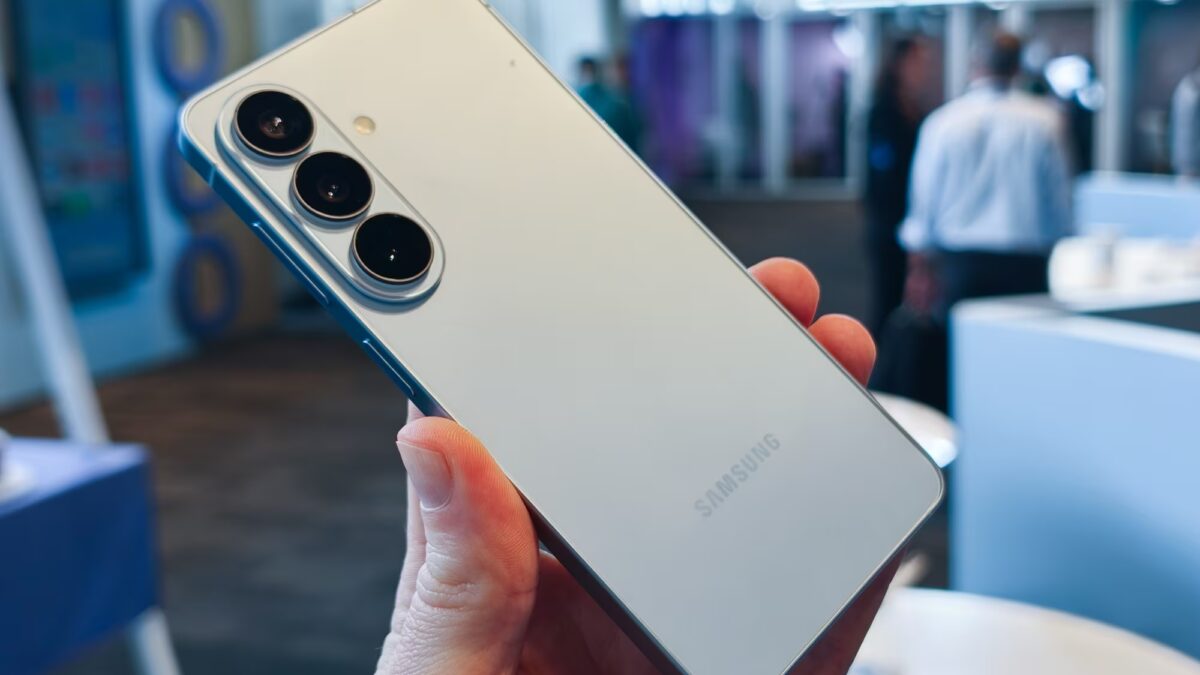
Samsung is reportedly planning a significant upgrade to the front-facing camera in its upcoming Galaxy S27 Pro and Ultra models, swapping the long-used 12-megapixel sensor for a sharper 16MP shooter. While the vanilla Galaxy S27 and S27 Plus versions haven’t been confirmed to receive this boost, the change hints at a bigger shift in Samsung’s approach to selfie cameras, which haven’t seen major hardware updates since the Galaxy S23.
According to insider reports from GalaxyClub, the new 16MP sensor may adopt a square format rather than the traditional rectangular one. This would enable better framing and cropping of selfies and video calls without having to physically rotate the phone, similar to Apple’s Center Stage feature on iPads and Studio Display monitors that uses intelligent cropping to keep subjects centered during video chats.

Samsung’s usual update cycle focuses heavily on rear cameras, rolling out new sensors, lenses, and zoom capabilities almost annually. In contrast, the front camera has been a rather static component, despite being important to everyday activities like selfies, facial recognition unlocking, and video calls – scenarios that arguably matter more to daily users than flashy rear camera features unveiled on stage.
This upgrade might tie into a larger revamp of the premium Galaxy S27 Pro and Ultra models. Leaks have previously hinted at a new facial recognition system for the Ultra, potentially moving beyond the current 2D face unlock Samsung uses towards a more secure, hardware-driven solution like Apple’s Face ID, which employs a separate depth sensor array. While a better front sensor alone won’t replace such technology, it could enhance the software’s ability to track faces and frame video calls more accurately.
Galaxy S27 front cameras evolution
Since the Galaxy S23 launch in 2023, Samsung has kept the 12MP front camera across its Galaxy S series without significant hardware upgrades. This strategy isn’t unique among Android flagships, where manufacturers often prioritize rear camera innovation, as those modules get the spotlight in DxOMark rankings, marketing campaigns, and Ultra model promotions.
By comparison, Apple stuck with a 12MP selfie camera for the iPhone 14 Pro and later models but improved the experience with autofocus, benefiting close-up selfies and video calls. Google’s Pixel line emphasizes computational photography over raw resolution increases. Samsung’s front camera approach has looked somewhat perfunctory, updating hardware only when absolutely necessary.
The rumors about a square sensor are especially intriguing because they suggest a focus on the practical needs of modern users: social media content, short videos, and video conferencing. For these uses, the ability to digitally crop and reframe images without quality loss or awkward phone positioning is far more valuable than a mere megapixel increase. Many content creators now rely on smartphones as webcam replacements, turning the front camera’s stability and quality into a critical factor.
There’s also a commercial angle. The Galaxy S lineup has increasingly differentiated its base models from the Pro and Ultra in terms of features and hardware. By equipping only the higher-end models with the new selfie sensor, Samsung gains another selling point to justify premium prices – a move cheaper than restructuring the entire camera system but more noticeable to users than small ISP tweaks.
The current leaks don’t confirm whether the basic Galaxy S27 and S27 Plus will get the 16MP sensor. Samsung’s recent pattern is debuting new hardware in Ultra versions first, then trickling improvements down in future generations. This was the case with periscope zoom cameras and advanced AI-driven camera features that often launch on top-tier devices.
If Samsung sticks to its usual release rhythm, the Galaxy S27 series will debut in early 2027. At that point, we’ll learn if the front camera upgrade is limited to a sensor swap or accompanied by new video call features and facial recognition tech. While not the headline upgrade Samsung might have hoped for, after four years of nearly identical front cameras, this improvement alone could shake up the selfie game for loyal Galaxy users.