

Kioxia has begun shipping engineering samples of its 10th-generation BiCS Flash, a 1 Tb TLC NAND chip built with 332 layers and aimed mainly at server storage. The new Kioxia 3D NAND is pitched as both denser and faster than its previous generation, with throughput up to 4.8 Gbit/s.
Kioxia says the chip delivers these gains while cutting power use, which is exactly the sort of message investors like to hear when the memory business is living and dying by bandwidth, power use, and who can squeeze more bits into less silicon.
Kioxia 3D NAND improvements
The headline number is 4.8 Gbit/s of throughput, which Kioxia says is one-third higher than the speed of its 8th-generation memory. Storage density rises by 59% thanks to the 332-layer design, while power consumption falls by 30% during reads and 18% during writes. That power cut matters because data-center operators are increasingly treating electricity as a design constraint, not a line item to ignore until the bill arrives.
The chip also keeps the CBA and OPS technologies used in the 8th generation. For enterprise customers, that combination of higher density and lower energy draw is the real selling point, especially as SSD makers keep chasing better performance per watt rather than just bigger peak numbers.
- Capacity: 1 Tb TLC
- Layer count: 332 layers
- Throughput: 4.8 Gbit/s
- Read power: 30% lower
- Write power: 18% lower
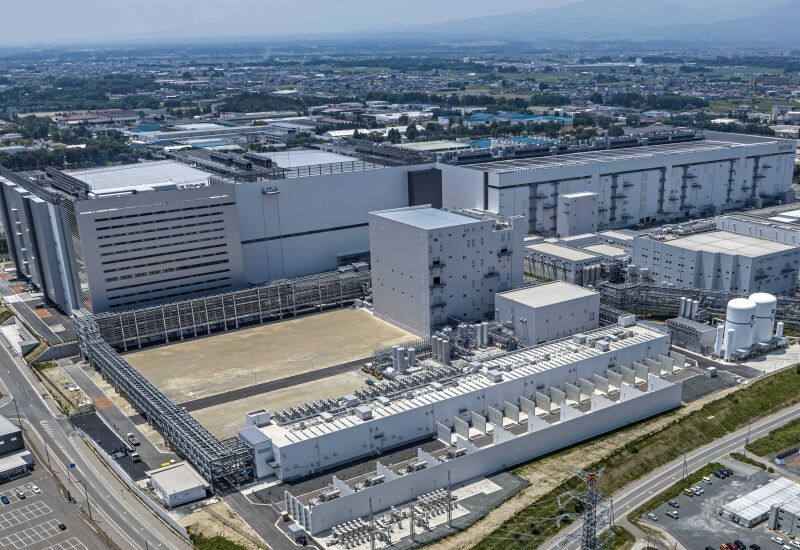
Kioxia’s new plant in Iwate prefecture
Kioxia will manufacture the new 332-layer memory at its new plant in Iwate prefecture, which was brought online in September last year. The timing is sensible: NAND prices and demand can swing sharply, and a company that makes only NAND does not have the luxury of leaning on DRAM or HBM the way Samsung and SK hynix can.
That makes technology leadership less of a brag and more of a survival strategy. Kioxia held about 10% of the global server NAND market last year, far behind Samsung at about 40% and SK hynix at about 30%, so every speed and efficiency gain is doing double duty as a product pitch and a defensive move.
Kioxia shares jump after sample shipments
News of the sample shipments pushed Kioxia shares up 8.9% in morning trading in Tokyo, which is a neat reminder that memory stocks still move on process nodes and layer counts almost as much as on earnings. Kioxia also briefly became the most valuable Japanese company by market capitalization earlier this year, a sign that investors are happy to reward any company that looks capable of keeping up with the memory arms race.
The bigger question is whether Kioxia can turn the sample announcement into real volume without getting squeezed by the giants around it. If server SSD makers decide the speed and power gains are enough, the company gets a rare clean win; if not, the market will quickly remind it that NAND bragging rights are cheaper than NAND dominance.