

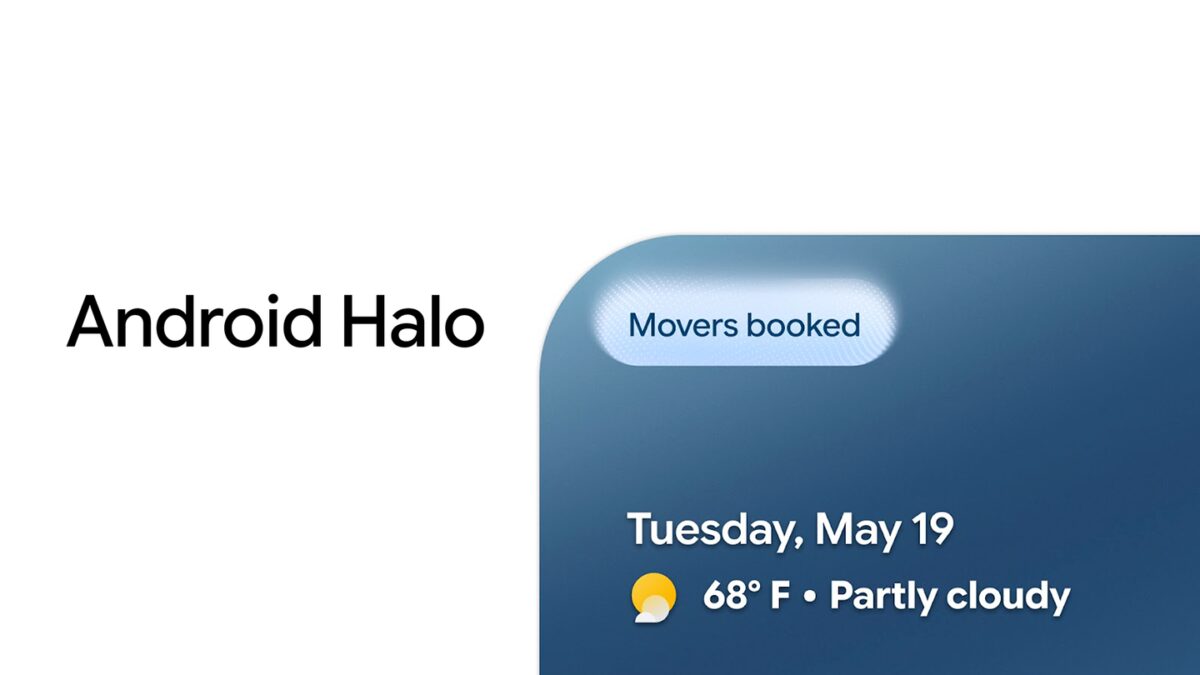
Google is turning the Android status bar into a control strip for AI agents. The company’s new Android Halo feature gives a chosen assistant, including Gemini or a compatible third-party option, a permanent place to surface updates, ask follow-up questions, and show results without forcing users back into another app. Google says Halo is expected to arrive later in 2026 with Android 17.
That may sound small, but it solves a real problem: agentic AI is only useful if people can see what it is doing and step in at the right moment. Google previewed Halo at Google I/O in May, and the latest explanation from Android President Sameer Samat makes the pitch clearer – this is about making background AI less opaque and less annoying, which is a low bar for the industry and still somehow rare.
How Android Halo works in the status bar
Halo creates a persistent spot in the status bar for the user-selected agent. When that agent is active, it can display progress indicators, ask for clarification, and surface final output in place. In Samat’s words, it is a dedicated location where the agent can report updates and receive the user’s latest instructions for the current task queue.
The idea is less flashy than a full-screen AI interface, and that is the point. Google is betting that the best AI experience on phones will be the one that stays visible without becoming intrusive, especially as agents start juggling more steps on their own and still need human approval for the awkward bits.
Android 17 and Google’s Gemini push
Google expects Halo to arrive later in 2026 with Android 17. That timing fits neatly with the company’s broader Gemini plans, and it also puts pressure on rivals to answer a simple question: if AI assistants are doing more work on devices, where exactly do they live when they need your attention?
- Persistent status bar presence for a selected AI agent
- Progress updates while a task is running
- Quick follow-up prompts when human input is needed
- Final results shown without reopening the app
If Halo ships as described, it could become one of those quiet Android features that others end up copying. The bigger shift is not the name or the UI trick; it is the assumption that AI should be continuous, visible, and interruptible rather than hidden behind a single chat window. That is where mobile assistants are headed next.