

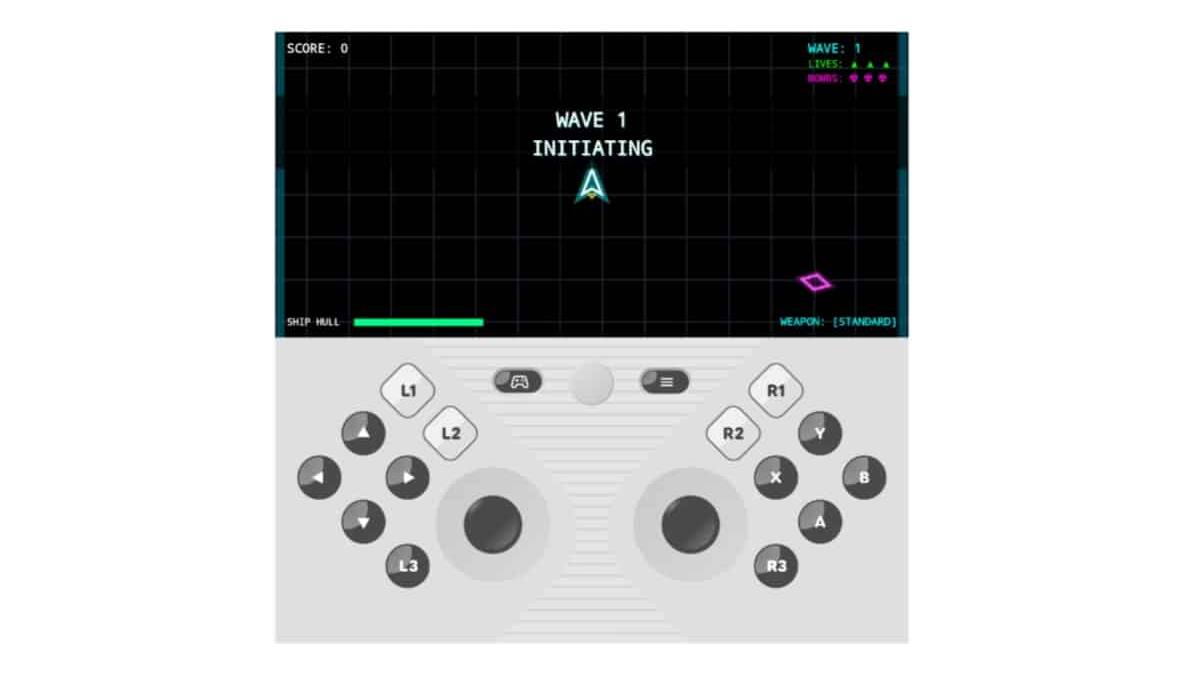
Android 17 is getting a foldable gaming mode that treats the top half of an unfolded device as the screen and turns the bottom half into a customizable virtual controller. The setup is designed to work automatically with games that already support controllers, which is the sort of small but very useful software trick that can make expensive foldables feel less like novelty slabs and more like handheld consoles.
The feature, spotted in work attributed to Mishaal Rahman, depends on adaptive games that can shrink to half of the display while the control panel lives below. That matters because foldable phone gaming has long been awkward: either you get screen space or controls, but not both in a clean way. Google is trying to do the obvious thing that somehow took this long – let the device behave more like a compact gaming machine without asking developers to rebuild everything from scratch.
How the foldable gaming mode works
The virtual controller mimics inputs at the system level, so compatible games should recognize it as a real gamepad. Supported buttons include the D-pad, both thumbsticks, A, B, X, Y, L1, L2, L3, R1, R2, R3, and Start. In practice, that gives Android a built-in bridge between touchscreen devices and controller-first games, which is far more sensible than forcing users into awkward on-screen overlays.
Customization is already baked in. Users can choose a staggered control layout, adjust button size with Small, Medium, or Large settings, switch the joystick into dark mode, and toggle haptic feedback on or off. You can also show or hide the virtual gamepad before gaming starts or while a game is already running, and Android will automatically hide it if a USB or Bluetooth controller is connected.
Why foldables may finally get a better gaming story
Foldables have spent years trying to justify their premium pricing with multitasking demos and big-screen bragging rights, while gaming has often felt like an afterthought. This move suggests Google sees a more practical use case: a phone that opens into a pocket-sized gaming setup without accessories. It also mirrors a broader industry trend, where software is doing more of the heavy lifting as hardware races ahead of user experience.
The bigger payoff may come once the feature lands in AOSP, which would let manufacturers adapt it for their own foldables. Samsung, Honor, and others already like to put their own spin on Android features, so expect this to become one more area where each brand tries to look clever while copying the same basic idea. The real winner, if Google gets this right, is anyone who wants a foldable that feels purpose-built instead of merely expensive.
What Android still needs to fix
The missing split-percentage adjustment is a small flaw, but it points to the usual Android problem: lots of flexibility, not always enough polish. If Google keeps refining the control layout and makes the feature easy for developers to support, foldable gaming could stop being a demo-room gimmick and become a real reason to buy the hardware. The next question is whether game studios will bother tuning for it quickly enough, or whether Android 17 ends up building a beautiful controller nobody fully uses.