

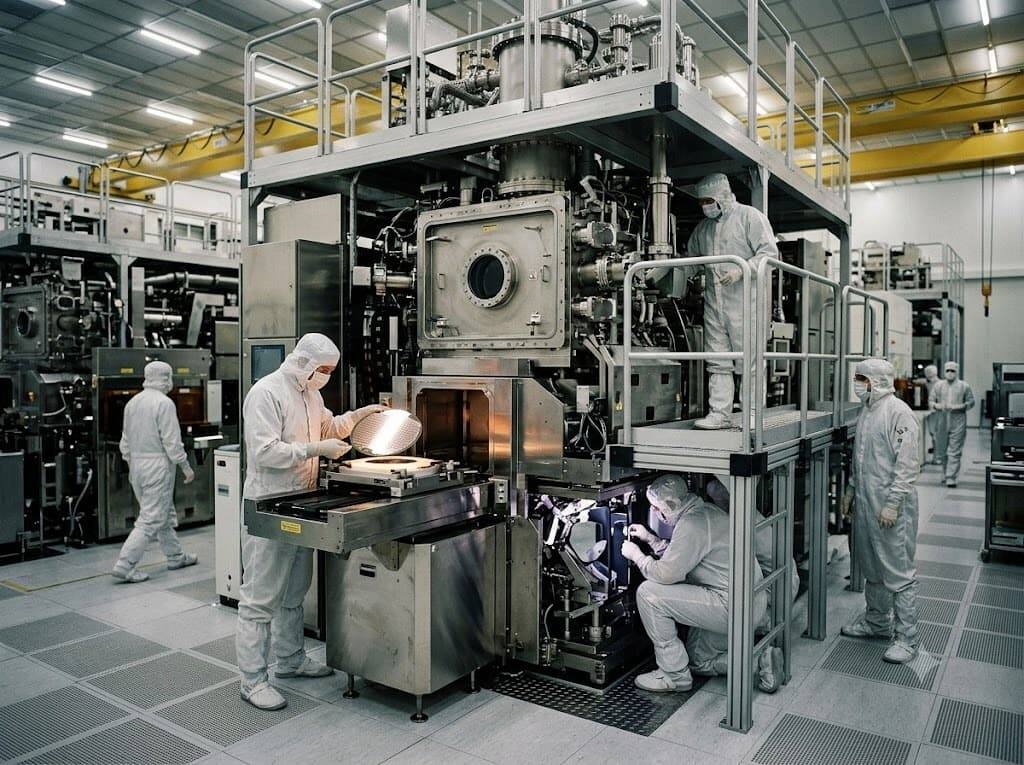
The Netherlands is trying to stop Washington from tightening chip-export rules on China in a move that could hit ASML, the European giant at the center of advanced lithography. Dutch officials have gone to the U.S. to argue that the proposed MATCH Act would go too far, especially if it cuts off exports of older ASML machines that still matter to Chinese chipmakers and ASML’s own revenue stream.
That would be a rare kind of intervention. When a government starts lobbying another country to protect a domestic champion, it is usually because the company in question is too important to ignore, and ASML fits that description better than most. It is Europe’s most valuable tech company by market value, and the only maker of the world’s most advanced lithography systems.
What the MATCH Act would change
The bill, introduced in Congress in April, would expand U.S. export controls on China’s semiconductor sector. Existing restrictions already block ASML’s EUV tools, which are used to make the most advanced chips. The new proposal goes further and could also cover DUV systems, the older deep-ultraviolet machines that remain one of the few high-end products ASML can still sell into China.
Those DUV tools are not museum pieces; they are the previous generation, and they still have commercial value. That is exactly why the proposal stings. Cutting them off would not just slow Chinese chipmakers, it would also close one of the last major revenue channels ASML still has in that market.
- ASML’s China sales account for about 19% of its lithography-system revenue.
- The company says the DUV machines in question are earlier-generation systems that first shipped about 10 years ago.
- The MATCH Act has not yet had a full vote in either the House or the Senate.
Why The Hague is nervous
For the Dutch government, this is not an abstract trade dispute. If the bill advances, the hit could spread beyond ASML’s balance sheet and into the wider European chip supply chain, which depends heavily on the company’s equipment. The U.S. has spent years tightening access to advanced semiconductor technology for China, but this latest push risks dragging older gear into the same net.
That is also where the political math gets messy. The MATCH Act will likely need to be folded into a larger legislative package to move forward, which means the final text could still change. But the direction of travel is clear: Washington is testing how far it can extend its chip controls without forcing allies to defend their own industrial crown jewels.
ASML becomes the pressure point
ASML has long been the unavoidable company in any serious discussion about advanced chips. It occupies a near-monopoly position in cutting-edge lithography, so even small policy changes ripple outward fast. That is why this fight is bigger than one company’s China sales: it is a preview of how far export controls can go before they start colliding with allied economic interests.
The likeliest outcome is more bargaining, not instant legislation. If the bill keeps moving, expect ASML and the Dutch government to keep pressing the case that sweeping up older DUV systems is blunt-force policy dressed up as precision. Washington may still decide the security argument wins. But if it does, the cost will not stop at China’s borders.