

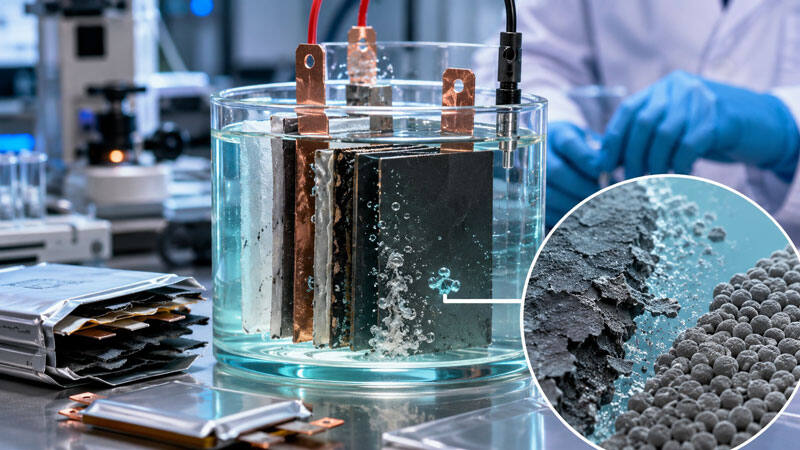
Cornell University researchers have sketched a very unglamorous-sounding fix for a very expensive problem: instead of shredding spent lithium-ion batteries and rebuilding them from scratch, they soak the old electrodes in an electrochemical bath and bring most of the lost capacity back. The process, called DEER, could make lithium battery recycling far less destructive and far more practical for the kind of high-volume packs that keep piling up in warehouses, cars, and labs.
The idea is simple enough to sound slightly absurd. Battery aging is driven in part by a growing SEI layer on the electrode surface, which blocks active material and raises resistance over time. DEER targets that layer directly, stripping away inactive residue while leaving the electrodes mechanically intact so they can be used again in a fresh cell.
How the DEER process works
In the Cornell method, used NMC cathodes and graphite anodes are placed into a bath based on 1,3-dimethyl-2-imidazolidinone, or DMI. The solvent dissolves the electrochemically inactive parts of the old interphase layer, but does not turn the electrode into scrap metal, which is the whole point. After treatment, the same electrodes can go back into battery assembly instead of being sent through the usual metal-recovery grind.
That is the part that should make recyclers pay attention. Traditional battery recycling is effective but brutal: crush, smelt, leach with acids, then synthesize and coat new active materials. DEER cuts out several of those steps, which is why the team says the approach could slash restoration costs and reduce the energy and water bill attached to old cells.
DEER battery recycling results and costs
- Up to 95% of the original capacity can be restored after treatment.
- A later recovery cycle could bring back about 90% of the original capacity.
- Costs may fall by 56% versus traditional pyrometallurgy and hydrometallurgy.
That 56% figure matters because battery recycling is under pressure on two fronts: there are more spent cells to handle, and the materials inside them are too valuable to waste. Nickel, cobalt, manganese, lithium, copper, and aluminium are all still sitting in those packs, and the industry has been trying to recover them without paying too much for the privilege.
A cleaner route than breaking batteries apart
The real appeal here is not just the chemistry, but the restraint. Instead of destroying the electrode structure and rebuilding it, DEER tries to keep the useful parts in service for longer, which is the kind of engineering that saves money twice: once on materials, and again on processing. If it scales outside the lab, it could fit neatly alongside the battery industry’s push for lower-emission, lower-water recycling methods.
The open question is durability. A battery that can be ”refreshed” once is nice; a battery that can be refreshed repeatedly without falling apart is the one manufacturers will actually care about. Cornell’s work suggests that the old pack does not have to be the end of the story, and that may be the most useful idea in the whole paper.