

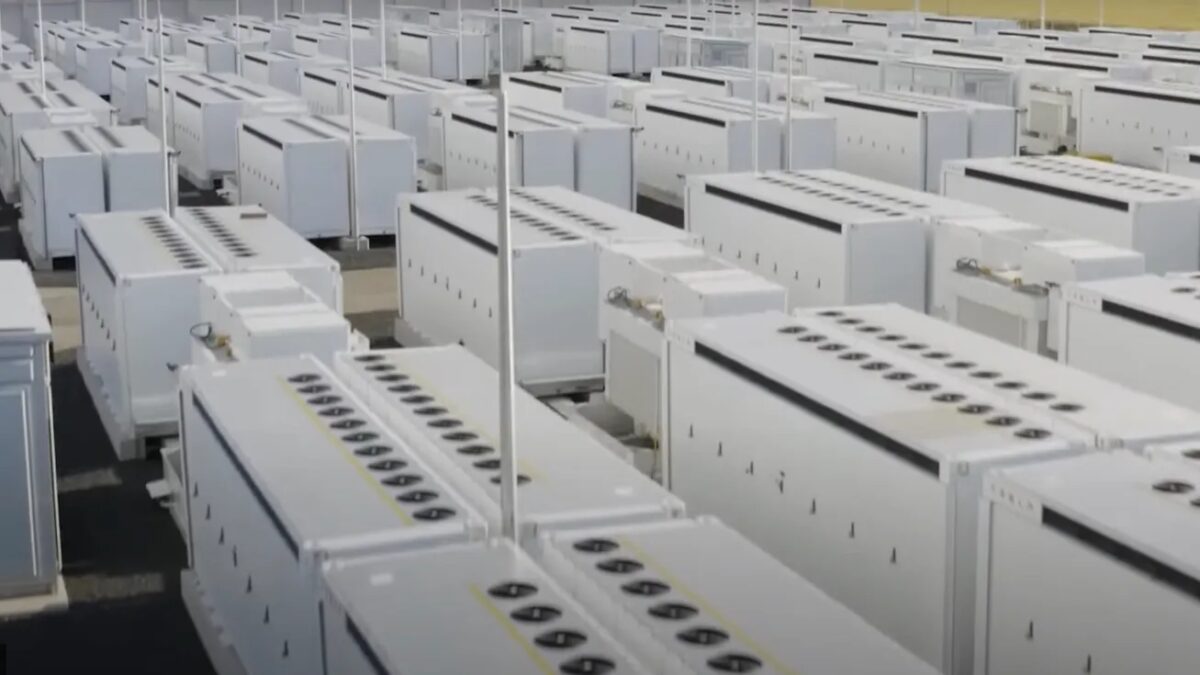
Tesla and NatPower have agreed to build 25 GWh of energy storage across Europe, starting with projects in the UK and Italy. The first phase is pegged at $4-5 billion and uses Tesla Megapack systems, plus software that helps shift charging and discharging to exploit power-price swings instead of leaving batteries sitting there looking heroic.
This is bigger than a single battery deal. NatPower says the rollout is only the opening move in a programme that is meant to go beyond 100 GWh of installed capacity, with total revenue over 20 years potentially reaching $15 billion. That puts the project in the same league as the long-duration storage race now heating up across Europe, where grid operators are under pressure from more wind, more solar, and more volatile electricity prices.
Tesla Megapack and trading software
The hardware side is straightforward: industrial battery clusters built on Tesla Megapack. The less obvious part is the trading technology Tesla is supplying, which manages when the batteries charge and discharge so the assets can earn money from market movements, not just sit on standby for emergencies.
That matters because storage economics have been moving fast. Competitors from Fluence to Wärtsilä have been pushing similar utility-scale systems, while European policymakers keep looking for ways to make intermittent renewables behave more like reliable baseload. Whoever controls the software layer gets a louder voice in how valuable each megawatt-hour becomes.
Why the UK and Italy are first
NatPower has not broken out the individual sites yet, but the UK and Italy are sensible starting points. Both markets have seen rising demand for flexibility as renewable generation grows and price spikes become more common, which is exactly the kind of environment where big batteries can do more than smooth a few peaks.
- Total planned storage: 25 GWh
- First phase value: $4-5 billion
- Initial countries: the UK and Italy
- Longer-term target: more than 100 GWh
- Potential 20-year revenue: $15 billion
A storage buildout with a business model attached
The smart part of the deal is that it treats storage as infrastructure and a trading business at the same time. Europe needs both, and that combination is likely to pull in more capital than a pure resilience pitch ever could.
The open question is how fast NatPower can turn the headline number into operating projects. A 25 GWh announcement sounds impressive, but the real test will be grid connections, permitting, and delivery timelines – the part where many ambitious energy plans lose their shine.