

Repairs, upgrades and Valve’s hardware layout
Valve is also leaning into repairability, at least in the usual ”please don’t panic with a screwdriver” sense. Digital Foundry says swapping the RAM takes more work than replacing the SSD, and Valve is preparing teardown instructions while working with iFixit on repair guides and spare parts. That is a sensible move for a compact gaming box that will almost certainly end up on desks, shelves, and coffee tables with questionable airflow.
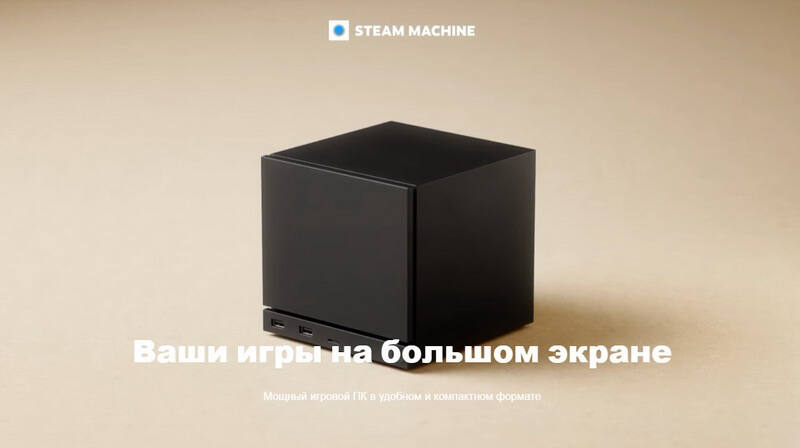
Inside, Steam Machine pairs a semi-custom AMD Zen 4 processor with six cores and 12 threads with an RDNA 3 graphics chip carrying 28 compute units and 8 GB of GDDR6 memory. The base model starts at $1049 with a 512 GB SSD, while the 2 TB version is priced at $1349. Valve also plans bundles with a Steam controller, listed at $1128 and $1428 for the 512 GB and 2 TB configurations.
How much the Steam Machine memory split could matter
The real open question is not whether Valve can make both versions work, but whether buyers will care once reviews land. If performance ends up close enough, the cheaper manufacturing path wins. If dual-channel mode shows a consistent edge in games, Valve may find itself explaining why ”same memory capacity” does not always mean ”same memory behavior.”
Repairs, upgrades and Valve’s hardware layout
Valve is also leaning into repairability, at least in the usual ”please don’t panic with a screwdriver” sense. Digital Foundry says swapping the RAM takes more work than replacing the SSD, and Valve is preparing teardown instructions while working with iFixit on repair guides and spare parts. That is a sensible move for a compact gaming box that will almost certainly end up on desks, shelves, and coffee tables with questionable airflow.
Inside, Steam Machine pairs a semi-custom AMD Zen 4 processor with six cores and 12 threads with an RDNA 3 graphics chip carrying 28 compute units and 8 GB of GDDR6 memory. The base model starts at $1049 with a 512 GB SSD, while the 2 TB version is priced at $1349. Valve also plans bundles with a Steam controller, listed at $1128 and $1428 for the 512 GB and 2 TB configurations.
How much the Steam Machine memory split could matter
The real open question is not whether Valve can make both versions work, but whether buyers will care once reviews land. If performance ends up close enough, the cheaper manufacturing path wins. If dual-channel mode shows a consistent edge in games, Valve may find itself explaining why ”same memory capacity” does not always mean ”same memory behavior.”
- One 16 GB DDR5-5600 SODIMM: single-channel mode
- Two 8 GB DDR5 modules: dual-channel mode
- Two SODIMM slots are available, so users can expand memory later
Repairs, upgrades and Valve’s hardware layout
Valve is also leaning into repairability, at least in the usual ”please don’t panic with a screwdriver” sense. Digital Foundry says swapping the RAM takes more work than replacing the SSD, and Valve is preparing teardown instructions while working with iFixit on repair guides and spare parts. That is a sensible move for a compact gaming box that will almost certainly end up on desks, shelves, and coffee tables with questionable airflow.
Inside, Steam Machine pairs a semi-custom AMD Zen 4 processor with six cores and 12 threads with an RDNA 3 graphics chip carrying 28 compute units and 8 GB of GDDR6 memory. The base model starts at $1049 with a 512 GB SSD, while the 2 TB version is priced at $1349. Valve also plans bundles with a Steam controller, listed at $1128 and $1428 for the 512 GB and 2 TB configurations.
How much the Steam Machine memory split could matter
The real open question is not whether Valve can make both versions work, but whether buyers will care once reviews land. If performance ends up close enough, the cheaper manufacturing path wins. If dual-channel mode shows a consistent edge in games, Valve may find itself explaining why ”same memory capacity” does not always mean ”same memory behavior.”
Valve’s Steam Machine is turning out to be a little less uniform than the first look suggested. While the total memory stays the same, early units may ship with either one 16 GB DDR5-5600 SODIMM or two 8 GB modules, depending on what Valve can source in volume.
That detail matters because it changes how the machine behaves behind the scenes: a single stick means single-channel operation, while two sticks enable dual-channel memory. Valve says its own testing did not show a large performance gap, but dual-channel memory is still the cleaner setup on paper, and independent testing has not fully settled the question yet. Supply chains, as ever, are the real product manager.
Steam Machine memory configurations
According to Valve engineers speaking in a Gamers Nexus interview, the shipping configuration will depend on availability rather than a single fixed bill of materials. That also explains why some review samples may differ from what Digital Foundry saw in its test system, which used one 16 GB module.
- One 16 GB DDR5-5600 SODIMM: single-channel mode
- Two 8 GB DDR5 modules: dual-channel mode
- Two SODIMM slots are available, so users can expand memory later
Repairs, upgrades and Valve’s hardware layout
Valve is also leaning into repairability, at least in the usual ”please don’t panic with a screwdriver” sense. Digital Foundry says swapping the RAM takes more work than replacing the SSD, and Valve is preparing teardown instructions while working with iFixit on repair guides and spare parts. That is a sensible move for a compact gaming box that will almost certainly end up on desks, shelves, and coffee tables with questionable airflow.
Inside, Steam Machine pairs a semi-custom AMD Zen 4 processor with six cores and 12 threads with an RDNA 3 graphics chip carrying 28 compute units and 8 GB of GDDR6 memory. The base model starts at $1049 with a 512 GB SSD, while the 2 TB version is priced at $1349. Valve also plans bundles with a Steam controller, listed at $1128 and $1428 for the 512 GB and 2 TB configurations.
How much the Steam Machine memory split could matter
The real open question is not whether Valve can make both versions work, but whether buyers will care once reviews land. If performance ends up close enough, the cheaper manufacturing path wins. If dual-channel mode shows a consistent edge in games, Valve may find itself explaining why ”same memory capacity” does not always mean ”same memory behavior.”