

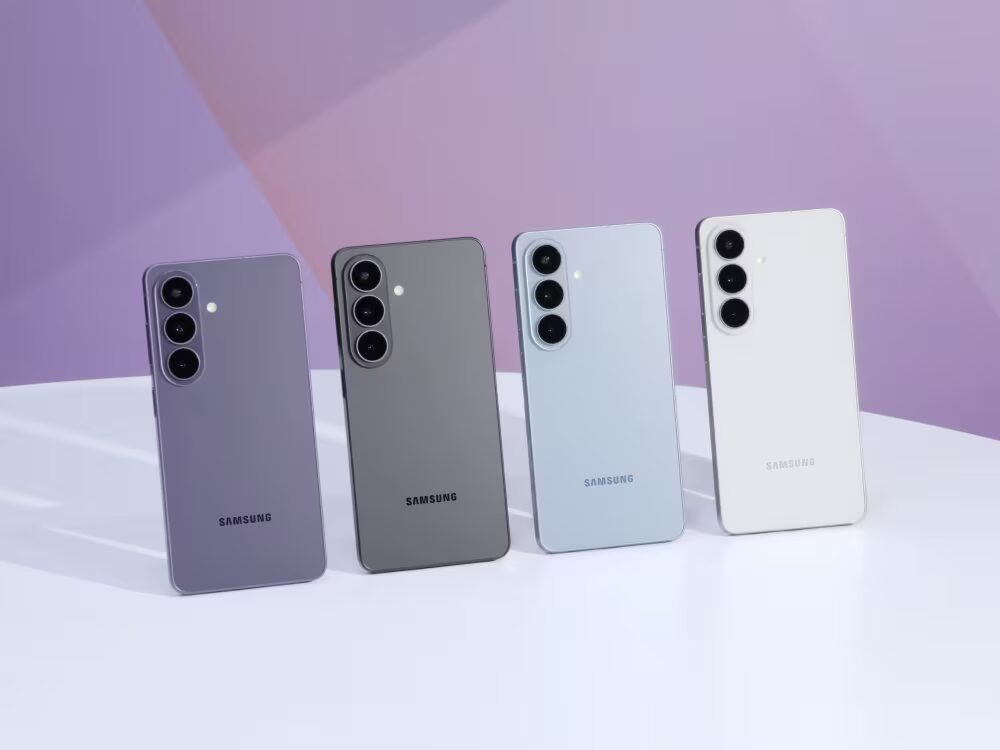
Samsung’s 2026 lineup covers everything from budget-friendly Galaxy A phones to flagship Galaxy S series and premium foldables in the Z lineup. Even entry-level models feature decent cameras, powerful processors, and large batteries – the real question is which features matter most to you. This guide breaks down the top Samsung phones to help you pick the right fit, including detailed pricing and specs comparisons.
Samsung Galaxy S26 Ultra: flagship power without compromises
Pros: innovative Privacy Display, long-lasting battery, handy AI features, reliably excellent cameras.
Cons: inconsistent AI functionality, no magnetic wireless charging, lots of specs echo the S25 Ultra.
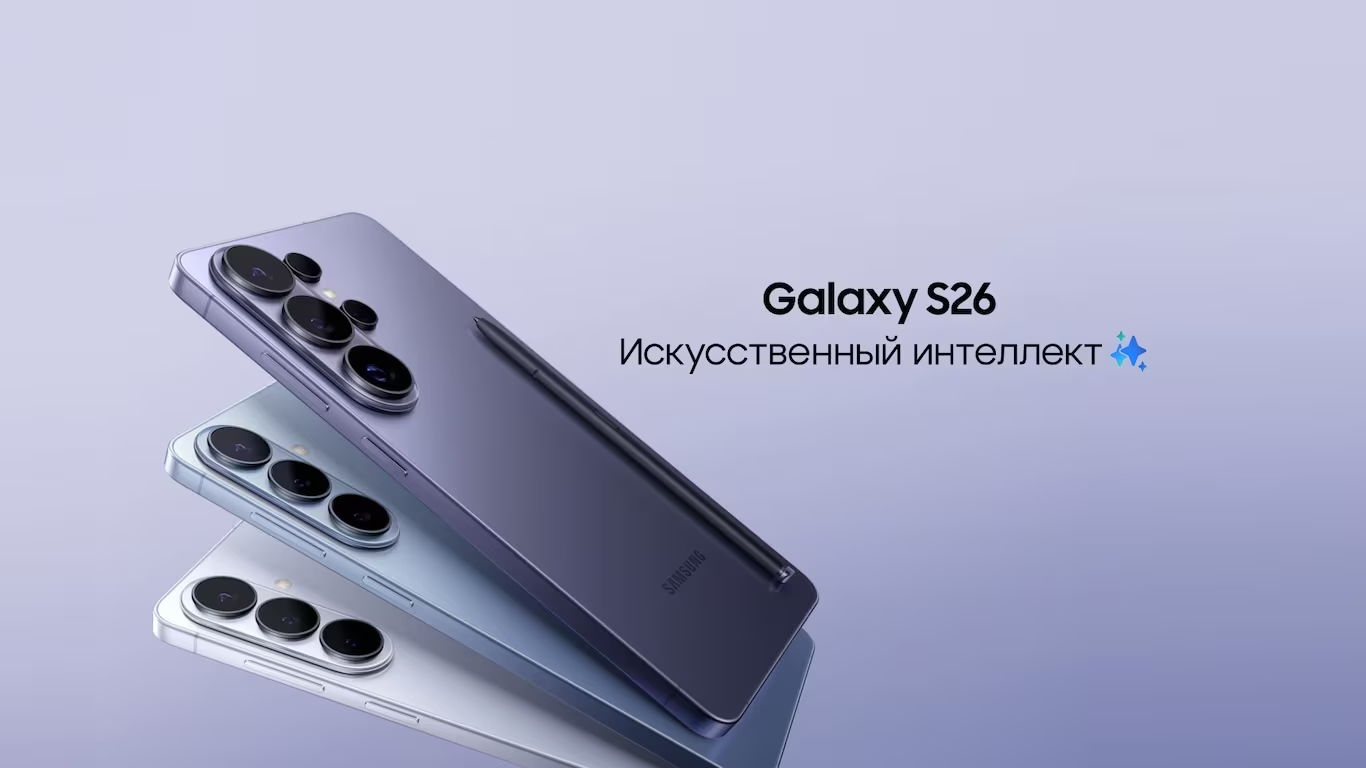
Priced at $1,300 for the 256GB model, the Galaxy S26 Ultra is more evolution than revolution. Thinner and lighter than its predecessor at 7.9 mm and 214 grams, it feels noticeably sleeker in hand. The standout hardware upgrade is the new Privacy Display – unlike a cheap screen protector, it lets you selectively dim the screen for specific apps like banking, email, or the lock screen, preventing prying eyes from catching passwords or PINs. You can even limit dimming to just notifications, keeping sensitive info shielded with minimal compromise.
Cameras remain unchanged on paper but continue to deliver sharp, stable shots. A highlight is the new Horizontal Lock mode for video, keeping the horizon steady even when you rotate the phone 360 degrees. Battery life comfortably lasts about a day and a half on a single charge.
On the AI front, the Now Nudge feature offers smart real-time suggestions based on what’s on screen – for example, it quickly directs you to relevant photo albums when someone asks for trip pictures. Document Scan automatically activates when snapping documents, removing shadows and creases and exporting the final image to PDF instantly.
Who it’s for: anyone wanting a large screen, powerhouse cameras, S Pen support, and long battery life without nightly charging worries.
Who should skip it: those who don’t need flagship-level cameras or prefer a more compact device-the base Galaxy S26 offers most features for less money.
Samsung Galaxy S26: a balanced flagship with a steep price
Pros: solid cameras, modern design, useful AI features.
Cons: $100 price hike doesn’t bring significant upgrades, 25W wired charging feels dated, most improvements are software-based.
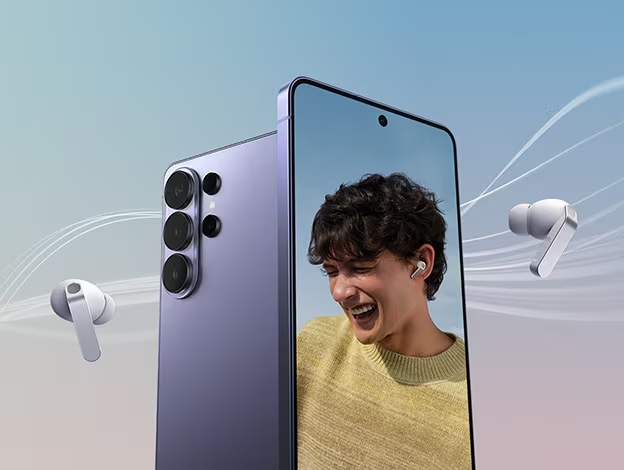
The Galaxy S26, priced at $900 for the 256GB model, is a reliable all-rounder flagship. It handles gaming, photography, and daily tasks competently without leading in any category but without glaring weaknesses either. Starting storage increased to 256GB, and Samsung’s promise of seven years of software and security updates means you won’t need to worry about obsolescence anytime soon.
The new Horizontal Lock video mode also appears here, alongside other useful but situational AI features. The $100 jump from the S25 seems more a reflection of market dynamics than real improvements.
Who it’s for: those wanting a dependable flagship without compromises and willing to pay a premium for years of future-proofing.
Who should skip it: users prioritizing battery life (OnePlus 15 leads here), top-tier AI camera features (Google Pixel 10 Pro), or budget – those might prefer the Galaxy S25 or other last year’s flagships.
Samsung Galaxy Z Fold 7: foldable finally done right
Pros: slimmer 4.2 mm body, 200MP main camera, Snapdragon 8 Elite CPU, rugged build.
Cons: $2,000 price tag, battery unchanged from last year, limited 25W wired charging.
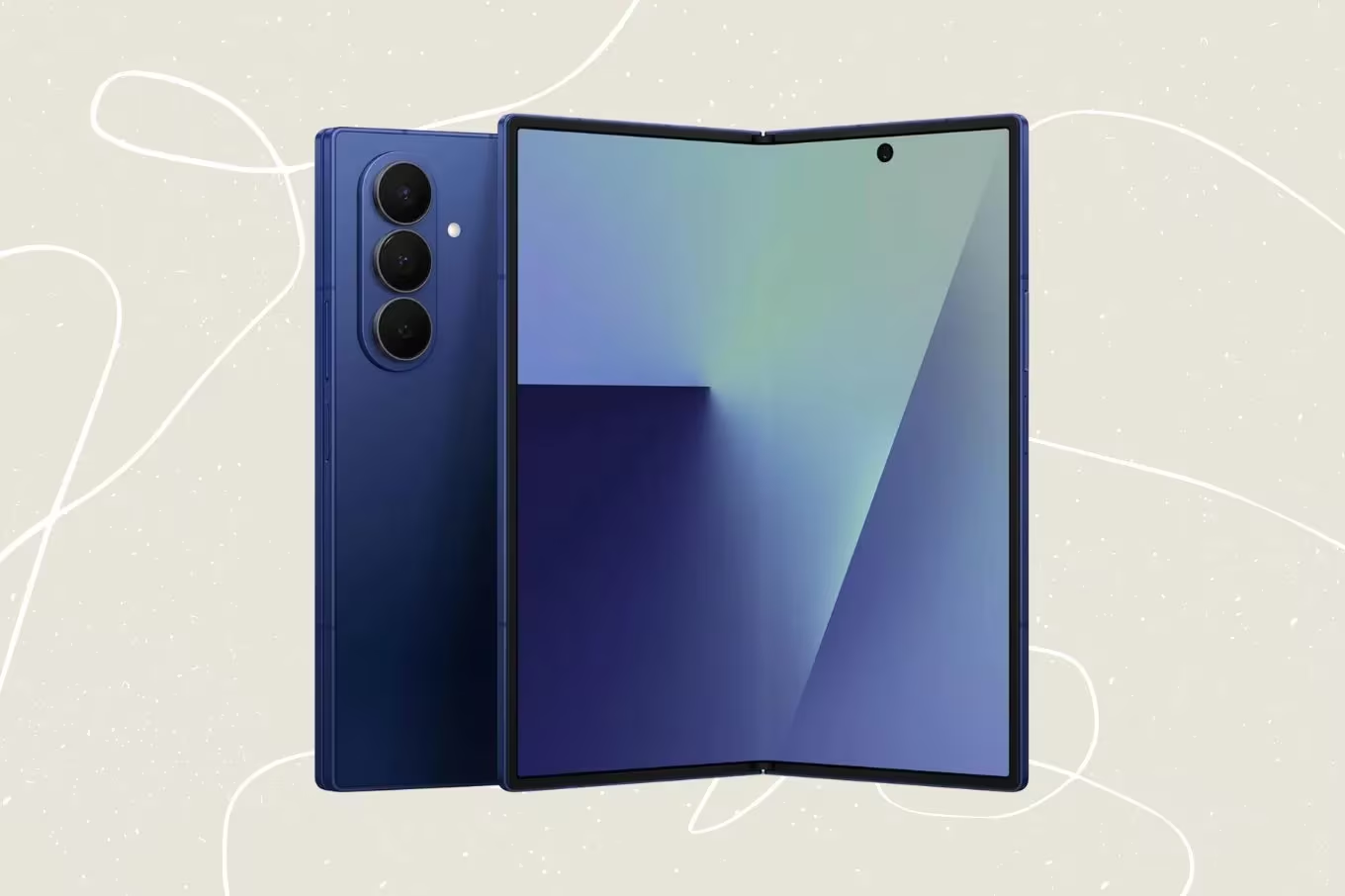
The Galaxy Z Fold 7 is Samsung’s most refined foldable yet. Its 6.5-inch outer screen makes the closed phone feel like a regular smartphone, while the 8-inch inner display is 11% larger than the Z Fold 6, perfect for multitasking up to three apps side-by-side. The major hardware upgrade is the 200MP main camera, delivering image quality on par with the S25 Ultra flagship.
The battery remains at 4400 mAh-modest compared to Chinese competitors, but at least there’s no downgrade. Samsung backs the Fold 7 with seven years of updates, along with AI features like Galaxy AI, Gemini Live, and Circle to Search.
Who it’s for: those tired of conventional phones and craving a massive screen without lugging a bulky tablet.
Who should skip it: shoppers daunted by the $2,000 price or users who don’t need to unfold their phone often-the bright external display is handy enough to avoid frequent unfolding.
Samsung Galaxy Z Flip 7: clamshell with a big screen and personality
Pros: massive 6.9-inch internal display with vivid colors, impressive 4.1-inch external screen, sturdy build, well-optimized One UI 8.
Cons: heats up during video and gaming, battery life unchanged despite bigger battery, external screen can still improve.
At $1,100 for the 256GB model, the Galaxy Z Flip 7 is the most polished Samsung flip phone yet. Compared to the Flip 6, it sports a smaller crease, larger internal and external displays, a thinner build, and a bigger battery.
Its 6.9-inch interior screen is second largest among Samsung phones after the Fold 7, turning movies, social apps, and the new 90:10 split-screen mode in One UI 8 into an immersive experience. The 4.1-inch outer display received fresh animations for video recording, charging, and selfies.
The only downside is battery performance. Despite a larger cell, real-world endurance matches the Flip 6 – most days you get through until evening with 15-20% left, but some days require earlier top-ups.
Who it’s for: fans curious about foldables or owners of Flip 4 and earlier models ready for a noticeable upgrade. Current Flip 6 owners don’t need to rush unless they want significantly bigger screens.
Who should skip it: people often outdoors in dusty, sandy, or rugged environments, as the phone isn’t dust or sand friendly.
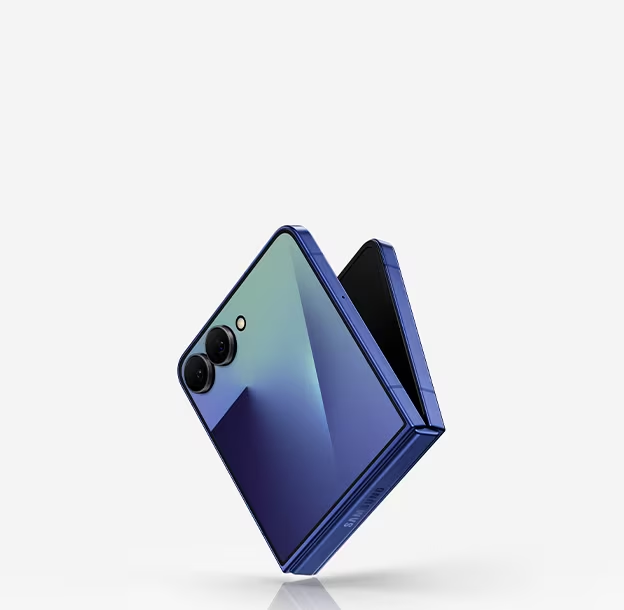
Samsung Galaxy S25 Edge: ultra-thin flagship for lightweights
Pros: featherweight design, 200MP main camera, titanium frame and Gorilla Glass, Snapdragon 8 Elite, 12GB RAM.
Cons: mediocre battery, just 25W wired charging, high price, only two rear cameras.
The Galaxy S25 Edge isn’t for everyone, but it’s hard to find alternatives if you want its blend of lightness and power. At just 163 grams and record-thin for the series, it doesn’t feel fragile thanks to Gorilla Glass Ceramic 2 front and Victus 2 rear. It shares the 200MP primary sensor with the S25 Ultra flagship but drops the telephoto lens.
Its slim build comes at the expense of battery size – 3900 mAh is the smallest in the S25 lineup. A full day’s charge is standard, but heavy users may need to plug in before evening.
Who it’s for: those prioritizing light, slim phones and wanting a unique non-foldable design.
Who should skip it: users who put battery life first or want a more affordable device.
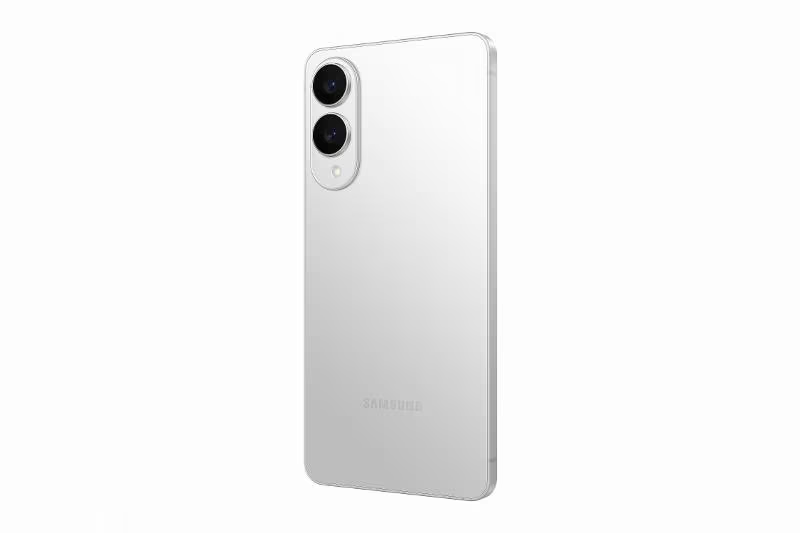
Samsung smartphone comparison chart
| Feature | Samsung Galaxy S26 Ultra | Samsung Galaxy S26 | Samsung Galaxy Z Fold 7 | Samsung Galaxy Z Flip 7 | Samsung Galaxy S25 Edge |
|---|---|---|---|---|---|
| Screen size and specs | 6.9″ AMOLED; 3120×1440; adaptive 1-120Hz | 6.3″ AMOLED; 2340×1080; adaptive 1-120Hz | Outer: 6.5″ AMOLED, 2520×1080, 1-120Hz; Inner: 8″ AMOLED, 2184×1968, 1-120Hz | Outer: 4.1″ AMOLED, 1048×948, 120Hz; Inner: 6.9″ AMOLED, 2520×1080, 1-120Hz | 6.7″ QHD+ AMOLED; 120Hz |
| Pixel density | 500 ppi | 411 ppi | Outer: 422 ppi; Inner: 368 ppi | Outer: 342 ppi; Inner: 397 ppi | 513 ppi |
| Dimensions (inches) | 6.44 × 3.07 × 0.31 | 5.89 × 2.82 × 0.28 | Open: 5.63 × 6.24 × 0.17; Folded: 2.87 × 6.24 × 0.35 | Open: 2.96 × 6.56 × 0.26; Folded: 2.96 × 3.37 × 0.26 | 2.98 × 6.23 × 0.23 |
| Dimensions (mm) | 163.6 × 78.1 × 7.9 mm | 149.6 × 71.7 × 7.2 mm | Open: 143.2 × 158.4 × 4.2 mm; Folded: 72.8 × 158.4 × 8.9 mm | Open: 75.2 × 166.7 × 6.5 mm; Folded: 75.2 × 85.5 × 13.7 mm | 75.6 × 158.2 × 5.8 mm |
| Weight | 214g (7.55 oz) | 167g (5.89 oz) | 215g (7.58 oz) | 188g (6.63 oz) | 163g (5.75 oz) |
| OS | Android 16 | Android 16 | Android 16 | Android 16 | Android 15 |
| Main camera | 200MP wide, 50MP ultra-wide, 10MP 3x tele, 50MP 5x tele | 50MP wide, 12MP ultra-wide, 10MP 3x tele | 200MP wide, 12MP ultra-wide, 10MP tele | 50MP wide, 12MP ultra-wide | 200MP wide, 12MP ultra-wide |
| Front camera | 12MP | 12MP | 10MP (inner), 10MP (outer) | 10MP | 12MP |
| Video recording | 8K | 8K | 8K | 4K | 8K |
| Processor | Qualcomm Snapdragon 8 Elite Gen 5 for Galaxy | Qualcomm Snapdragon 8 Elite Gen 5 for Galaxy | Qualcomm Snapdragon 8 Elite for Galaxy | Samsung Exynos 2500 | Snapdragon 8 Elite |
| RAM and storage | 12GB + 256GB; 16GB + 512GB or 1TB | 12GB + 256GB or 512GB | 12GB + 256GB; 12GB + 512GB; 16GB + 1TB | 12GB + 256GB; 12GB + 512GB | 12GB + 256GB or 512GB |
| Memory card slot | No | No | No | No | No |
| Battery | 5000mAh | 4300mAh | 4400mAh | 4300mAh | 3900mAh |
| Fingerprint sensor | Under display | Under display | Yes | Yes | Under display |
| Port | USB-C | USB-C | USB-C | USB-C | USB-C |
| Headphone jack | No | No | No | No | No |
| Starting price | $1,300 (256GB) | $900 (256GB) | $2,000 (256GB) | $1,100 (256GB) | $1,100 (256GB) |
How to choose your Samsung smartphone: three practical tips
Try before you buy. Handling a phone in person is important before dropping a sizable amount – in-hand feel can be worlds apart from on-screen impressions.
Pick a protective case. No matter which Samsung you choose, a sturdy case is a smart investment, especially for foldables or glass-backed phones.
Don’t overpay for features you won’t use. The Galaxy S25 FE, at $650, offers solid photography and all essential flagship perks – plenty for most users.
Samsung remains one of the few manufacturers with an expansive portfolio covering entry-level to premium foldables, standing out with aggressively long update support and hardware variety. Compared to Apple’s streamlined lineup or Google’s Pixel series, Samsung offers more choice, but navigating its ecosystem requires prioritizing which features you actually need.
The foldables, particularly the Z Fold 7 and Z Flip 7, illustrate Samsung’s push to make flexible phones practical and polished, though prices remain north of $1,000. Meanwhile, the S series continues to balance performance and battery life, appealing to users seeking traditional phones but willing to pay for Android’s top-tier experience.
Looking ahead, watch for Samsung’s next moves in battery technology, AI integration, and camera innovation. Especially for foldables, how they tackle durability, battery life, and user interface will determine if these devices move beyond niche status. For mainstream buyers, balancing cost and longevity remains the core challenge amid rising smartphone prices.