

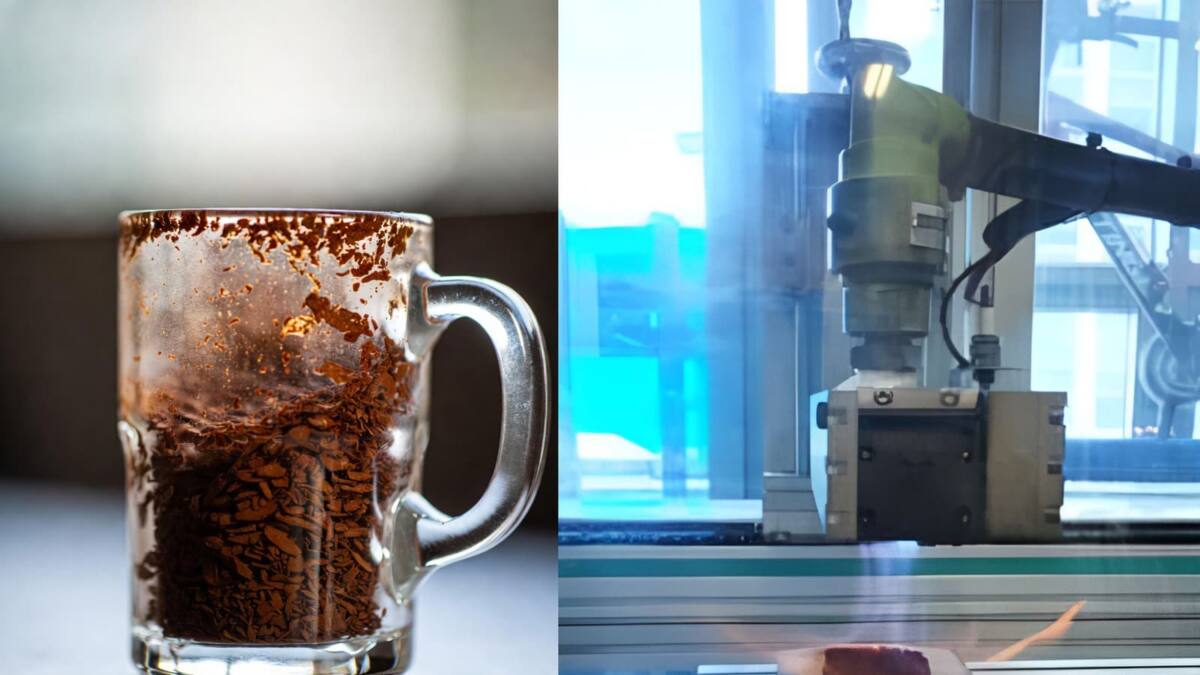
A South Korean research team has found a way to turn wet coffee grounds into an anthracite-like solid fuel in about 90 seconds, skipping the usual drying step that makes biomass recycling slow, expensive, and annoyingly energy-hungry. The result is a porous biochar that performs a lot more like anthracite than the sludge left at the bottom of a cafetière.
The process could make coffee grounds more valuable as an energy feedstock, but it also points to a broader problem: a lot of organic waste is hard to use because it is too wet. Traditional routes such as hydrothermal carbonization and torrefaction work, but they take much longer, which is why this plasma approach stands out.
How the plasma pyrolysis process works
Researchers from the Korea Institute of Geoscience and Mineral Resources, known as KIGAM, used a system called Flame Plasma Pyrolysis. It heats the material with a plasma flame at about 800-900 C, and instead of fighting the moisture in the coffee grounds, it uses it.
As the wet particles hit the hot zone, the water flashes into steam and pressure builds inside the material. That creates what the team described as an ”effect of popcorn”: tiny internal bursts that break down the biomass, make it more porous, and accelerate carbonization.
Fuel quality and emissions profile
The finished biochar reached a calorific value of 29 MJ per kilogram, roughly one-third higher than the original coffee grounds. Bound carbon also rose sharply, from 15.6% to 46.2%, which is the kind of jump that turns waste into something genuinely usable.
There is a cleaner side to the process, too. The treatment removes sulfur compounds completely, so burning the fuel should not produce sulfur dioxide, a major air pollutant. Compared with older thermal methods, it also generates far less smoke and tar.
Uses beyond coffee waste
The material is not limited to combustion. Because it is highly porous, it could also be used for activated carbon, industrial sorbents, and filtration systems, which broadens the business case beyond simple energy recovery.
KIGAM says the same approach could be applied to food waste, sewage sludge, and agricultural residues. If that holds up at scale, the bigger prize may not be coffee grounds fuel at all, but a faster way to turn difficult wet waste streams into something industry can actually sell.