

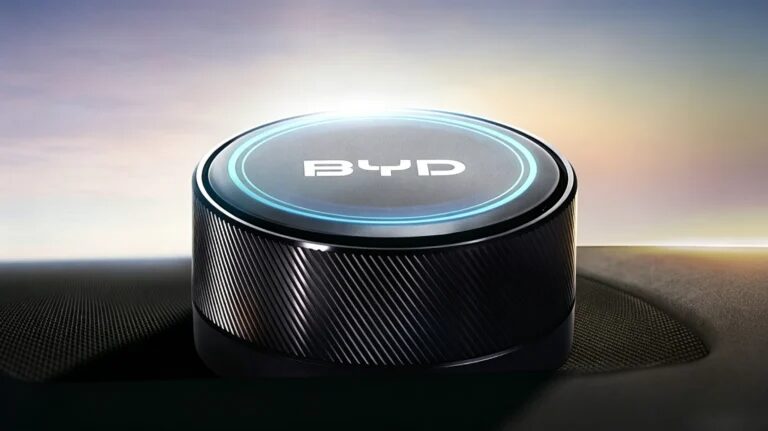
BYD has introduced a small but very 2026 piece of car tech: the Smart Button, a customizable wireless shortcut device designed to keep drivers from stabbing at a giant touchscreen while moving. Debuting alongside the flagship electric BYD Great Tang, the BYD Smart Button uses a magnetic mount so it can sit on the center console or door panels, and it lets users trigger more than 20 cabin functions without reaching for voice control.
The basic idea is simple. Instead of burying everyday controls inside a menu maze, BYD gives the driver a physical button that supports single presses, double presses, and rotating actions. That is not exactly new in the auto world, but it is a clear sign that carmakers are backing away from the ”everything on the screen” era that made infotainment look modern and use feel annoying.
How BYD Smart Button works
BYD says the accessory uses near-field communication chips for pairing and synchronization. Because the button is wireless and movable, it can be placed where the driver or front passenger finds it easiest to reach, which is the whole point: less visual searching, less fiddling, fewer reasons to take eyes off the road.
- Magnetic mounting for the center console or door panels
- Single press, double press, and rotation support
- More than 20 pre-programmed cabin functions
- No voice command required for the basic shortcut actions
A familiar move with a different target
Physical shortcut controls are making a quiet comeback across the industry because touchscreen-only cabins have turned out to be elegant in brochures and irritating in traffic. Xiaomi already went down a similar path with separate magnetic shortcut buttons in the YU7, linking them to smart-home and cabin functions through the Internet of Things. BYD is aiming at the same frustration point, but in a more premium way, tied to one of its flagship EVs.
That also hints at where the competition is headed: not more screens, but more ways to escape them. Expect more brands to copy the idea, especially as regulators and safety-minded buyers keep pushing for controls that can be operated by feel instead of by guesswork.