

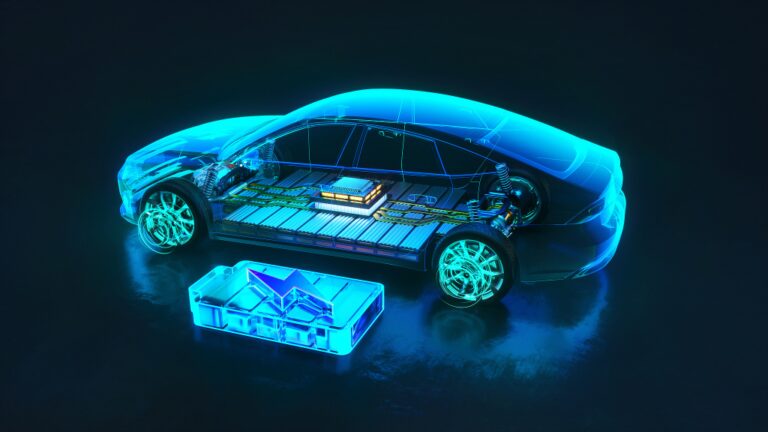
China is about to tighten the screws on electric-vehicle safety. From 1 July 2026, two mandatory national standards will take effect: one for electric vehicles, and another for their power batteries. Together, they push the industry beyond software warnings and into hard physical safeguards, with a new ”one-button power cut” mechanism and tougher battery tests aimed at stopping fires, explosions, and toxic smoke before they hurt people.
The new China EV battery safety rules arrive as the country’s market keeps growing. According to the China Association of Automobile Manufacturers, EV production reached 1.554 million units in May and sales hit 1.496 million. By the end of 2025, China had 43.97 million electric vehicles on the road, which means any flaw in safety rules scales very fast. Regulators are clearly betting that the next phase of growth has to look less like a sprint and more like adult supervision.
A physical power cutoff replaces software-only control
The vehicle standard, GB18384-2025, requires a physical mechanism that can disconnect the high-voltage circuit from the energy storage system with a single action. That is a meaningful shift: software can fail, freeze, or be bypassed, while a physical cutoff gives drivers and rescuers a simpler way to isolate power in an emergency.
For first responders, that is the real prize. A reliable shutoff can save time during crashes, battery damage, or fire calls, and the new rule makes safety hardware part of the car’s basic architecture rather than an optional extra dressed up as innovation.
China EV battery safety rules now target fire, impact, and charging stress
The battery standard, GB38031-2025, raises the bar in three places. Thermal safety now requires that batteries do not catch fire or explode, while alarms are still mandatory; smoke also must not harm people inside the cabin. That is a stricter standard than the older approach, which focused on warning drivers five minutes before a fire or explosion risk.
- Thermal safety: no fire or explosion, with alarms still required
- Cabin protection: smoke must not injure occupants
- Structural durability: a new bottom-impact test checks protection in underside collisions
- Charging endurance: after 300 fast-charge cycles, batteries must still withstand external short-circuit testing without fire or explosion
That last item is especially pointed. Fast charging is one of the biggest selling points in the EV race, but it is also where battery wear can expose weak cells, sloppy engineering, or over-optimistic claims. China is not banning speed; it is asking manufacturers to prove the hardware can survive it.
What automakers will have to prove next
These standards will almost certainly ripple beyond China’s borders, because global carmakers rarely build one battery system for one market and something weaker for everyone else. The more likely outcome is a higher baseline for EV design, especially for battery packs, crash protection and emergency isolation systems.
The open question is how quickly suppliers can adapt without slowing production or raising costs. Some brands will treat this as paperwork with new test labels; the smarter ones will treat it as a product reset and market the extra safety as a selling point. In EVs, confidence is a feature too.