

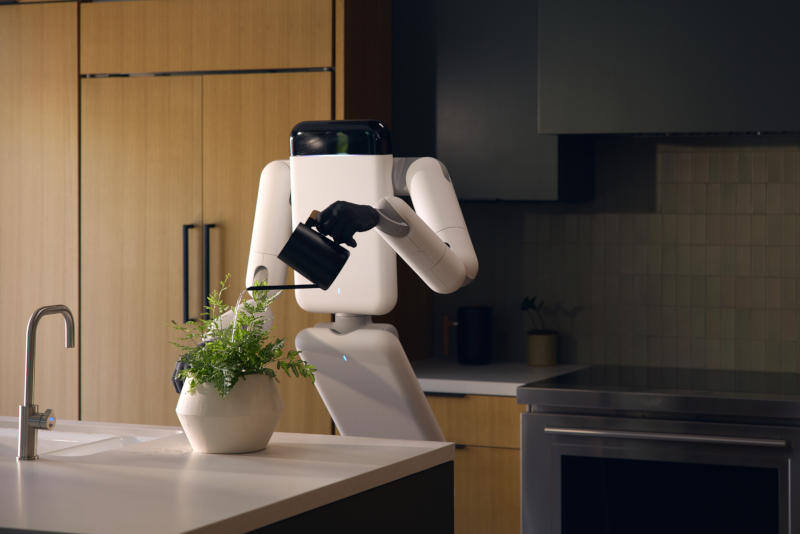
French startup Genesis AI has unveiled Eno, a humanoid robot that looks less like a sci-fi extra and more like a piece of clever industrial equipment. Backed in part by former Google chief executive Eric Schmidt, the company is betting that robots do not need a face, legs, or even a conventional body to do human work.
That stance is more practical than provocative. Genesis AI says Eno was designed around what humans can do, not how they look, which helps explain the stripped-down build: no head, no legs, a wheel base for movement, and a folding form that can collapse like a deck chair. In other words, it is ”humanoid” in the engineering sense, not the cosplay sense.
Hands built for human tools
The one place Genesis AI has kept the human template is the upper body. The company says Eno’s arms were developed to match the shape and function of human hands closely enough to handle tools and objects already made for people. That is the smart part: instead of forcing factories and hospitals to redesign their kit, the robot is being shaped to fit the world as it already exists.
That’s also where the real competition is heading. Tesla’s Optimus and Figure’s humanoid robots are chasing general-purpose labor too, but most robotics companies still end up sacrificing some human likeness once utility takes over. Genesis AI seems to have decided that wheel-based mobility and a simplified body are a fair trade if the robot can work longer, fit tighter spaces, and cost less to deploy.
Eno robot rollout starts in 2026
Genesis AI plans to start producing and rolling out Eno for customers by the end of 2026. The first deployments are meant for manufacturing, laboratories, and logistics, before the robot is pushed into hospitals, hotels, and eventually consumer settings. That rollout path is sensible: the first buyers of any usable humanoid are usually the places that tolerate awkwardness as long as the machine saves labor.
- Form factor: headless and legless humanoid design
- Mobility: wheel platform instead of walking legs
- Use case: general-purpose robot, not a single-task machine
- First target sectors: manufacturing, labs, logistics
The open question is not whether Eno looks human enough. It is whether buyers care. If the robot can handle tools, move through real workplaces, and avoid the costly awkwardness of a full biped, Genesis AI may have found a more honest version of the humanoid robot category. If not, it will become another demo that impressed a room and disappointed a procurement team.