

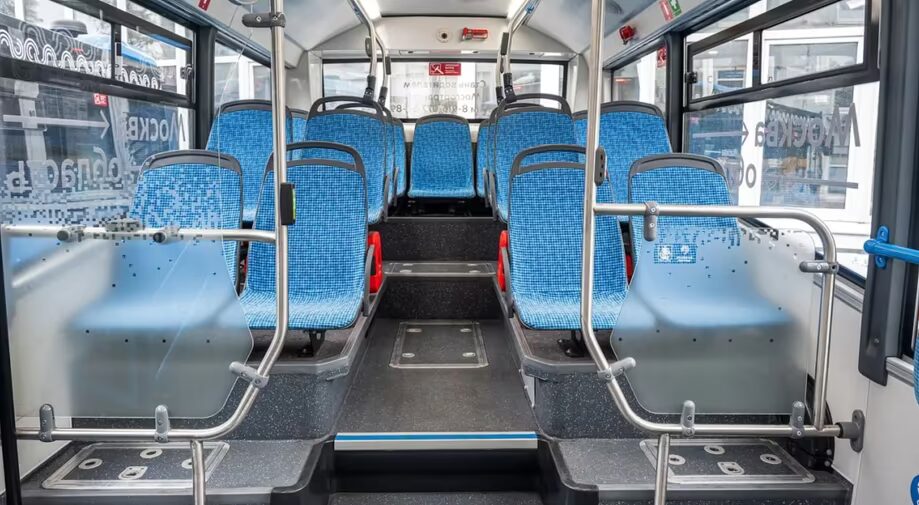
Mosgortrans has launched its first KamAZ-4290 mid-size bus on the ”Moscow – region” route from Khovrino metro station to Podrezkovo, marking a new phase in expanding suburban transit. The company plans to receive 72 KamAZ-4290 vehicles by the end of the year as part of a wider fleet update.
The KamAZ-4290 seats 25 passengers and can carry up to 70 including standing riders. Its interior features climate control, media panels, and USB charging ports. At the entrance, there is a dedicated space for strollers and bicycles – a must-have for suburban routes, where passenger needs differ from city commutes.
Moscow’s Deputy Mayor for Transport, Maxim Liksutov, explained the buses are based at Mosgortrans’s Tushino depot and assigned specifically to links between Moscow and the Moscow Region (Moscow Oblast). Since early 2026, 17 such routes have launched, serving eight city districts with a total fleet of 360 large and mid-size buses.
The focus on mid-size buses like the KamAZ-4290 makes sense given ridership patterns on suburban routes, which tend to be lighter than busy urban corridors. Deploying 12-meter buses there would increase operational costs without significantly improving capacity. KamAZ competes primarily with LiAZ and Volgabus in this mid-size bus segment. For Moscow, introducing the KamAZ-4290 also diversifies a fleet recently dominated by large electric buses in the city.

Over 500 new large and mid-size buses are expected to join Mosgortrans’s fleet this year from various manufacturers. If deliveries of the KamAZ-4290 stick to schedule, this order will represent about 14% of that total. For KamAZ, this is a significant contract: Moscow remains one of Russia’s biggest public transit buyers, and the busy suburban routes offer high visibility for new vehicles on critical regional links.
Suburban bus services are a balancing act worldwide – smaller buses reduce costs when demand is moderate, yet need enough capacity for peak travel times. Moscow’s introduction of the KamAZ-4290 highlights a strategic shift toward segment-appropriate vehicles, an approach also seen in other global cities where transit agencies optimize fleet mix to improve efficiency and passenger comfort. Watching how these buses perform on Moscow’s challenging suburban runs will be key to future procurement decisions, especially as the city continues electrifying and modernizing its public transport network.