

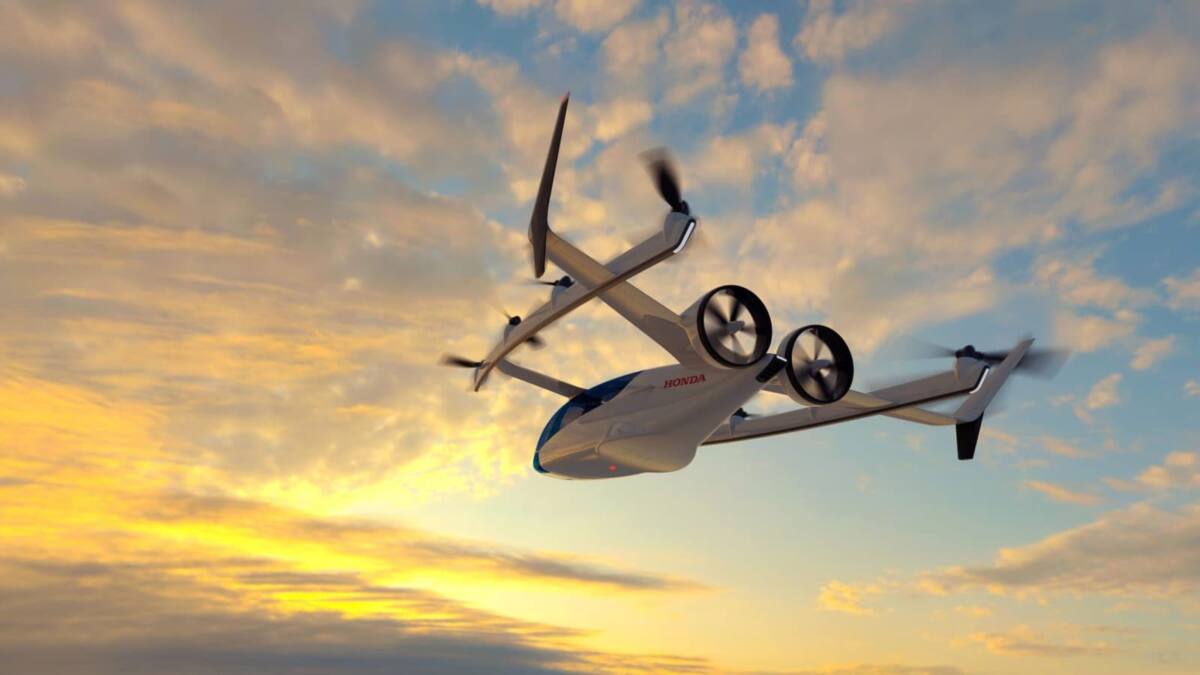
Honda has cleared a key regulatory hurdle in the U.S. and can now test its unmanned electric air taxi, the F1, in California. The FAA approval does not mean the vehicle is ready to carry passengers; it means the company can finally prove whether a 15-minute battery-powered flight can be made safe enough for the real world.
That matters because electric aviation is still stuck in an awkward place: the hardware looks futuristic, but the batteries behave like a compromise. Honda’s case shows how the industry is trying to work around that gap with special permissions, extra safeguards, and carefully boxed-in test conditions.
FAA sets tight limits on Honda’s F1 tests
The trials will happen under an experimental FAA certificate at a private airfield in California. Flights are limited to daytime, and the aircraft must stay within the operator’s line of sight. The maximum takeoff weight is capped at 3,175 kilograms, which is a reminder that even ”flying taxis” are still aircraft first and product demos second.
Honda needed the extra sign-off because the fully electric version of the F1 can stay airborne for about 15 minutes, according to the FAA. That falls short of the usual safety expectations around reserve energy after landing, a problem that applies to much of the eVTOL sector, not just Honda.
Safety systems do the heavy lifting
To get the green light, Honda pointed to a bundle of fail-safes: redundant control systems, an emergency flight-termination system, and a parachute that deploys automatically if there is a critical malfunction or loss of control. The flights will be conducted over private property, which trims risk for everyone outside the test program.
Honda Research Institute will handle the testing. That setup suggests a deliberate, methodical approach rather than a flashy race to the finish line, which is probably sensible in a sector where regulators are still writing the rulebook as the aircraft are being built.
Honda’s hybrid route is longer, but less fragile
The company is not betting on batteries alone. In April, Honda completed the first test flight of a hybrid version of the same air taxi, combining batteries with a gas turbine generator. That prototype can travel up to 400 kilometers, and its first flight lasted about a minute and a half.
That split strategy makes sense. Pure-electric eVTOLs are cleaner and simpler in theory, but hybrid systems buy range and operational breathing room today. If Honda can keep both tracks moving, it may end up with a more realistic path into air mobility than rivals chasing a battery-only headline.
The open question is whether regulators will continue to treat short-range electric aircraft as exceptions for much longer. If battery energy density stays stubbornly behind aviation needs, special approvals like Honda’s may become the rule rather than the workaround.