

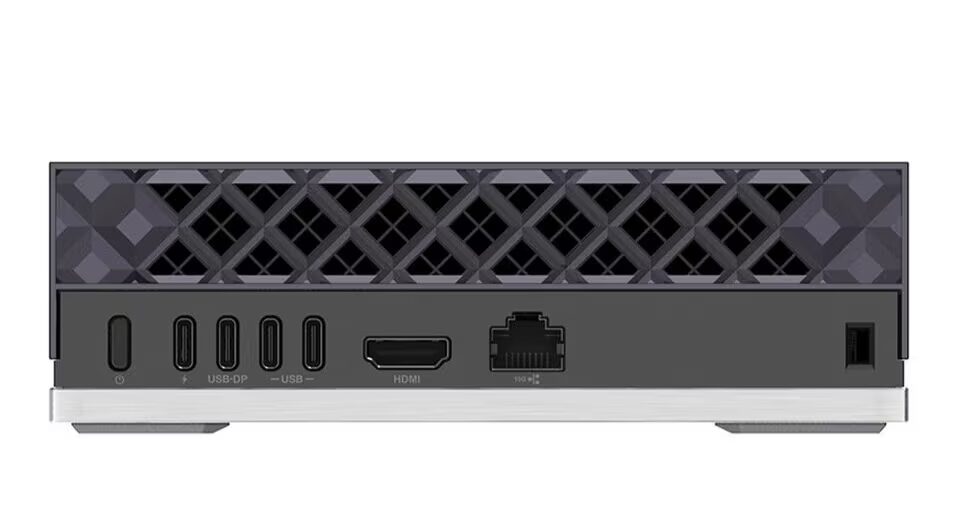
The US just opened preorders for a mini PC powered by AMD’s Ryzen AI Max+ 395 chip and equipped with a massive 128GB of unified LPDDR5X-8000 memory. Designed for AI developers and users running models locally, this compact machine packs serious integrated graphics performance and offers Windows 11 Pro or Linux options – all starting at $4,000.
This is no ordinary mini PC. The Ryzen AI Max+ 395 features 16 cores and 32 threads based on AMD’s new Zen 5 architecture, alongside an integrated Radeon 8060S GPU. What sets this system apart is its colossal shared memory pool – 128GB of fast unified RAM accessible by both CPU and GPU. Such a configuration, particularly with LPDDR5X-8000, is rare in the x86 mini PC segment.
This memory design addresses a key bottleneck for AI practitioners and developers running large models locally. While many compact PCs rely on discrete GPUs with dedicated VRAM to handle heavy workloads, AMD’s solution mirrors Apple’s approach in MacBook Pro and Mac Studio machines, which use unified memory to boost efficiency. However, this is one of the first times a similar design has come to a Windows- and Linux-based mini PC measuring just 149 × 149 × 43.18 mm.
Mini PC specs with Ryzen AI Max+ 395
- AMD Ryzen AI Max+ 395 processor, 16 cores / 32 threads
- Integrated Radeon 8060S graphics
- 128GB unified LPDDR5X-8000 memory
- 2TB SSD storage
- Three USB-C ports
- HDMI 2.1 and 10 Gigabit Ethernet
- Bluetooth 5.4 and Wi-Fi 7
- 120W power supply
The chassis is mostly aluminum, lending it a premium and sturdy feel. The port selection leans toward professional use rather than casual home setups – particularly the inclusion of 10-gigabit Ethernet, which caters to rapid data transfers, access to network storage, and integration into office or studio environments.
Positioned between standard mini PCs and compact AI workstations, this device breaks from the mainstream. Typical mini PCs in this size range use mobile Ryzen or Intel Core Ultra processors paired with up to 64GB of RAM and target office tasks. At $4,000 and with this hardware, AMD offers a notably heavier-duty machine that can close the gap on setups that usually demand discrete graphics.
This product extends AMD’s Ryzen AI Max series, aimed at local AI inference, graphics workloads, and small workstation form factors. Its challengers come in two camps: Apple’s Mac mini and Mac Studio with unified memory chips, and Intel-Nvidia-based compact PCs relying on CPU plus discrete GPU combos. AMD’s unified memory approach delivers a smaller footprint but sacrifices user memory upgradeability, since the LPDDR5X is soldered on.
At $4,000, buyers must weigh not just raw performance but total cost of ownership. Should demand for locally hosted large AI models persist, machines like this could carve out a niche between AI-focused laptops and full-size workstations. The real test will come once shipments start and independent benchmarks evaluate AI inference speeds and integrated graphics efficiency-especially against entry-level professional discrete GPUs.