

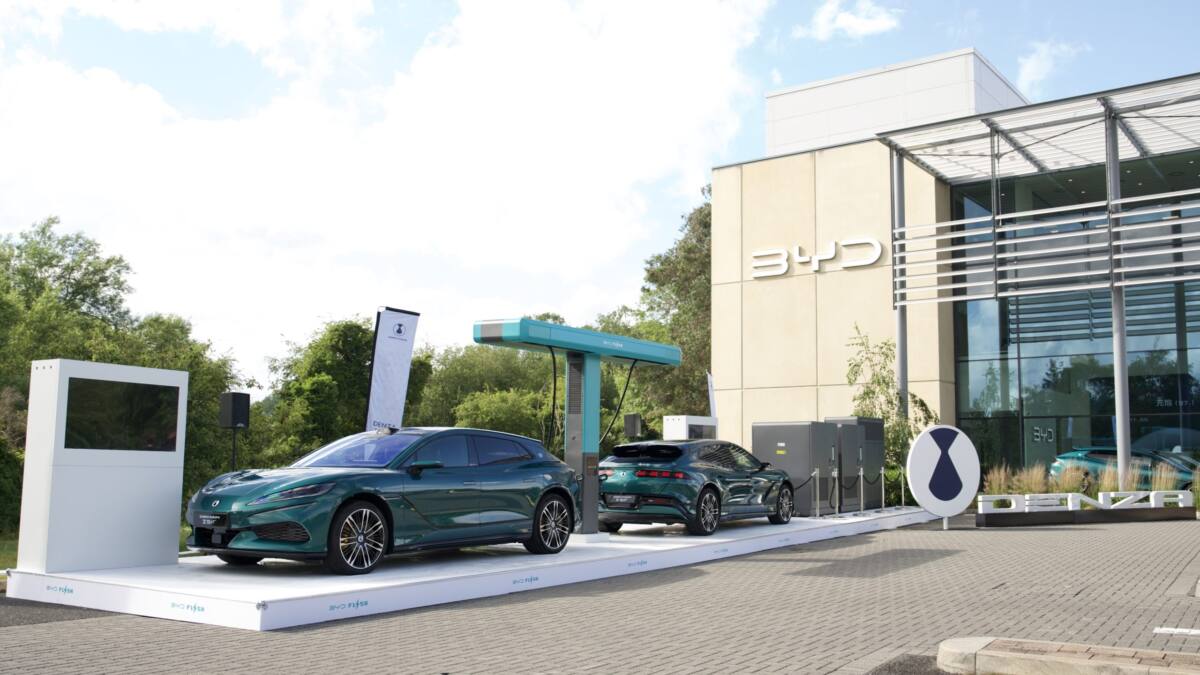
BYD has shown off its FLASH Charging system in the United Kingdom for the first time, and the headline number is as aggressive as it sounds: up to 1,500kW through a single connector. Paired with the company’s Blade Battery 2.0, the setup is designed to turn a long stop into a coffee break, not a lunch break.
On a live demo using the upcoming DENZA Z9 GT, BYD said the battery went from 5% to 70% in five minutes and from 10% to 97% in nine minutes. With a 372-mile WLTP range, the company says those sessions equate to adding 223 miles and 323 miles, respectively. That’s the sort of claim that instantly resets the benchmark conversation, especially in a market where most public chargers are still judged by how little they inconvenience drivers.
How BYD flash charging works
BYD describes the charging standard as ”Ready in 5, Full in 9, Cold Add 3.” In colder conditions, it says the same system managed a 20% to 97% charge in 12 minutes at temperatures as low as -30°C. That matters because fast charging claims tend to look excellent in a lab and mediocre in winter; BYD is clearly trying to get ahead of that familiar complaint.
To get around the usual grid bottlenecks, the FLASH Charging network relies on on-site battery storage units. Those buffers draw a steady, low-level top-up from the grid, between 100kW and 560kW, which helps avoid the sort of expensive infrastructure upgrades that can stall ultra-fast charger rollouts for years.
300 chargers are planned for the UK
BYD says it plans to install 300 FLASH Chargers at DENZA stores and select public locations across the UK by the end of 2026. That is an ambitious build-out for a charging network still at the demonstration stage in Britain, and it also hints at where the company wants its luxury DENZA brand to sit: not just selling cars, but controlling the charging experience around them.
The wider race is already on. Tesla has spent years proving that proprietary charging can be a sales weapon, while European charging networks have largely chased scale before speed. BYD is trying a different pitch: absurd power, battery buffering, and enough range added in minutes to make range anxiety look old-fashioned.
What to watch next
The real test is whether BYD can turn a dazzling demo into something drivers actually use at scale. If the company can deliver reliable high-power charging across the UK, rivals will have to answer with either faster hardware, better site design, or both. If not, this will join the long list of impressive EV specs that look brilliant on stage and awkward in the real world.