

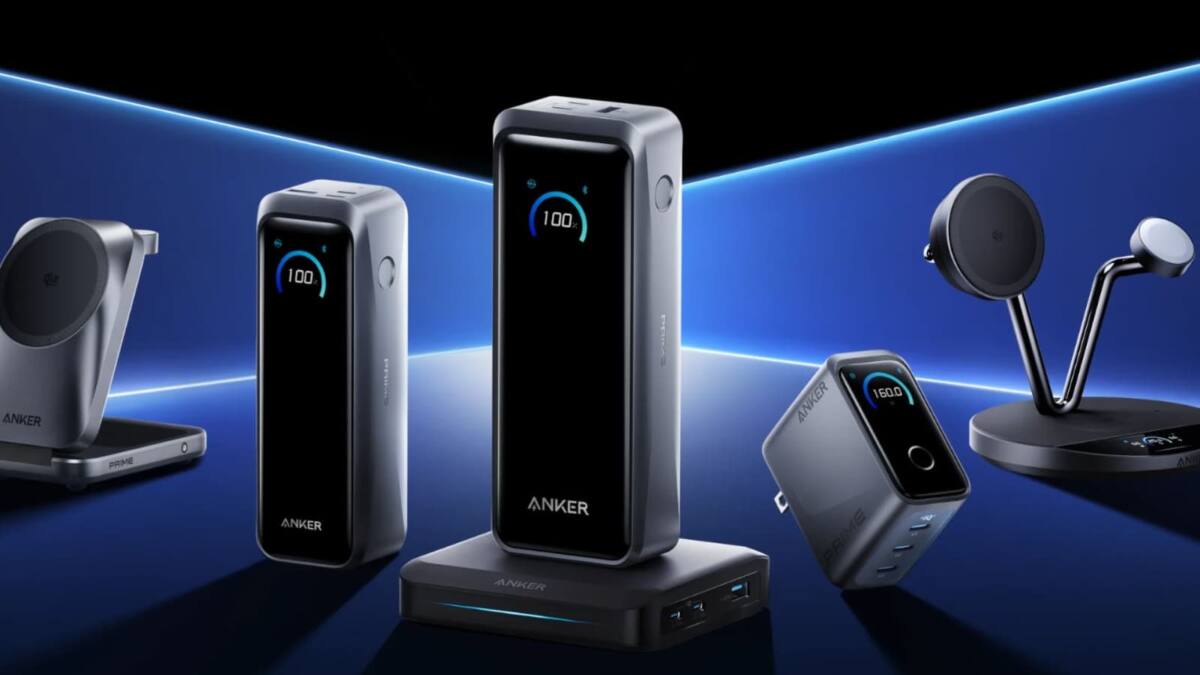
Anker’s best-known product may be heading toward the same shelf life as MP3 players and CD players. The company’s founder and chief executive, Yang Meng, says the power bank category could eventually disappear as phone and device batteries improve, and Anker is already acting like a business that sees the clock ticking.
That does not mean the category is collapsing tomorrow. It does suggest that the old formula – flood the market with dozens of near-identical models and let volume do the work – is getting harder to defend. In consumer electronics, convenience products often live fast and fade fast, especially once the main device gets better at doing the same job.
Anker is leaning less on power banks
Anker has spent years being almost synonymous with portable chargers, but the company’s revenue mix is shifting. For 2025, it reported about $4.2 billion in revenue, up 23.5%, while chargers and energy storage products accounted for roughly half of sales. Traditional mobile batteries are no longer the centerpiece they once were.
The broader takeaway is familiar across tech hardware: once a company starts making serious money elsewhere, it can afford to treat a legacy category more like a supporting act than the whole show. Apple did this with iPods. Samsung did it with a long list of once-dominant gadgets. Anker looks like it is making the same calculation, just with more USB-C cables involved.
Too many power bank models, too little control
Quality control appears to have been part of the wake-up call. Anker has acknowledged that an overly broad product lineup made it harder to keep standards consistent, and it said there were about 100 different power bank models in 2024 alone. That is a lot of batteries to babysit.
The company’s latest numbers still look healthy: first-quarter 2026 revenue rose almost 27% to about $1 billion, even though net profit dipped slightly. So this is not a distressed retreat. It looks more like a deliberate pruning of a mature category before it starts dragging on the rest of the business.
Smarter batteries may shrink the need for extras
Yang’s argument is simple: if smartphones and other mobile devices keep getting better battery life, fewer people will need an external battery in their bag. That would hurt not just Anker, but any brand whose value proposition depends on charging a device that increasingly refuses to die by dinner.
- 2025 revenue: about $4.2 billion
- 2025 growth: 23.5%
- First-quarter 2026 revenue: about $1 billion
- Power bank models in 2024: about 100
The more interesting question is whether power banks disappear outright or simply become a niche product for heavy travelers, gamers, and people who treat wall sockets as an insult. My bet: the category shrinks first, then consolidates, and the brands that survive will be the ones selling batteries as part of a broader charging ecosystem rather than as a one-trick emergency fix.