

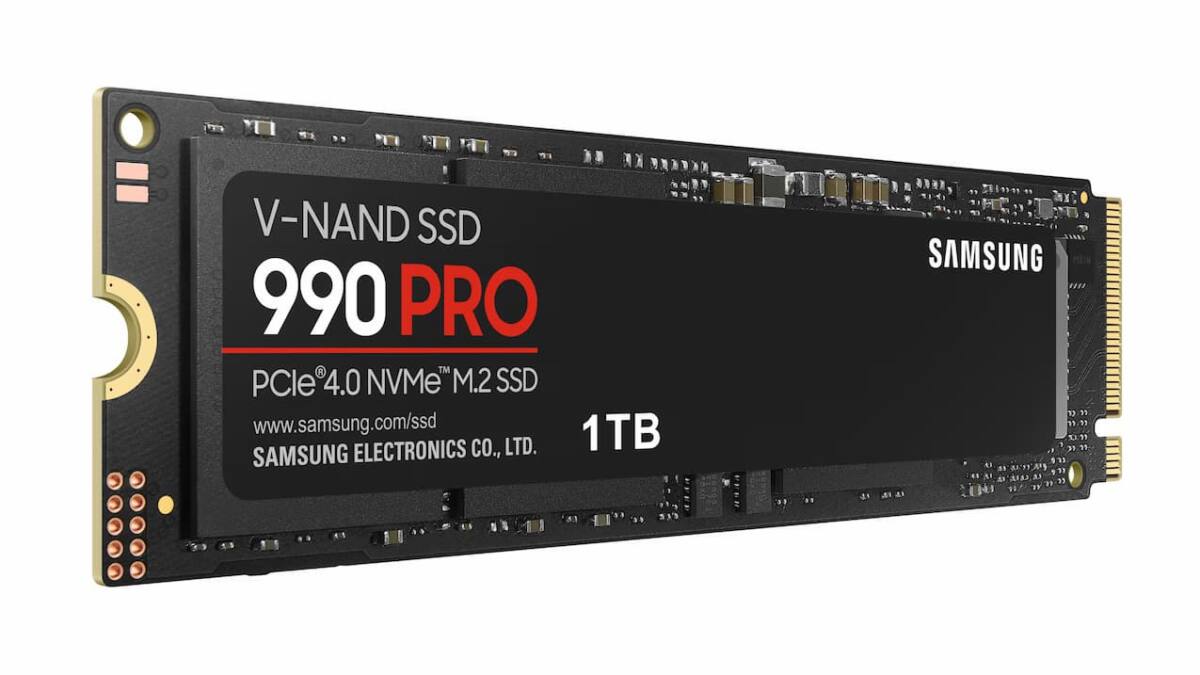
Louis Rossmann is threatening to take Samsung to court after the company refused to replace his faulty 4 TB Samsung 990 Pro SSD under warranty, even though the same model is still on sale through Samsung’s own Amazon store. The dispute has turned into a test of warranty language versus retail reality: Samsung says it has no replacement stock, while Rossmann says that claim collapses the moment you look at the product listing.
Rossmann, a Right to Repair activist and well-known tech blogger, says the drive failed during the warranty period, and that diagnostic logs pointed to a bad unit. He says Samsung initially agreed the logs suggested the SSD was dead, then ran its own tests, declared the drive healthy, and sent back the same hardware. After another round of checks, Rossmann says the problems were still there.
Samsung 990 Pro warranty dispute over repair and replacement
What makes this dispute awkward for Samsung is the contrast between its explanation and its storefront. The company reportedly offered to refund the original $330 purchase price rather than replace the drive, saying it lacked replacement stock. Rossmann points out that the exact model is listed for $950, which means a refund would leave him paying far more to get the same SSD again.
- Product: Samsung 990 Pro SSD, 4 TB
- Original price Rossmann paid: $330
- Price Rossmann says it sells for now: $950
- Samsung’s explanation: no warranty replacement stock
What Samsung’s warranty terms could decide
The fight now hinges on Samsung’s own warranty terms, which Rossmann says allow a refund only if repair or replacement is impossible. That is where the company’s position looks risky: if the drive is genuinely available for sale, a judge may have little patience for a ”no stock” argument that sounds more like a paperwork escape hatch than a real shortage.
Rossmann says he plans to file suit in Texas if the issue is not resolved voluntarily after the legally required waiting period. If he follows through, the case will be less about one SSD and more about how manufacturers handle warranty obligations when a product is still very much alive on the open market.