

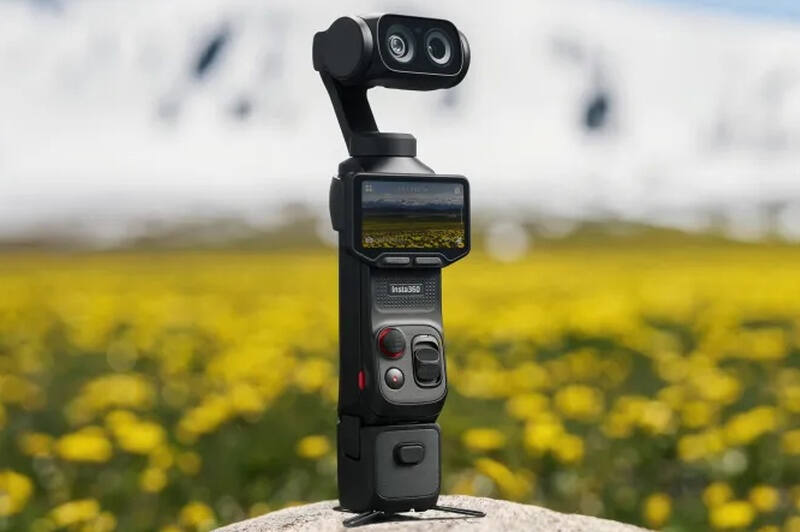
Insta360 has taken the wraps off Luna Ultra, its first portable stabilized camera, pairing two 8K cameras with a 3-axis gimbal and a Leica Summicron lens on the main unit. The pitch is obvious: give creators a compact rig that can follow subjects, hold framing, and shoot serious video without the usual bag of accessories. It is on sale now in the U.S. for $770 through Insta360 and retailers including Amazon, B&H, and Best Buy.
That price puts the Insta360 Luna Ultra in an awkward but interesting spot. It is more expensive than a typical action camera, yet far more integrated than a mirrorless setup with a separate gimbal, which is exactly the gap Insta360 is trying to exploit for vloggers and solo shooters.
Luna Ultra camera specs
The main camera uses a 1-inch 8K sensor, while the secondary camera relies on a smaller 1/1.3-inch sensor paired with a telephoto lens offering 6x optical zoom. The maximum still image size is 37 megapixels, which should be enough for social, travel, and thumbnail duty without asking too many questions.
- 8K video at up to 30 fps
- 4K video at up to 60 fps
- 1080p video at up to 240 fps
- Dolby Vision, 10-bit I-Log, and Leica color profiles in 8K recording
Tracking and remote control for solo creators
Insta360 is also leaning hard on Deep Track 5.0, which can follow individual subjects or groups and reframe automatically. That is the sort of feature that sounds gimmicky until you are trying to film yourself, at which point it suddenly looks very sensible.
The more unusual trick is the detachable touchscreen and controls, which can be used as a wireless remote with live view at distances of more than 20 meters. For videobloggers without a dedicated camera operator, that is the feature that may matter most.
Battery, storage, and accessories
Luna Ultra includes 47GB of built-in storage and supports microSD cards up to 1TB. Insta360 says the 1550mAh battery can last up to four hours on a charge, which is respectable for a stabilized camera doing this much processing.
The optional accessories are aimed at making the camera feel less like a gadget and more like a production tool: a head-worn POV tracker that translates head movement into camera movement, a battery grip, ND filters, and a wide-angle lens. Rival brands have spent years building ecosystems around compact creator cameras, and Insta360 is clearly trying to skip ahead by bundling the moving parts into one device. The open question is whether buyers will pay mirrorless-adjacent money for a camera that still lives in the creator-first category.