

SpaceX’s IPO story looks less like a conventional public offering and more like a three-part engineering bet: a fully reusable rocket, a fast-enough satellite factory, and a new US chip foundry. That is what makes the deal so intoxicating to investors and so awkward for anyone trying to price it soberly. The company’s bankers are reportedly aiming near $1.8 trillion, but fresh outside estimates from Morningstar and Aswath Damodaran land far lower, which tells you where the market’s optimism ends and the physics begin.
The simplest way to read the SpaceX IPO is this: SpaceX already has the juicy parts of the business. Launch services and Starlink produce the kind of high-margin cash flow most rivals would happily steal. The rest is a wager that Elon Musk can bolt an AI cloud onto that base before competitors, regulators or gravity get in the way.
The valuation gap is really an AI option
Morningstar pegs SpaceX at about $825 billion. Damodaran comes in at $1.2 trillion. Both are well below the bankers’ price, and both effectively treat the orbital-data-center pitch as an expensive bonus layer rather than the main event. Morningstar’s math is especially blunt: at a fair value of $63 a share versus the offering price of $135, investors are being asked to pay a $72 call option on whether Musk can make orbital compute work at scale.
That gap makes sense. SpaceX’s existing businesses are real, but the AI push is still half strategy deck, half moonshot. The company says the biggest opportunity is enterprise AI, including coding tools from the Cursor team it acquired and its ”Macrohard” project for digital workers. Yet it is also selling compute to Anthropic and Google, which sounds a lot like acting as infrastructure for rivals while trying to become one.
Why orbital data centers are such a hard sell
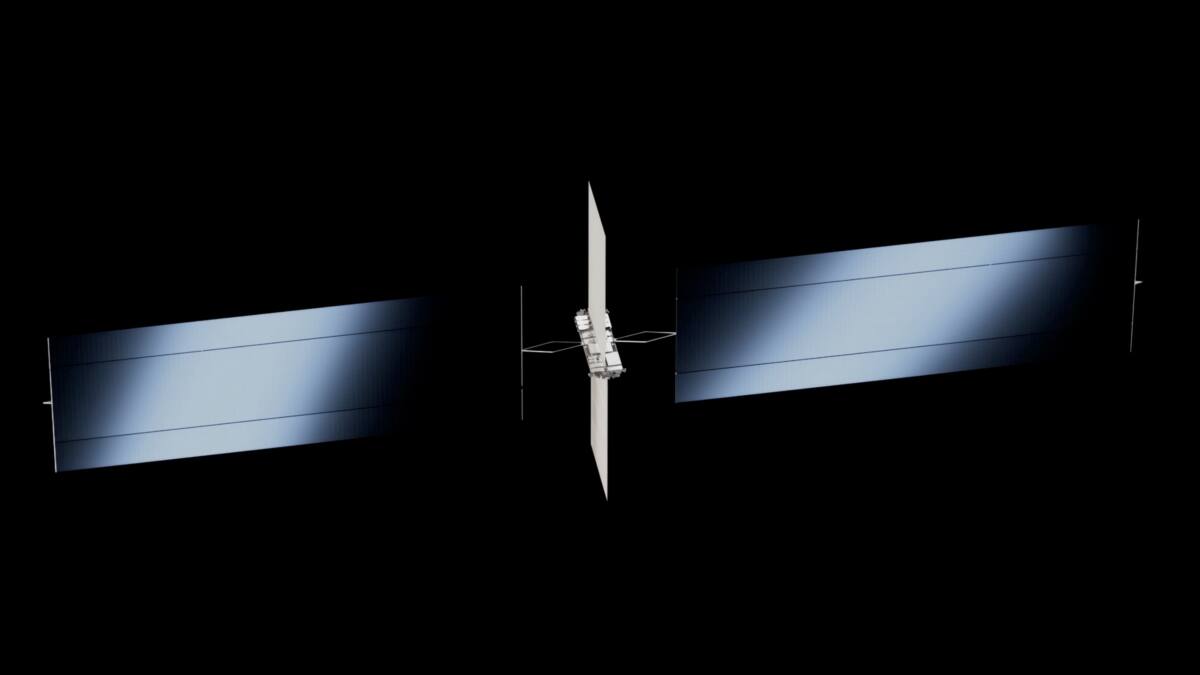
Musk’s argument is that SpaceX is uniquely able to put massive amounts of hardware into orbit cheaply, pair it with solar power, and eventually manufacture chips for space. In a video interview released this week, he said the company is trying to reach an annualized rate of a gigawatt per year by the end of next year in space AI compute. That sounds tidy until you do the arithmetic: at 150kW per satellite, that implies 6,666 satellites a year, or about 556 a month.
- Annualized space AI compute target: roughly a gigawatt per year by the end of next year
- Implied satellite output: 6,666 a year, or about 556 a month
- Reported current Starlink satellite production: 70 a week
- Planned chip foundry: Terafab
That is not a small scale-up. It is a manufacturing moonshot layered on top of another manufacturing moonshot. And while the AI industry loves to talk about explosive growth, the broader market has spent the last year rewarding companies that can actually ship compute, not just promise that gravity will become optional.
Starship has to work before the spreadsheet does
The whole plan depends on Starship being cheap and reusable enough to make orbital infrastructure economically sane. SpaceX’s recent test flight was good enough to keep hope alive, but not good enough to prove rapid reusability. For now, the company may end up reusing only the booster first, which would make the economics of space data centers uglier than the pitch deck suggests.
Then there is the chip foundry problem. Building a leading-edge fab is one of the nastiest industrial projects in modern business, usually taking years and billions of dollars. SpaceX is effectively proposing to do that while also ramping satellite production and landing a rocket system that has not yet demonstrated the kind of turnaround the business model needs. NASA’s own Starship Moon-lander deal, worth nearly $4 billion, is a reminder that even friendly customers are not ready to bet the mission on Musk’s timetable.
What investors are really buying
If the IPO goes ahead on these terms, buyers are not just getting a launch company or a satellite network. They are buying a near-monopoly on US and European access to space, a global communications platform, and a claim on the most ambitious AI infrastructure play on the market. That is a powerful bundle, which is exactly why the skepticism matters: the success case depends on SpaceX building things that few companies have ever built, and doing it on a timetable that would make most industrial planners laugh.
Musk once said he would not take SpaceX public until Mars. That delay may have been relaxed, but the challenge he is offering investors now is almost as extreme: trust me on rockets, trust me on chips, trust me on orbital compute. The next question is whether public markets will keep paying up for the vision once the first real manufacturing bottleneck hits.