

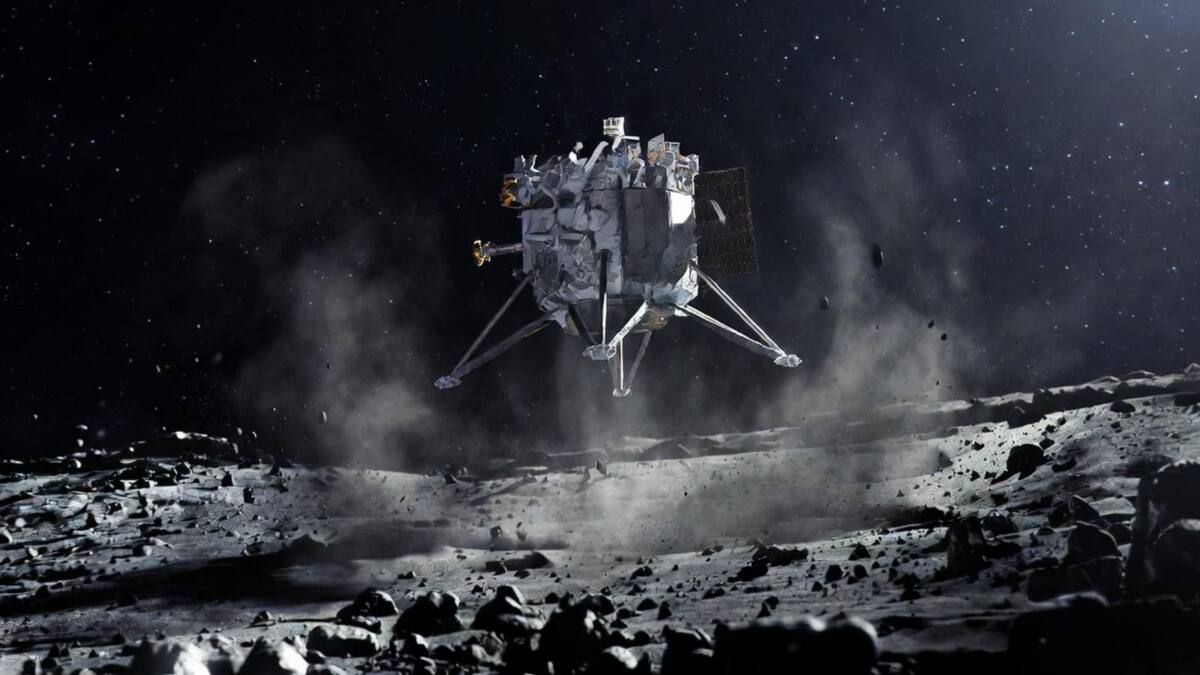
China’s Tianwen-2 probe has reached the final approach phase to asteroid (469219) Kamo’oalewa, with a landing attempt planned for 4 July 2026. If the mission’s navigation checks keep matching the calculations, the spacecraft will tighten its distance in stages – first to about 2,000 km, then 20 km, and finally 3 km – before trying to touch down on one of the strangest near-Earth objects we know.
The mission is run by the China National Space Administration, and the target is not just another rock to tick off a list. Kamo’oalewa has long stood out among near-Earth asteroids because its orbit and physical behavior could help researchers reconstruct what the early Solar System was doing before planets settled into their current arrangement. NASA and other space agencies have spent years treating small bodies as scientific time capsules, and China is now pushing deeper into that same high-value territory.
Why Kamo’oalewa is such an unusual target
The appeal is simple: asteroids preserve old material that larger worlds have churned, melted, or buried. Kamo’oalewa is especially interesting because it is one of the most unusual near-Earth asteroids, which is exactly why scientists want samples and close-up data instead of just another flyby image. That puts Tianwen-2 in the same strategic bracket as missions that made asteroid science mainstream, from Japan’s Hayabusa probes to NASA’s OSIRIS-REx.
- Target: asteroid (469219) Kamo’oalewa
- Closest planned steps: about 2,000 km, 20 km, and 3 km
- Landing attempt date: 4 July 2026
- Operator: China National Space Administration
China’s Tianwen-2 asteroid mission gets more ambitious
Tianwen-2 is part of a broader shift in planetary exploration: countries are moving beyond orbiters and into precision operations around small bodies, where tiny errors can ruin expensive missions. That’s a demanding game, but also a smart one, because the payoff is disproportionately high for science – and for prestige.
Assuming the approach goes smoothly, the landing itself will be the real test. A successful touchdown would give researchers a rare look at material from a body that may still carry clues to the Solar System’s earliest building blocks, and it would put China in a much narrower club of agencies that have attempted such work. The question now is whether Tianwen-2’s navigation can stay as clean under pressure as it looks on paper.