

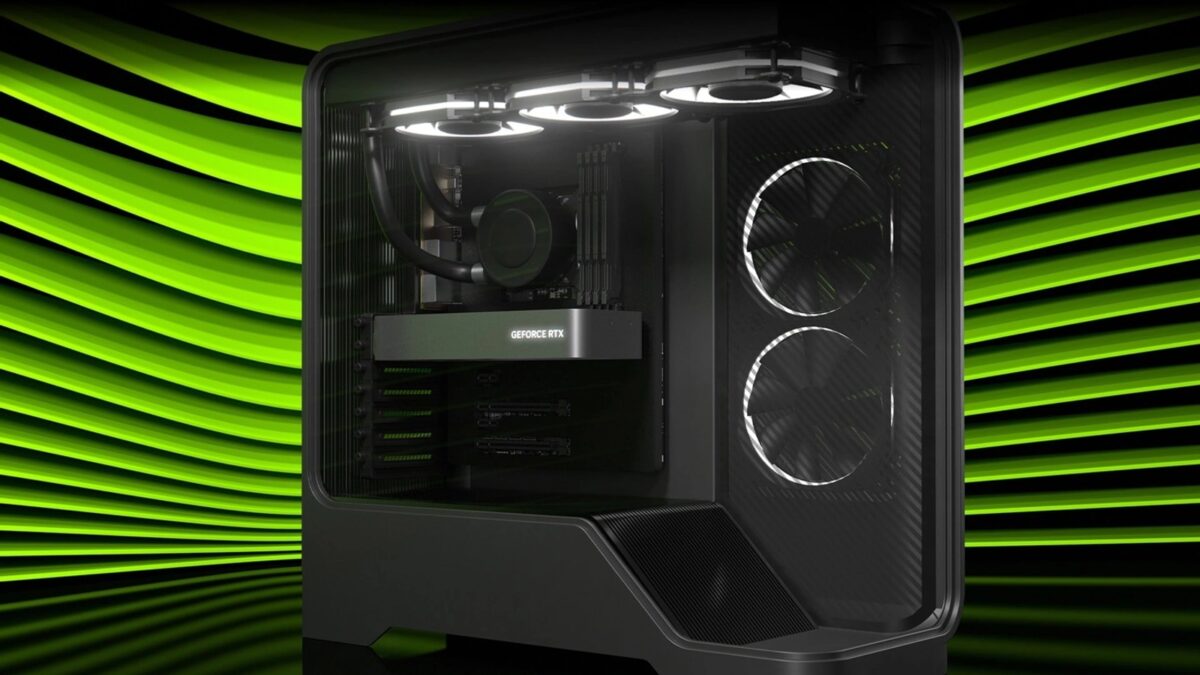
Nvidia’s GeForce RTX 50 Super refresh is now being tipped for early 2027, with CES 2027 the likeliest stage if the latest industry chatter is right. The big draw is not a new architecture or a dramatic speed jump, but a memory bump that could push select cards from 16 GB to 24 GB of GDDR7.
That sounds modest until you remember how much modern games and creator workloads lean on VRAM. Nvidia has been leaning heavily on memory capacity and efficiency across this generation, and a GeForce RTX 50 Super refresh would be a very familiar play: extend the life of the lineup, keep pricing structure intact, and give buyers a reason to skip a full-platform upgrade.
RTX 5060 through RTX 5080 Super models are rumored
According to BenchLife.info, the Super treatment is expected to cover desktop versions of the RTX 5060, RTX 5070, RTX 5070 Ti, and RTX 5080. There is also talk of an RTX 5060 variant with 12 GB of memory, which would slot below the higher-capacity models and widen the spread inside the lineup.
Mobile versions have not been mentioned, which is a small but telling omission. Nvidia has often used desktop and notebook refreshes on different timetables, so no laptop Super models yet does not mean they are impossible – just that they are not part of this rumor cycle.
GeForce RTX 50 Super memory upgrade to 24 GB
The jump from 16 GB to 24 GB of GDDR7 is the headline here, and for good reason. If Nvidia keeps the rest of the silicon changes modest, extra VRAM becomes the simplest way to make a refreshed card look meaningfully better without upsetting the whole stack. AMD has been happy to stress memory size in competing cards, so this would also help Nvidia avoid being mocked in spec-sheet battles for another cycle.
- Expected timing: early 2027
- Possible debut: CES 2027
- Rumored desktop range: RTX 5060, RTX 5070, RTX 5070 Ti, RTX 5080
- Main change: 16 GB to 24 GB GDDR7 on some models
- Mobile Super versions: not mentioned
A refresh built for patience, not drama
If this schedule holds, Nvidia is effectively stretching the RTX 50 family across a longer runway instead of racing into a completely new generation. That is classic GPU business: sell the current stack hard, then return with a memory-heavy refresh when competitors have had time to breathe. The real question is whether buyers will see 24 GB as a practical upgrade or just a neat number that looks better in marketing slides.