

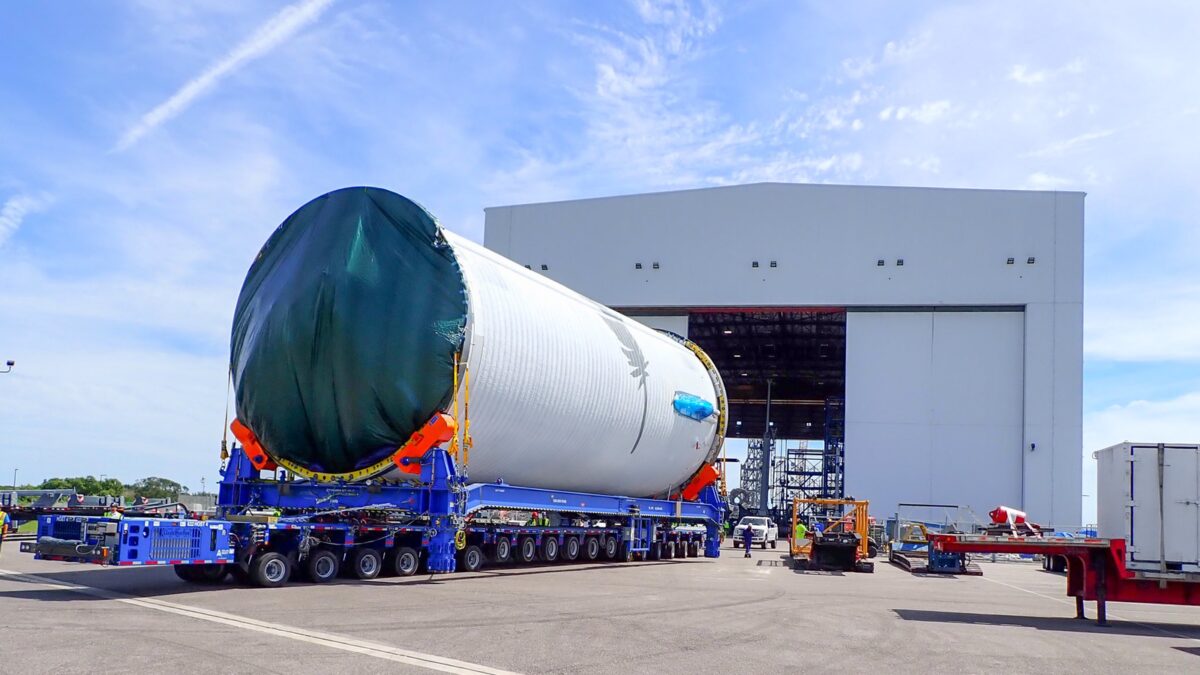
Blue Origin is already clearing and repairing its LC-36 launch pad after the May 28 explosion that destroyed a New Glenn rocket during a hot-fire test, and the company says it still plans to return to flight by the end of 2026. The latest sign of progress came from chief executive Dave Limp, who shared images from the Cape Canaveral site showing work underway and the first movement of New Glenn second stages out of the integration building.
The speed of the cleanup matters. Space launch companies do not get to shrug off pad damage for long, because every week lost on the ground turns into schedule pressure, customer anxiety, and fresh comparisons with rivals that are launching more often. Blue Origin has been trying to prove that New Glenn is more than a giant, expensive promise; getting LC-36 back into shape is part engineering, part confidence exercise.
What survived the blast at LC-36
According to Blue Origin, the main propellant tanks, the water tower, and other key systems were either largely intact or can be repaired on site. That is the difference between a painful setback and a much uglier rebuild. The destroyed test rocket was the headline casualty, but the pad itself appears to have escaped a total wipeout, which gives the company a fighting chance to stay on its timeline.
That said, ”largely intact” is doing a lot of work here. Launch infrastructure is full of components that look fine in a photo and then quietly consume weeks once inspections, replacements, and certification checks begin. SpaceX has long made pad recovery part of its operating rhythm; Blue Origin is now learning how unforgiving that rhythm can be.
New Glenn second stages are moving again
Limp said transport had begun for GS2 upper stages from the integration facility, and the company plans to move several more in the near future, along with the recovered booster named ”Never Tell Me The Odds.” One photo shared by Limp showed a large white stage, the kind of image rocket fans read like tea leaves because, in the launch business, visible hardware usually means invisible scheduling work is finally happening.
- Incident date: May 28
- Location: LC-36 at Cape Canaveral
- Vehicle involved: New Glenn
- Target: return to flight by the end of 2026
Why Blue Origin cannot afford another long delay
Blue Origin has spent years trying to turn New Glenn into a real rival to Falcon Heavy and the growing field of heavy-lift rockets, and the May failure made that job harder, not impossible. The good news is that the company is talking about recovery in operational terms rather than apology terms. The less good news is that launch pads are easy to damage and hard to rush, especially when the next milestone is supposed to be a genuine return to flight rather than another test of patience.
If the current pace holds, the next question is whether Blue Origin can convert this cleanup into an actual launch campaign without another snag. The pad is being restored, the hardware is moving, and the clock is already ticking toward the end of 2026.