

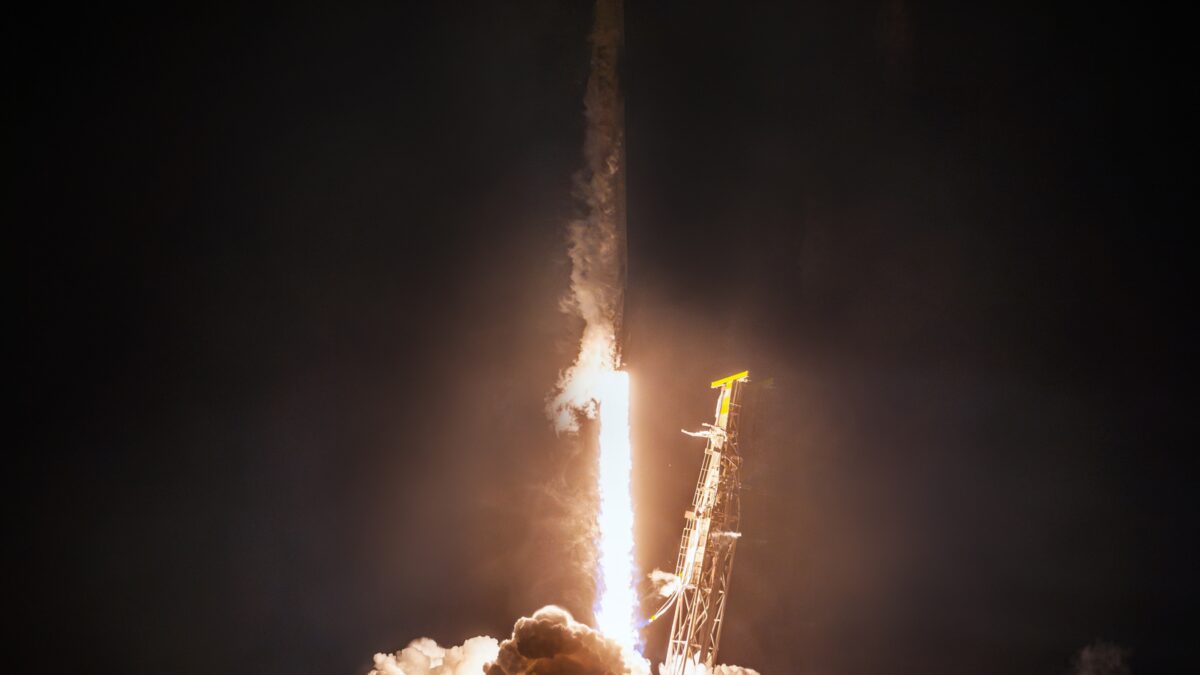
SpaceX has used a single Falcon 9 to lift 23 satellites from Vandenberg in California, sending 21 Starlink spacecraft and 2 Starshield satellites into orbit in a launch that further widens the company’s split between consumer internet and government services. The 7 June 2026 launch at 21:24 local time also added another reused booster landing to the tally, with the first stage touching down on a drone ship in the Pacific after its 10th flight.
That may sound routine, and that is exactly the point: SpaceX has turned mixed-manifest missions into a factory line, squeezing more value out of each Falcon 9 while keeping Starlink deployment moving and Starshield available for U.S. intelligence and government work.
What flew on the Falcon 9
The payload split was simple enough: 21 Starlink satellites for the commercial broadband network, plus 2 Starshield satellites for government missions. Starshield is SpaceX’s state-focused version of Starlink, built for reconnaissance and official use rather than mass-market internet access.
- Launch site: Vandenberg, California
- Launch time: 21:24 local time on 7 June 2026
- Payload: 21 Starlink satellites and 2 Starshield satellites
- Booster: B1097, 10th flight
Starlink keeps scaling, Starshield keeps separating
Starlink is already the world’s most widely used satellite internet system, with more than 10,000 spacecraft in orbit and more than 12 million subscribers across 160 countries. That scale is the real story here: every launch like this is less a headline-grabber than a maintenance item for a network that now serves schools in remote Bolivia and, increasingly, a far less public set of customers.
SpaceX is also setting up a larger shift. The first Starlink V3 launch on Starship is expected in 2026, and those satellites are meant to raise the service’s capacity substantially. If that schedule holds, Falcon 9 will keep doing the grunt work for now, while Starship gets the heavyweight jobs.
Reusable Falcon 9 still does the heavy lifting
The B1097 booster’s successful landing is another reminder that reusability is SpaceX’s quiet advantage. Competitors can match individual launches, but not this tempo: launch, recover, relaunch, repeat, with enough reliability to keep both a consumer megaconstellation and a government variant moving at the same time.
The next question is whether Starlink’s expansion continues to be paced by Falcon 9’s cadence, or whether Starship finally starts absorbing the pressure. If the company can move V3 satellites onto the larger rocket this year, the network’s growth could accelerate again without squeezing Falcon 9 quite so hard.